Why the Next Real Estate Boom Will Be Driven by Experience, Not Infrastructure

Anuj Jain – COO, SNN Raj Corp
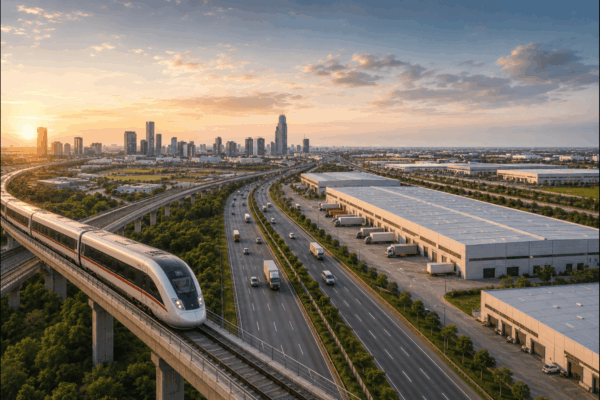
For a long time, the easiest real estate story to tell was an infrastructure story. A metro line was announced, a road was widened, an airport corridor gathered pace, and suddenly a micro-market had a new reason to be discussed. Buyers followed the map. Developers followed the buyer. Prices followed both.
That logic still works. It would be careless to suggest otherwise. Infrastructure remains one of the strongest creators of access, catchment and long-term value. A home close to employment, schools, healthcare, retail and transit will always carry an advantage.
But the market has moved beyond that first question.
Today, infrastructure may bring a buyer to a location. It does not automatically make the buyer choose one project over another. That decision is becoming more personal, more practical and, in many cases, more demanding. Once the commute, the corridor and the location check out, the buyer looks closer. How will the home work every day? How crowded will the community feel? Is the layout sensible? Will the open space actually be used? What happens after handover?
That is where the next cycle of real estate value is beginning to form.
The Corridor is Only the Beginning
Bengaluru makes this clear. The city has grown around technology parks, business districts, ring roads, airport access, metro expansion and new mobility plans. Karnataka’s recent push for fast-track approval of ₹13,549 crore worth of Bengaluru mobility projects shows how deeply infrastructure continues to shape the city’s future. These investments matter. They create movement, unlock land, shorten distances and give confidence to new corridors.
Still, anyone who understands Bengaluru knows that infrastructure is not the full living experience. A project may sit near a promising corridor, but the resident still has to deal with entry and exit traffic, parking, lift waiting time, water systems, waste management, internal circulation, security, noise, heat and common-area upkeep.
That is the part buyers are beginning to read more carefully.
A good road can bring people to the gate. It cannot fix a poorly planned driveway. A metro station can improve access. It cannot make an overcrowded clubhouse useful. An airport corridor can lift the value of a catchment. It cannot replace thoughtful master planning.
The next boom will come from projects that understand this difference.
Buyers are Reading Projects Differently Now
The modern homebuyer is not only buying built-up area. That may sound obvious, but the industry has taken years to fully accept it. For many families, the purchase is not just about owning a unit. It is about buying a way to manage work, children, ageing parents, social life, health, privacy and time.
This is why square footage alone has become a blunt measure. Two homes with the same area can feel completely different. One may have dead corners, poor light and awkward circulation. Another may feel larger because the planning is cleaner. The same is true for communities. A project with fewer but better-used amenities can feel richer than one with a long checklist that nobody uses after the first few months.
The shift is also visible in the market. CREDAI-Anarock’s Q1 2026 residential market report notes that homes priced above ₹1.5 crore accounted for about 53% of new launches across the top seven cities. That is not just a story of premium pricing. It shows that buyers are stretching for better locations, larger formats, better specifications and stronger developer credibility where they see lasting value.
The word “value” matters here. It is not the same as price. Price is what gets negotiated. Value is what survives after possession.
Amenities have to Earn their Place
A few years ago, amenity lists began to get longer across residential projects. Clubhouse, pool, gym, co-working lounge, theatre room, party hall, outdoor deck, children’s area, senior citizen zone. Some of these are useful. Some are added because brochures need weight, and humans apparently need more ways to misuse the word luxury.
The next phase will be more disciplined.
Buyers are starting to ask whether amenities fit the community size, the resident profile and the way people will actually live. A walking track needs shade and safety. A children’s play area needs visibility and sensible placement. A senior-friendly zone cannot be tucked into a forgotten corner. A clubhouse should not become overcrowded because the density was misread at the planning stage.
Experience is not created by adding more facilities. It is created when the facilities are planned, proportioned, maintained and easy to use.
This is where development becomes more than construction. It becomes judgement.
The Invisible Parts Decide the Experience
Many of the things that shape daily life in a project are not visible in launch campaigns. Lift capacity. Basement design. Ramp gradients. Fire access. Water pressure. Garbage movement. Acoustic comfort. Utility routing. Security protocols. Common-area maintenance. Response time from facility management.
These do not always look exciting on a hoarding, but they decide whether a project feels premium after residents move in.
Post-possession experience has become one of the strongest tests of developer quality. A project can sell on location, elevation and pricing. It earns trust through operations. If services are unreliable, if common areas age quickly, if complaints keep repeating, the resident’s memory of the project changes. The launch promise starts losing value.
This is why experience cannot be treated as the last layer of real estate. It has to be protected from the first drawing itself. Density, circulation, landscape, services, structure, material selection and facility planning all shape how a project performs years later.
Wellness is Not a Brochure Word Anymore
Wellness in housing is often reduced to a gym or yoga deck. That is too narrow. In a city like Bengaluru, where workdays are long and commutes can be tiring, wellness is also about coming home to a place that does not add to the stress.
Light, ventilation, air movement, shaded outdoor spaces, usable greenery, quiet corners, walking loops, seating areas, safe internal movement and lower heat build-up all matter. So does the emotional comfort of a community that feels secure, maintained and alive without being noisy or forced.
The home has also taken on more roles. It is a workplace on some days, a learning space for children, a place for elderly care, a social setting and a retreat. That makes planning more demanding. Developers can no longer assume that a home is used only in the morning and late evening. It is being lived in through the day.
The best projects will respond to this without shouting about it.
Technology Should Reduce Friction
Technology has become part of real estate, but it should not be treated as a decorative feature. Smart living is useful only when it makes the resident’s life simpler.
Visitor management should be smooth. Security should feel reliable. Maintenance requests should not disappear into silence. Energy and water systems should be monitored intelligently. Community communication should be clear. Digital tools should help facility teams act faster, not give residents another complicated app to tolerate.
The same applies during construction. Better project monitoring, quality checks, procurement tracking and site coordination can improve delivery discipline. That may not sound glamorous, but it reduces surprises, and real estate buyers have had enough surprises for one lifetime.
Technology should not become the face of the project. It should become the wiring behind better service.
Inventory is Rising. Differentiation will matter
There is another reason experience will become more important: buyers have more to compare. CREDAI-Anarock reported that available inventory across the top seven cities crossed 6 lakh units by the end of Q1 2026. In a market with deeper supply and higher ticket sizes, projects cannot depend only on launch excitement or infrastructure adjacency.
Sales velocity will increasingly depend on how clearly a project answers the lived-use question. Does it feel better planned? Does it solve daily pain points? Is the maintenance model thought through? Does the community have enough breathing space? Is the location convenient beyond the marketing radius? Is the developer trusted to carry the project through the full lifecycle?
These are not soft questions. They affect absorption, pricing power and resale confidence.
Real Estate is Returning to Its First Purpose
Real estate is often discussed as an asset class, an investment, a construction product or an infrastructure play. All of that is true. But before all of that, it is a place where life happens.
That is the point the next boom will bring back into focus.
Infrastructure will continue to create the larger map of growth. It will decide which corridors open, which catchments mature and where capital begins to move. But within those corridors, the stronger projects will be the ones that offer a better everyday experience.
A home should save time, not consume it. A community should give people room to breathe. A development should make daily life easier to manage, not merely provide an address near a future road or station.
The next real estate boom will not be driven by experience because infrastructure has stopped mattering. It will be driven by experience because infrastructure has become the starting line.
What comes after that is what buyers are now judging more carefully.
Tags