Beyond Gurugram: The Rise of a New Economic Corridor

by Deepak Sangwan, Chairman, Origen Realty
Cities rarely grow in straight lines. Their expansion follows infrastructure: new roads, transit networks, and economic corridors that improve connectivity, attract investment, and gradually pull the centre of gravity towards locations that once seemed peripheral. Few Indian cities illustrate this more vividly than Gurugram. Two decades ago, it was a satellite township on Delhi’s southwestern edge. Today, it hosts over 250 Fortune 500 companies and accounts for a significant share of the NCR’s economic output. Highways, employment centres, and successive waves of connectivity investment unlocked new development corridors, drew sustained capital, and turned overlooked locations into thriving commercial and residential districts. Infrastructure did not follow Gurugram’s growth. It created the conditions for that growth to happen.
A similar dynamic is now taking shape on the southern edge of Gurugram. As the city’s established commercial and industrial districts mature, the next wave of expansion is steadily moving along the Pataudi-Rewari-Bawal corridor. What distinguishes this emerging growth belt is the convergence of multiple infrastructure investments – highway upgrades, freight connectivity, logistics infrastructure, industrial expansion, and future rapid transit links. These developments are laying the foundation for a new industrial and economic ecosystem that extends well beyond Gurugram’s traditional boundaries.
For locations positioned along this corridor, particularly Sector 88A in New Gurugram, the implications are significant. Industrial growth, connectivity improvements, and urban development are aligning within the same geography, creating the kind of structural momentum that has historically preceded some of the region’s most successful growth stories. The corridor may still be emerging, but the forces shaping its future are already firmly in motion.
A New Growth Axis Emerges
The traditional industrial hubs of NCR have long been struggling with issues such as scarcity of land, congestion and environmental concerns. With industries increasingly demanding larger land parcels, better logistics connectivity and more sustainable operational environments, growth is moving towards newer industrial clusters on the southern periphery of NCR. The Rewari-Dharuhera-Bawal region has already been designated as one of only eleven regional centres for large-scale planned growth under NCR Plan 2041. This cluster is expected to play a key role in decentralising economic activity from Delhi and Gurugram while creating new jobs and investment opportunities across southern Haryana.
This shift is being reinforced by the presence of established industrial centres such as IMT Bawal, Dharuhera and Manesar, which collectively host hundreds of manufacturing and ancillary units across automotive, engineering, logistics and export-oriented sectors. Bawal, in particular, has evolved into one of Haryana’s most significant industrial townships and continues to attract industrial expansion due to its strategic location along the Delhi-Jaipur economic corridor.
Warehousing and Logistics Lead Expansion Wave
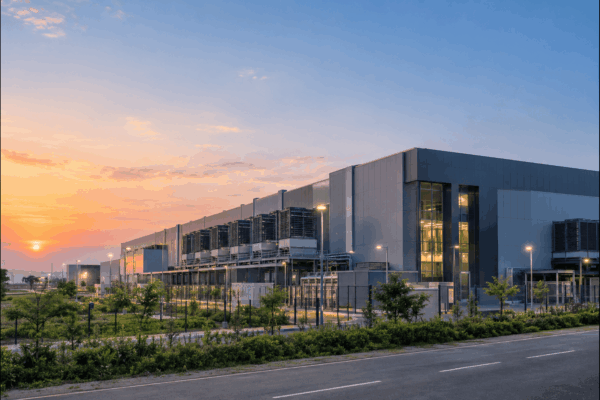
While manufacturing remains a foundational pillar, the next chapter of growth in the corridor is being written by warehousing and logistics. The rise of e-commerce, organised retail, and modern supply chains has created unprecedented demand for Grade-A warehousing, and the Pataudi-Rewari belt is well positioned to absorb it. The region enjoys multimodal connectivity across NH-48, the Western Dedicated Freight Corridor, and several new highway projects, with Rewari serving as a major transport junction and freight node in regional logistics planning.
As logistics companies seek alternatives to saturated locations closer to Delhi, the availability of larger land parcels and comparatively lower costs along this belt are accelerating warehousing development. The employment base this creates extends well beyond factory workers to include logistics professionals, engineers, technology specialists, and service-sector employees, broadening the corridor’s economic reach considerably.
Better Connectivity Drives Economic Momentum
What distinguishes the Pataudi-Rewari corridor from earlier industrial zones is the simultaneity of infrastructure investment. The Gurgaon-Pataudi-Rewari Highway upgrade will significantly improve movement between Gurugram, southern Haryana, and Rajasthan, offering an alternative to the congested Delhi-Jaipur Expressway while improving freight access to Manesar, Bilaspur, Dharuhera, and Rewari. A proposed six-lane corridor linking Gurugram and Jhajjar through Pataudi will create additional connectivity with the Dwarka Expressway, forming another critical logistics artery for industrial traffic.
Running parallel is the Haryana Orbital Rail Corridor (HORC), designed to connect key industrial and freight centres across Haryana while integrating with the Western Dedicated Freight Corridor. Supporting both passenger and cargo movement, HORC is expected to enhance logistics efficiency and strengthen the corridor’s industrial competitiveness across the region.
Sector 88A: Address of Opportunity in New Gurugram
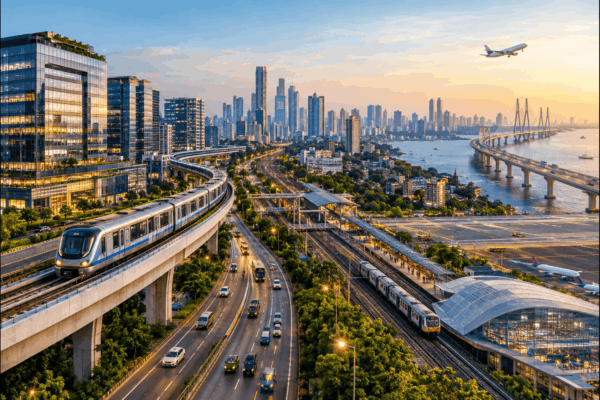
When the Delhi-Gurugram-Rewari-Bawal-Alwar Namo Bharat corridor becomes operational, it will do something quite simple and quite profound: it will make distance feel smaller. Major industrial hubs across Gurugram, Manesar, Rewari, and Bawal will sit within roughly an hour of Delhi, stitching together what has historically felt like a fragmented region into a single, connected economic geography.
The significance of this goes well beyond faster commutes. High-speed transit corridors have a consistent track record of pulling industrial investment in their wake, broadening employment catchments, and triggering the kind of integrated residential and commercial development that defines maturing urban ecosystems. As the Pataudi-Rewari-Bawal belt grows into a serious industrial and logistics corridor, the locations that already sit near jobs and infrastructure will feel the benefit first.
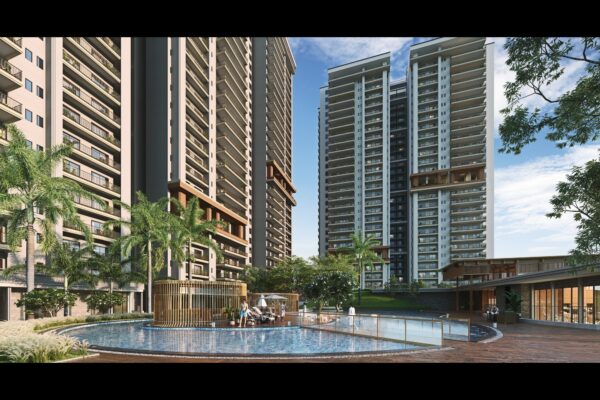
Sector 88A is one of those locations. Sitting between the Dwarka Expressway, NH-48, and the Pataudi-Rewari growth corridor, it connects residents to Gurugram’s established business districts in one direction and to the expanding manufacturing, warehousing, and logistics hubs of Manesar, Dharuhera, Rewari, and Bawal in the other. It is not a market built on a single infrastructure bet. The Dwarka Expressway is already operational. Pataudi Road upgrades are underway.
The RRTS will add another layer. Each project reinforces the others, and together they create a residential location with unusual resilience across multiple growth scenarios. As industrial and logistics activity continues to scale across the corridor, the professionals, entrepreneurs, and senior executives working within it will need somewhere to live. Quality housing close to work, with good city connectivity, is not an easy combination to find. Sector 88A offers both.
Standing at the Crossroads of Industrial and Urban Growth
The Pataudi-Rewari-Bawal corridor is not a story about potential. It is a story about momentum. Industrial expansion, warehousing demand, freight infrastructure, and next-generation regional connectivity are all moving in the same direction at the same time. What was once viewed as a peripheral stretch connecting Gurugram to southern Haryana is quietly becoming one of the region’s most consequential economic corridors, backed by highway upgrades, the Haryana Orbital Rail Corridor, and the incoming Namo Bharat network.
For New Gurugram, this marks the start of a genuinely new growth cycle. For Sector 88A, positioned at the point where Gurugram’s urban core meets southern Haryana’s industrial ambition, the timing is particularly good. The infrastructure is being built. The employment base is growing. The case for being here early is compelling.
Tags