The Evolution of Industrial Parks: From Warehouses to Smart Manufacturing Hubs

by Aayush Madhusudan Agrawal, Founder & Director, Inspira Global
India’s industrial parks are undergoing a huge change as they have become vital to the development of India’s manufacturing industry. Manufacturing contributes ~17% of India’s GDP as on Nov.2025 and aims to reach 25% under national industrial growth programs, while merchandise exports reached USD 254.25 billion in the first half of FY’26 according to Ministry of Commerce and Industry. Till a while back, industrial parks were simply thought of as places to store products but now they have developed into central points for manufacturers to affect productivity, time to market and long-term competitiveness. The growth of industrial parks is a reflection of the transformation of the manufacturing industry itself, where efficiency, integration and scalability have become the keys to their success.
Historically, industrial parks have been defined mostly by their land and access. Their location is important to an extent but their function has generally been limited. Today, the environment in which manufacturers operate is extremely complex. Logistics costs in India account for nearly 13–14% of GDP compared to 8–9% in developed economies, highlighting the need for integrated industrial ecosystems, as noted by NITI Aayog. Supply chains are almost fully integrated, production cycles are substantially shorter, and competitiveness is now based on how quickly goods can be moved from factory floor to market. Because of this complexity, manufacturers will now see industrial parks evolve into full integrated systems that integrate both infrastructure, logistics and operational capacity all within one space.
This transformation is evident throughout India’s industrial real estate market. In particular, leasing there have increased dramatically in the last year, with a majority being driven by manufacturers and logistics users looking for improved and diverse spaces. Therefore, demand for industrial space is no longer just based on the amount of space available but also for the quality of the infrastructure available. This indicates that the move toward modern (also referred to as “Grade A”) industrial parks has begun and is a vital component of maximizing speed to market and increasing operational effectiveness.
The emergence of technology has played a vital role in supporting this shift. Automation, smart logistics systems, and data-driven operations have become core requirements of modern manufacturing. Industrial parks that meet these requirements through appropriate layout, improved connectivity, and operational flexibility are now often preferred by occupiers looking to expand. While manufacturing still accounts for the largest share of industrial and warehousing absorption in key Indian markets, it has further cemented the position of industrial parks as active manufacturing platforms and not simply passive storage assets.
The progress seen throughout this evolution has been made possible through policy support and infrastructure investment. For example, the introduction of the Production Linked Incentive (PLI) program and the significant investment in the road and rail networks as well as the ports infrastructure has contributed to the reduction of logistical bottlenecks, enhancing regional cohesiveness. All of the above factors have led to manufacturers giving more weight to connectivity, degree of operational certainty, and ability to scale in the long term when evaluating industrial locations.
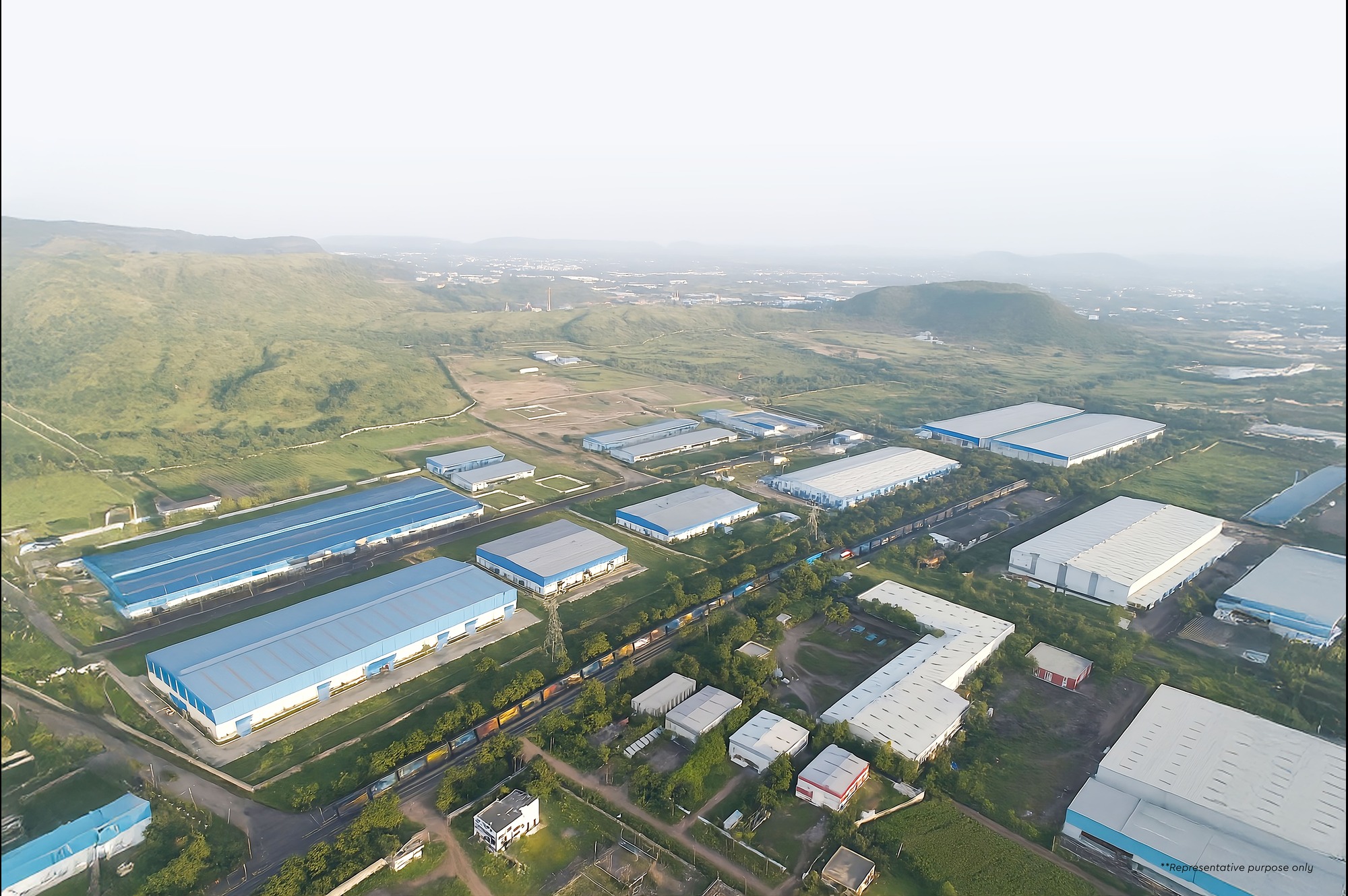
The most compelling feature of this transformation is not limited to India’s largest cities; Tier-2 cities are now becoming credible industrial destinations. A strong example of this shift is Chhatrapati Sambhaji Nagar. For years, the region was primarily seen as an automotive and engineering hub; today, it is witnessing a broader industrial evolution. The development of infrastructure particularly enhanced connectivity through projects like the Samruddhi Mahamarg along with improved access to industrial parks and a steady supply of industrial land (such as organized industrial estates), has significantly strengthened its logistics advantage. This has enabled diversification beyond traditional sectors, positioning the region to support its next phase of industrial growth and attract a wider range of industries.
In terms of the future of industrial parks in India, it is unlikely that size is the only factor that will distinguish these parks; rather, it will be the parks’ capabilities that will separate the successful from the unsuccessful. Parks that have the ability to offer adaptive manufacturing capabilities through the provision of infrastructure readiness and logistics capacity will be the parks that define the next era of India’s industrial development.
As India continues to strengthen its role within the global manufacturing value chain, industrial parks will no longer simply be a part of the backdrop of growth; they will become much more active participants in the industrial sector and will play an important role in supporting enhancements to efficiency, expansion and competitiveness throughout India’s industrial sector.
Tags