
Why Mumbai Homebuyers are Prioritising Lifestyle over Square Footage

by Abhishek Jain, Chief Operating Officer, Group Satellite
The Shrinking Room That No Longer Apologises for Itself
Here is a distinct brand of defiance in the Mumbai apartment. Take a 450-square-foot flat in Bandra or Lower Parel, it will easily outprice that more than a farmhouse in Pune, yet it commands a waiting list. For decades, homebuyers in this city accepted the arithmetic of scarcity, smaller spaces, higher prices and longer commutes as the immovable conditions of urban ambition. The deal was understood: you pay dearly, you live tightly and you compensate in other ways. Across Mumbai’s primary and secondary real estate markets, a discernible shift is underway one that demographers, developers and design consultants are struggling to fully articulate, let alone monetise. Homebuyers, particularly those aged 28 to 45, are making purchasing decisions increasingly anchored not in built-up areas but in what might be loosely called the quality of inhabited life. The question is no longer simply “how much space?” but “what kind of life does this space make possible?”
From Aspiration to Architecture: A Value System in Transition
The post-pandemic city recalibrated everything. When offices closed and apartments became the sole theatre of existence workspace, school, gym, restaurant and sanctuary simultaneously, the limitations of purely transactional housing became viscerally apparent. A flat optimised for resale value rather than daily living revealed itself, quite cruelly, in those eighteen months. What emerged was not merely a preference for open-plan kitchens or balconies with a view. It came down to something more fundamental, a total rethinking of what a home is actually supposed to do. Buyers stopped focusing strictly on floor plans. Instead, they began evaluating the entire ecosystem from building amenities to green spaces and the vicinity of a decent coffee shop. Mumbai, historically a city built around the grim logic of density and endurance, found itself confronted with a generation of buyers who had travelled worked remotely from Goa and Coorg, and returned with shifted expectations. They had tasted something called spatial ease or a slower rhythm of living and they were no longer willing to entirely forfeit it at the city limits.
The Amenity Arms Race and What It Actually Signals
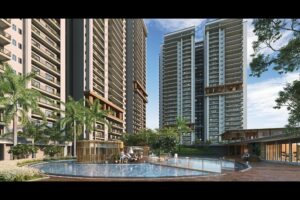
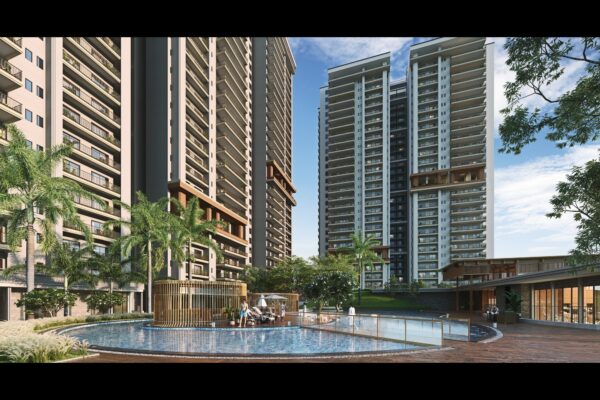
Developers have noticed. The boom of amenity-rich towers across Mulund, Thane, Andheri and the extended Western suburbs is not accidental. Sky lounges, co-working pods, rooftop yoga decks, pet-friendly zones and curated retail at the podium level, these are not luxuries being generously bestowed upon buyers. They are responses to explicit demand signals. What the amenity arms race actually reflects is something more psychologically complex than a checklist of conveniences. It reflects the buyer’s desire to purchase a community and a rhythm, not merely a legal title over four walls. When a buyer in Goregaon pays extra for a project with a Japanese-inspired zen garden and a sleek co-working lounge they are not paying for marble countertops. They are purchasing admission into a version of life that feels intentionally curated. This marks a sharp departure from earlier generations of Mumbai homebuyers for who viewed a property mainly as a way to park wealth and signal social arrival. The EMI was a form of disciplined sacrifice towards an appreciating asset. Today’s buyer, burdened by the same EMI logic, increasingly asks: “Will I actually enjoy living here not eventually, but now?”
Walkability, the Urban Village, and the Death of the Car-Dependent Dream
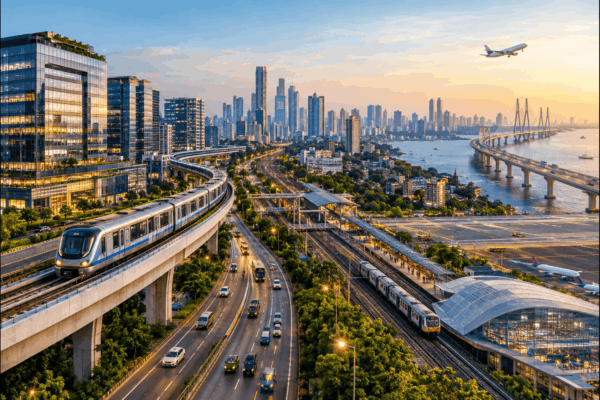
Perhaps the most telling indicator of this value shift is the renewed premium placed on walkability and neighbourhood character. The hyperconnected, car-dependent suburb which defined aspirational living from the 1990s through the 2010s, is losing its grip on the imagination. Micro-markets like Versova, Mahim, Matunga and parts of the eastern suburbs that possess genuine neighbourhood texture, street-level commerce, cultural institutions, diverse food ecosystems and a certain unplanned vitality are being reassessed by buyers who once would have dismissed them as insufficiently “developed.” The embedded life of these localities, their capacity to be navigated on foot, their resistance to the homogenisation of gated-community living, now reads as a feature rather than a flaw. This is, in part, a global phenomenon. The urban planning literature has long documented the human cost of car-dependency and the social thinness of purely residential suburbs. Mumbai buyers appear, slowly and unevenly, to be internalising that critique or at least its experiential consequences.
The Interior Turn: Designing for Living, Not Listing
Inside the home itself, the shift is equally pronounced. Interior designers working in the mid-to-luxury segment report a consistent pattern: clients are increasingly resistant to the “show home” aesthetic, the interiors optimised for a listing photograph and more invested in spaces that function beautifully for actual daily use. Smaller, better-designed homes are being chosen over larger ones with awkward proportions. A well-considered 650-square-foot apartment with generous ceiling height, intelligently placed storage, and a kitchen that functions as a social space is now preferred, by a significant segment, to an 800-square-foot unit that wastes space in corridors and poorly lit bedrooms. Function, as a design principle, has been reclaimed from the purely pragmatic and elevated to the aspirational.
A City Learning a New Language of Home
None of this suggests that size no longer matters in Mumbai’s real estate market. It does, manifestly, particularly for families with children, multi-generational households, and buyers in price-sensitive brackets where every square foot represents a genuine financial calculation. The structural realities of Mumbai’s land economics have not dissolved. But the cultural centre of gravity is shifting. The buyer who enters a developer’s sales office today carries a different set of questions about how the apartment handles afternoon heat, where natural light falls in winter, whether the building’s community actually coheres into something resembling neighbourliness alongside the inevitable ones about floor area and per-square-foot rates. This is not a rejection of the city’s fundamental bargain. It is a renegotiation of its terms. Mumbai’s homebuyers are not abandoning ambition; they are redirecting it from the measurement of space to the experience of it. In a city that has always made compression feel like energy, that may be the most natural evolution of all.
Tags