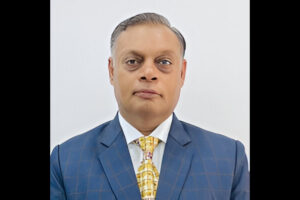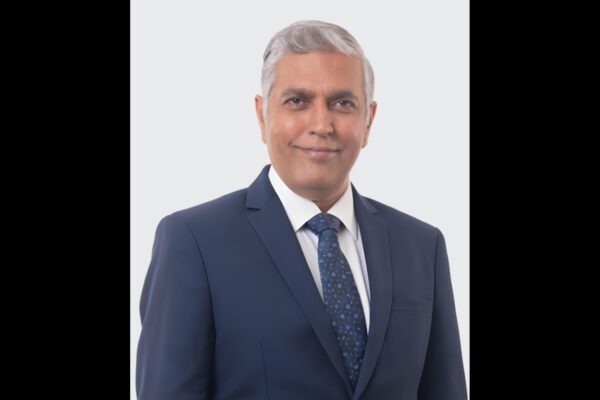

Interview: Peeyush Narang, Managing Director of Membrane Group India

With water scarcity becoming a growing concern across India, can wastewater treatment, water reuse and resource recovery emerge as the cornerstone of the country’s long-term water security strategy? How is your organisation contributing to this transformation?
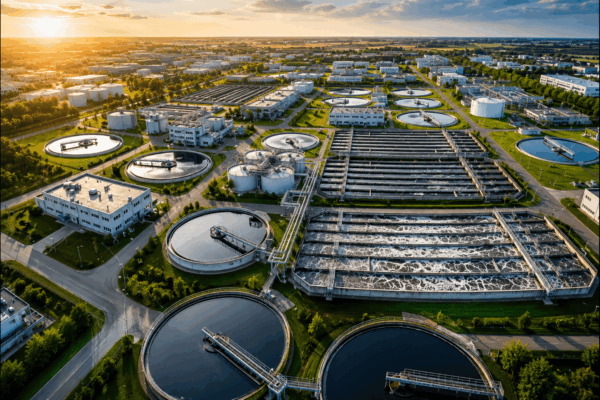
India’s water challenge is no longer just about availability, it is about sustainable management of available resources. With increasing industrialization, urbanization and climate variability, industries must shift from being consumers of freshwater to becoming stewards of water resources. Wastewater treatment, recycling and resource recovery will undoubtedly become the cornerstone of India’s long-term water security strategy. Every liter of wastewater recycled reduces dependence on freshwater sources while also reducing pollution of rivers and groundwater. At the same time, wastewater contains valuable resources such as water, chemicals, salts, metals and energy that can be recovered instead of discarded. Sustainability is at the core of everything we do. We have delivered more than 300 wastewater recycling plants and over 150 Zero Liquid Discharge (ZLD) systems across diverse industries. Our solutions help industries recycle over 90–95% of wastewater, significantly reducing freshwater intake while recovering valuable resources wherever feasible. We believe the future lies in creating circular water systems where wastewater is viewed as a resource rather than a waste stream. Our focus is not only on maximizing water recovery but also on designing solutions that deliver the lowest lifecycle cost, enabling industries to secure a reliable and sustainable water supply at an economically competitive cost. We believe the future lies in creating a circular water economy where wastewater is viewed not as waste, but as a valuable resource. By combining advanced membrane technologies, intelligent process design and resource recovery, we are helping industries become more resilient while contributing to India’s long-term water security.
Membrane technologies are playing an increasingly important role in wastewater treatment and water reuse. What are the latest advancements in membrane technology, and how is your organisation leveraging them to improve treatment efficiency and resource recovery?
Membrane technology has evolved tremendously over the past decade. Improvements in membrane chemistry, fouling resistance, energy efficiency and digital monitoring have significantly enhanced system reliability and lifecycle economics. Today, we are seeing wider adoption of advanced ultrafiltration membranes, low-energy reverse osmosis membranes, membrane bioreactors (MBR), Ultra-high pressure Reverse osmosis membranes and selective membranes for resource recovery. Digital monitoring, predictive maintenance and AI-based performance optimization are further improving membrane performance. We believe the future of water treatment lies at the intersection of advanced membrane technologies and artificial intelligence. We are increasingly integrating AI-enabled monitoring, predictive maintenance and data-driven process optimization with our membrane systems to maximize water recovery while minimizing energy consumption and operating costs. Intelligent analytics help predict membrane fouling, optimize chemical cleaning, improve recovery rates and enhance overall plant performance. This enables industries to operate more efficiently, reduce lifecycle costs and move closer to autonomous, self-optimizing water treatment systems.
Industries are under increasing pressure to reduce freshwater consumption and meet stricter environmental regulations. How are advanced water treatment technologies helping industries achieve these objectives, and how is your organisation supporting this transition?
Industries today face a combination of regulatory, operational and economic pressures. They are expected to reduce freshwater consumption, comply with increasingly stringent discharge norms and demonstrate measurable progress toward their sustainability goals. At the same time, the cost of sourcing raw water is increasing in many regions due to scarcity, higher tariffs, longer transportation distances, groundwater restrictions and the need for additional pretreatment. In several industrial clusters, the availability and quality of freshwater are also becoming less predictable. This makes water security not only an environmental issue but also a critical business continuity concern. Our Proprietary technologies such as MEMVAP, MEMSCRUB and LOWVAP are helping industries address these challenges by enabling wastewater recycling, high-recovery reuse and Zero Liquid Discharge. In many cases, recycled water through our system is produced at a cost that is competitive with or even lower than the total cost of procuring, transporting, treating and managing fresh water. This is changing the perception of wastewater recycling from a compliance expense into a strategic investment that improves resilience and reduces long-term operating costs. We work with customers to develop integrated water management solutions rather than standalone treatment plants. We evaluate the complete water cycle from raw-water intake and process-water generation to wastewater treatment, recycling, reuse and resource recovery. Our objective is to help industries minimize their freshwater dependence, reduce discharge, comply with regulations and secure a reliable long-term source of process water at the lowest sustainable lifecycle cost. Whether it is an ultrapure water system for a Solar Photovoltaic Cell facility, wastewater recycling for a pharmaceutical manufacturing plant, or a ZLD solution for an Automobile industry, we believe sustainability and commercial viability must go hand in hand.
Zero Liquid Discharge (ZLD) is gaining momentum across water-intensive industries. How do you see its adoption evolving in India, and what innovations is your organisation introducing to make ZLD systems more efficient and commercially viable?
ZLD is rapidly moving from being a regulatory requirement to becoming a strategic business investment. Industries are increasingly recognizing that recovering water is often more economical than securing additional freshwater sources. The next phase of ZLD adoption will focus on improving economics through higher recoveries, lower energy consumption and greater resource recovery. Innovations such as LOWVAP which is based on mechanical vapor recompression (MVR), advanced membrane concentration, intelligent process control and selective salt recovery will significantly reduce lifecycle costs. We have extensive experience in implementing ZLD across multiple industries. Our focus is on optimizing every stage of the treatment process to minimize evaporation loads, reduce energy consumption and maximize water recovery. We are also working towards integrating chemical and resource recovery into ZLD systems to improve overall project economics.
The rapid growth of sectors such as semiconductors, batteries, green hydrogen and pharmaceuticals is driving demand for high-quality process water. How is your organisation preparing to address the evolving water and wastewater treatment requirements of these industries?
India’s emergence as a global manufacturing hub for semiconductors, advanced electronics, battery manufacturing, green hydrogen and pharmaceuticals presents an unprecedented opportunity for the water industry. These sectors are not only driving demand for higher volumes of water but also for significantly higher standards of water quality, reliability and sustainability. For industries such as semiconductors and advanced electronics, ultrapure water (UPW) is a critical utility that directly impacts product quality, manufacturing yield and operational reliability. At the same time, these facilities are expected to maximise water recycling and minimise environmental impact through advanced wastewater treatment and resource recovery. Recognizing this opportunity, we have established a joint venture with Kurita Water Industries, Japan, one of the world’s leading water technology companies. Through Kurita Membrane India, we are combining Kurita’s global expertise in ultrapure water technologies, specialty chemicals and advanced water treatment with Membrane Group’s strong engineering, manufacturing and project execution capabilities in India. This partnership enables us to deliver world-class solutions for India’s rapidly expanding semiconductor and advanced electronics manufacturing ecosystem. Beyond semiconductors, we are actively serving other high-growth sectors such as batteries, green hydrogen and pharmaceuticals, where reliable high-purity process water and sustainable wastewater management are equally critical. Our expertise in Ultra Pure Water – MEMPURE System, high-recovery wastewater recycling- MEMVAP and Zero Liquid Discharge (ZLD)- LOWVAP allows us to provide integrated solutions that meet the most stringent global quality standards while reducing freshwater consumption and improving overall sustainability. We believe water infrastructure will be a key enabler of India’s advanced manufacturing ambitions. By combining global technology partnerships, advanced membrane systems and innovative water management solutions, Membrane Group is committed to supporting the country’s journey towards becoming a global manufacturing powerhouse while ensuring sustainable use of water resources.
As India moves towards a circular water economy, what policy and regulatory changes would encourage wider adoption of membrane technologies, wastewater recycling and Zero Liquid Discharge (ZLD) systems?
A supportive policy framework will be essential to accelerate adoption. Firstly, treated wastewater should increasingly be recognized as an alternative water source rather than merely an environmental compliance requirement. Secondly, industries investing in water recycling and ZLD should receive incentives similar to those available for renewable energy and energy-efficient technologies. Thirdly, regulatory frameworks should progressively encourage higher levels of wastewater reuse rather than focusing solely on discharge quality. Finally, developing national standards for industrial water reuse and encouraging public-private partnerships in wastewater recycling would significantly accelerate implementation. Policy should reward industries that conserve water rather than simply penalizing those that discharge wastewater.
Looking ahead, what are your organisation’s strategic priorities over the next five years, and how will they contribute to advancing sustainable water management and strengthening India’s water security?
Over the next five years, our strategy is centred around four key priorities. The first is expanding our leadership in high-growth sectors such as semiconductors, advanced electronics, solar photovoltaic manufacturing, green hydrogen and pharmaceuticals, where advanced water treatment plays a mission-critical role. The second is strengthening our capabilities in wastewater recycling, Zero Liquid Discharge (ZLD) and resource recovery to support India’s transition towards a circular water economy. The third is accelerating the adoption of automation, artificial intelligence and digital water management across our solutions. We believe the future of the water industry lies in intelligent and connected treatment systems that continuously monitor plant performance, predict equipment and membrane health, optimize chemical and energy consumption, and enable predictive maintenance through AI-driven analytics. By integrating automation and digital monitoring into our solutions, we aim to help customers improve reliability, maximize water recovery, reduce operating costs and make faster, data-driven operational decisions. Finally, we are making significant investments to expand our manufacturing capabilities. We firmly believe that India has the potential to become a global solutions hub for advanced water and wastewater treatment technologies. As industries around the world seek sustainable and cost-effective water solutions, India is uniquely positioned with its engineering talent, manufacturing capabilities and innovation ecosystem to serve global markets. To support this vision, we are expanding our manufacturing capacity by five times over the coming years. This investment will enhance our ability to deliver larger, more complex and technology-intensive projects, while strengthening our capabilities to serve customers not only across India but also in international markets. We believe India’s future water security will depend not only on building more treatment plants but on building smarter, more sustainable water ecosystems. At the same time, we see India emerging as a global center for innovation and manufacturing in the water sector. We are committed to contributing to both these journeys by delivering innovative technologies that conserve water, recover resources and enable sustainable industrial growth in India and around the world.
Tags