India’s Next Water Revolution Must Focus on Quality Not Just Supply

by Yashovardhan Agarwal, Managing Director, Welspun BAPL and Director, Sintex
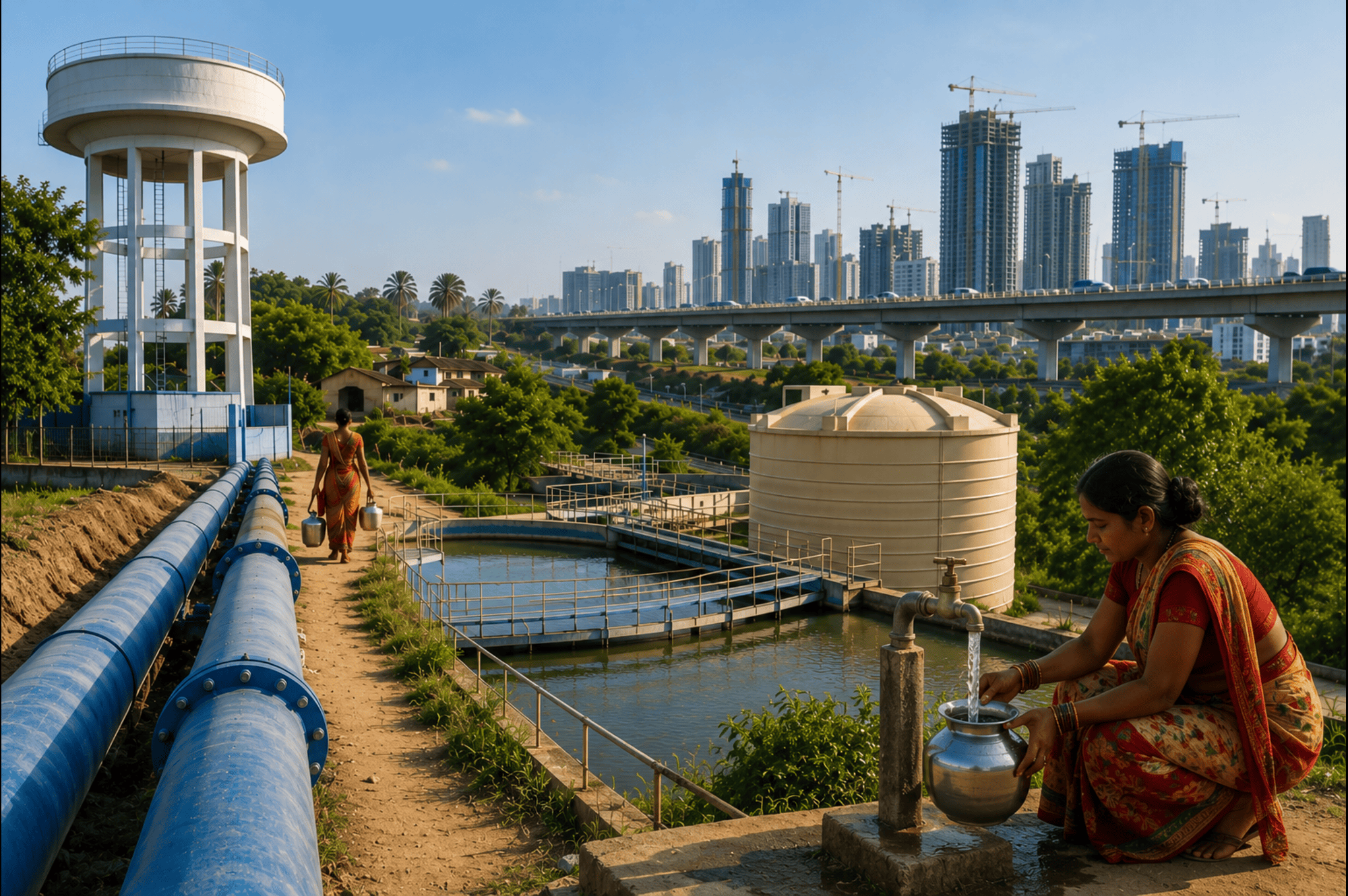
India’s infrastructure story is being rewritten at an unprecedented pace. From highways to urban systems, the country is building with intent and urgency. Within this transformation, one of the most significant achievements has been in water bringing piped access to millions of households in a short span of time. Flagship initiatives such as the Jal Jeevan Mission have catalysed this shift, expanding rural tap water coverage from 17% in 2019 to over 80% today, reaching more than 15 crore households. The impact goes well beyond infrastructure easing the burden of water collection for millions of women and improving health and hygiene outcomes at scale. Today Water is not just a resource; it will be the base layer of India’s growth.
This is a structural transformation one that deserves recognition. But infrastructure, by itself, does not guarantee outcomes. Water is unlike most utilities. It can begin clean at the source and become unsafe by the time it reaches the end user. As India scales access, the challenge is no longer limited to delivery; it is about ensuring that water remains safe across its entire journey, from source to storage to consumption. Today Water security is not just about availability, but ensuring water is clean, reliable, and safe at the point of use. Across the system, risks persist. Distribution pipelines are vulnerable to leakages and pressure fluctuations, storage systems vary widely in quality and maintenance, and materials used are not always standardised for potable water. Each of these factors introduces uncertainty into what should be a reliable system, creating a growing gap between access and assurance.
For decades, India’s water challenge has been framed around scarcity. Today, as access improves, the more pressing question is one of performance whether the water reaching households is truly safe to use. In many parts of the country, supply remains intermittent, making storage an essential part of daily life. Yet storage is also where water is most vulnerable. Exposure to heat, degradation of materials, and inadequate maintenance can compromise quality over time. In effect, the safety of water is often determined not at the source, but at the point where it is stored. Even treated water can deteriorate as it moves through ageing or poorly maintained distribution systems, and in several urban centres, a significant share of water is lost before it reaches consumers.
These challenges are not isolated they are systemic. Addressing them requires a shift in how water infrastructure is understood and managed. Expansion must now be complemented by standardisation, monitoring, and lifecycle performance. Materials used in storage and distribution must be designed specifically for potable water and for Indian climatic conditions, while systems must be built not just for installation, but for long-term reliability. Technology offers promising solutions, from real-time monitoring to advances in material science, but adoption remains uneven and scale is yet to be achieved.
Equally important, however, is recognising that this is not purely an engineering problem. Insights from the World Economic Forum highlight that India’s water systems are under strain not only due to infrastructure gaps, but also because engineering solutions are often not complemented by institutional, behavioural, and cultural shifts. Issues such as pilferage, improper storage practices, and lack of awareness around contamination risks are frequently human-induced, whether intentional or otherwise. This makes it clear that water security is as much about behaviour and governance as it is about infrastructure.
The way forward, therefore, must be both technical and systemic.
• Design for Life: Policy has a critical role to play in setting and enforcing certified materials, monitoring water quality, and embedding accountability across the value chain that reflect real operating conditions.
• Digitise the Network: Investments in technology must be scaled to enable real-time tracking and early detection of risks and leaks, adopt DMAs and check water quality and intrusions before citizens feel them.
• Close the loop: Urban planning must move toward integrated water management, including wastewater reuse and circular systems, especially as cities continue to expand and demand intensifies. Focus on replenishing groundwater and ensuring that materials at the end of their life cycle return to value, not waste.
Equally, there is a need to drive behavioural change at the community level, encouraging responsible usage, safe storage practices, and collective ownership of water infrastructure.
Water sits at the intersection of public health, economic productivity, and urban resilience. Systems that deliver unsafe or inconsistent water impose hidden costs on healthcare systems, on industry, and on households themselves. Improving water quality is therefore not just a matter of infrastructure, but an economic and social imperative. India has already demonstrated its ability to build at scale. The opportunity now is to ensure that what has been built performs as intended. Because in water, the challenge is not just to deliver it, but to ensure that what is delivered can be trusted.
References:
Jal Jeevan Mission Dashboard: https://ejalshakti.gov.in/jjmreport/JJMIndia.aspx
PIB – Rural tap water coverage: https://pib.gov.in/PressReleasePage.aspx?PRID=2098651
India Water Portal: https://www.indiawaterportal.org/drinking-water/water-taps-at-every-doorstep-what-next
World Economic Forum: https://www.weforum.org/stories/2026/02/policy-culture-mindset-india-water-future/
PIB: https://www.pib.gov.in/PressReleasePage.aspx?PRID=2246883®=3&lang=2#:~:text=To%20enable%20every%…
Tags