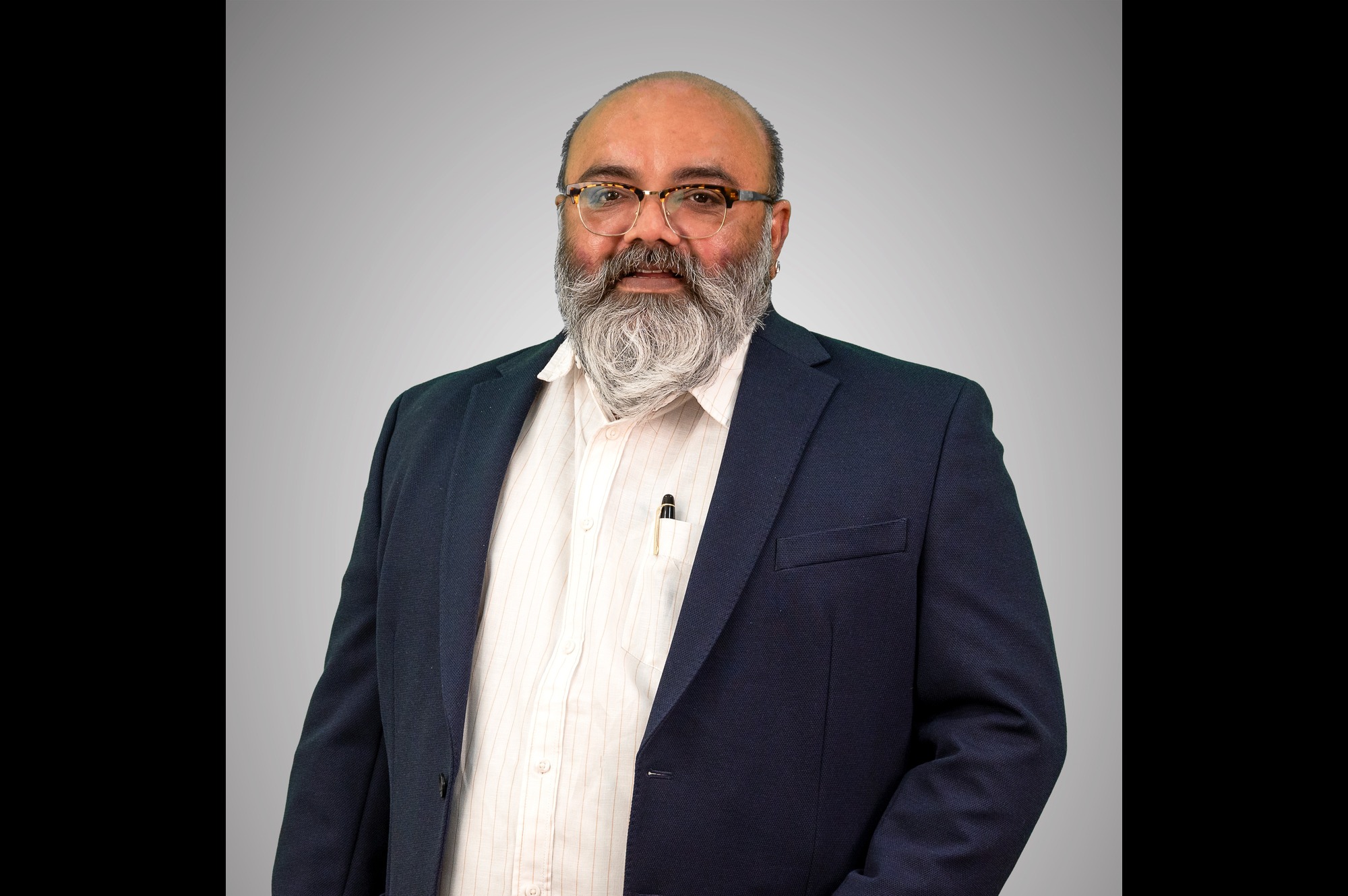
Interview: Nikhil Bhuta, Director, Belding India

Belding India has recently launched its indigenously developed Hybrid BESS, which promises to reduce diesel consumption by up to 80%. How has the market responded to the solution so far, and which sectors do you expect will drive its adoption?
The market response since the launch has been very encouraging. Potential customers have already started visiting our state-of-the-art manufacturing facility, spread across 9 acres, to understand our capabilities and share their specific operational challenges and problem statements. This is enabling us to work closely with customers to design Hybrid BESS solutions tailored to their energy and power requirements. We are currently working with three customers for whom we are developing prototypes as Proof of Concept (POC), with the objective of validating the solution in their respective operating environments before progressing towards larger-scale deployments. This early engagement gives us strong confidence in the market potential for Hybrid BESS. As renewable energy adoption continues to increase year-on-year across India, we believe Hybrid BESS can play an important role in making its widespread adoption more realistic and practical. By intelligently integrating renewable energy, battery storage, and conventional backup power, the solution can help address the intermittency challenges associated with renewables while providing customers with the reliability and flexibility required for mission-critical operations.
Belding India recently acquired Evolve IT Solutions, marking your entry into security screening technologies. What strategic synergies do you expect between this business and your existing portfolio in energy storage, data centres and defence?
The 100% acquisition of Evolve IT Solutions is an important strategic milestone that expands Belding India’s presence in the critical infrastructure ecosystem. The acquisition provides us with an established operational platform, and proven execution capabilities in the security screening segment. Leveraging Evolve IT’s existing infrastructure and expertise allows us to optimise capital deployment while accelerating revenue growth. Security is becoming increasingly integrated with power, digital infrastructure, and operational resilience. By combining security screening technologies with our expertise in energy storage, and data centre infrastructure, we can offer customers more comprehensive, integrated solutions. Whether it is airports, ports, logistics hubs, defence establishments, government facilities, or data centres, customers increasingly prefer a single technology partner capable of delivering multiple critical infrastructure solutions. The acquisition also strengthens our defence portfolio, where secure infrastructure, reliable power, and advanced screening technologies are all essential components of mission-critical operations.
Your recent joint venture with HD Fabcon signals a stronger focus on large-scale renewable energy and BESS projects. What role will this partnership play in expanding Belding’s EPC and project execution capabilities?
The JV with HD Fabcon is a strategic step to strengthen Belding India’s end-to-end capabilities, particularly from a marketing, sales, commissioning, and execution perspective. While Belding has strong capabilities in product development and manufacturing, HD Fabcon brings valuable expertise in customer engagement, project execution, on-site commissioning, and after-sales support. This enables us to offer a seamless, end-to-end solution which is from design and manufacturing to installation, commissioning. In the defence sector, execution capability and timely deployment are just as important as technology. HD Fabcon’s established relationships, field experience, and execution expertise enhance our ability to participate in larger defence programs and deliver mission-critical projects with greater efficiency and reliability. Beyond defence, this integration also strengthens our ability to execute complex energy storage and critical infrastructure projects by combining Belding’s technology strengths with HD Fabcon’s execution and customer-facing capabilities. This creates a stronger platform for scaling our business while ensuring consistent quality and faster project delivery.
The government continues to emphasise ‘Make in India’ and localisation of advanced technologies. How is Belding India strengthening indigenous manufacturing capabilities in areas such as energy storage, power electronics and critical infrastructure technologies?
Indigenisation is a core pillar of our long-term strategy. We strongly believe that India has the talent, engineering capability, and manufacturing ecosystem to develop world-class technologies locally rather than relying on imports. Our focus is on increasing local value addition across energy storage systems, intelligent energy management, and critical infrastructure technologies. We continue to invest in product development, manufacturing capabilities, supply chain localisation, and engineering talent. For us, localisation is not just about manufacturing in India but about creating intellectual property, strengthening the domestic supply chain, and building technologies that are designed to address Indian operating conditions while remaining globally competitive. This approach enables us to innovate faster, respond more quickly to customer requirements, and contribute to the broader vision of Make in India by creating advanced technology products that can serve both domestic and international markets.
Looking ahead to 2030, what are Belding India’s key priorities, and how do you envision the company contributing to India’s infrastructure development and energy transition?
Our vision is to position Belding India as a leading indigenous OEM for Edge and Modular Data Centre infrastructure and Battery Energy Storage Systems (BESS) in India, while also establishing ourselves as a trusted global delivery partner for international markets. To achieve this, we will continue to grow both organically and inorganically by investing in new technologies, expanding our product portfolio, and strengthening our end-to-end capabilities. Our objective is to become a one-stop technology partner for customers across the critical infrastructure ecosystem. Currently, we are already a highly integrated solutions provider. Except for battery cells, the entire value chain is managed in-house. From battery pack assembly and module integration to developing cooling plates, integrating fire protection systems, power conditioning and distribution equipment, energy management systems (EMS), and the design and fabrication of complex containerised solutions everything is managed in-house. This level of vertical integration enables us to deliver superior quality, faster innovation, and greater customisation while maintaining complete control over product performance. With our existing 3 GWh battery assembly line and advanced data centre integration capabilities, we will continue to expand our manufacturing capacity and technology capabilities to meet the rapidly growing demand for resilient energy and digital infrastructure. Our long-term ambition is to establish Belding India as one of India’s leading indigenous OEMs in the Edge Data Centre and BESS sectors, supporting both the country’s infrastructure transformation and global markets with world-class, Made-in-India solutions.
Tags