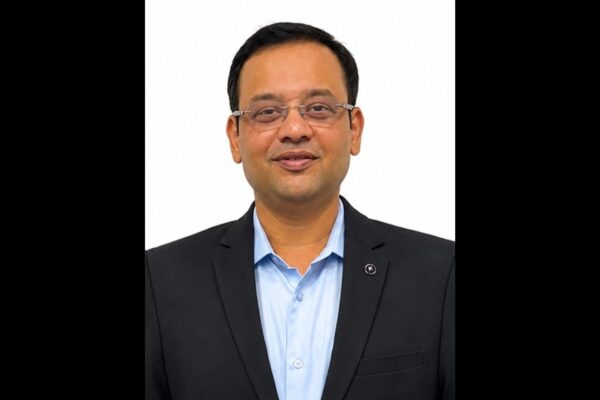

Interview: Akshit Bansal, Founder & CEO, Statiq

As a leading player in EV charging infrastructure, what are the key challenges you are facing today in scaling the charging network, particularly in terms of utilisation, power availability and the economics of operating charging stations?
The challenge today is not simply to install more chargers, but to build a network that is reliable, well-utilised and commercially sustainable. Public charging utilisation in India is still relatively low, with industry estimates placing it in the 1–5% range in many cases. At these utilisation levels, recovering the cost of land, equipment, electricity, grid connectivity, maintenance and day-to-day operations remains challenging. For operators, therefore, the focus has to be on deploying the right charger, at the right location and for the right use case, rather than pursuing charger numbers alone.
Power availability and timely grid connectivity become particularly important as demand shifts towards higher-capacity fast charging. We see data-led site selection, better demand forecasting, appropriate charger sizing and higher utilisation of existing assets as critical to improving the economics of the network. Different locations will also require different models, whether it is destination charging, highway fast charging, workplace charging or high-utilisation fleet infrastructure. The objective should be to create charging networks that can scale sustainably as EV adoption grows.
With charging infrastructure becoming increasingly digital, what innovations is Statiq bringing through its charging software and app to improve charger discovery, availability, payments, network management and the overall user experience?
We see software as an essential layer of the charging ecosystem because the quality of the user experience depends on more than the physical charger. Through the Statiq app, users can discover nearby charging stations, view real-time charger status, filter and navigate to suitable chargers, make digital payments and track their charging activity. The platform also offers features such as Flux and Autocharge to make charging more convenient and predictable. Flux is a paid feature that allows drivers to block power sharing on a multi-connector charger, ensuring that their vehicle receives the charger’s full available power throughout the session. Autocharge allows enrolled CCS vehicles to start charging automatically on supported Statiq chargers. It is available on some chargers manufactured by Statiq and does not work on roaming partner networks.
For operators and charging-network owners, Statiq’s Charging Station Management System provides real-time visibility into charger status, availability, charging sessions, transactions, revenue, errors and operational performance. It also supports remote issue management, reporting and OCPP- and OCPI-compliant operations. Beyond individual networks, our EVlinq platform enables interoperability by connecting multiple charging networks through a single integration, helping CPOs, eMSPs, OEMs and fleet operators provide wider access to charging infrastructure without requiring multiple integrations. As the ecosystem expands, we believe interoperability, reliable data and intelligent network management will be central to making charging more accessible and scalable.
Looking ahead, as EV adoption and charging demand grow, how can the industry ensure that charging infrastructure keeps pace with demand? What infrastructure, technology and policy measures will be needed to bridge the gap between demand and supply?
India will need a diversified charging network that grows in line with actual EV usage patterns. This means a combination of home and workplace charging, destination charging, public city infrastructure, highway fast charging, and dedicated infrastructure for fleets and commercial vehicles. Deployment should increasingly be guided by EV density, traffic volumes, travel patterns, charging behaviour and local power availability. The September 2025 Operational Guidelines for Deployment of EV Public Charging Stations under the PM E-DRIVE Scheme also emphasise feasibility-based identification of charging locations and demand aggregation.
The next phase will require faster and more predictable grid connections, adequate upstream power infrastructure, smart energy management, greater interoperability and greater use of renewable energy where viable. Policy can further support this by simplifying approvals, enabling timely electricity connections, improving access to suitable locations and encouraging charging deployment in underserved markets. The broader regulatory framework should also continue to evolve in line with the changing needs of the charging ecosystem.
Ultimately, the industry needs to move beyond measuring progress by the number of chargers installed. The focus should be on building a network that is reliable, accessible, interoperable, adequately utilised and commercially sustainable. That will be critical to ensuring charging infrastructure keeps pace with the growth of electric mobility in India.