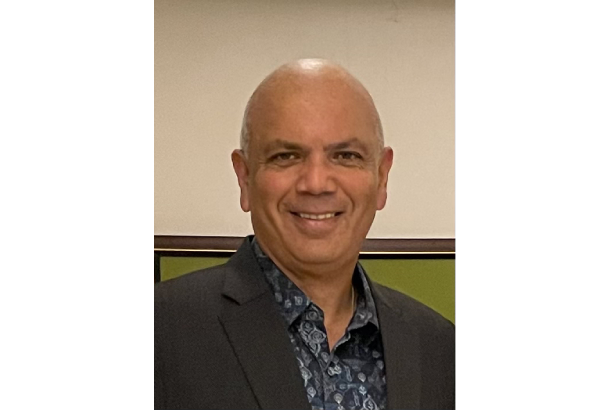

Interview: Ganesh Mani, Chief Executive Officer, SWITCH Mobility

As electric vehicles move towards wider adoption, what kind of charging infrastructure will be required to support their growth, particularly in terms of charging capacity, availability and turnaround time?
India’s charging infrastructure has made significant progress over the last few years and is increasingly supporting large-scale electric bus deployments. Public charging infrastructure has already crossed 30,000 charging points nationwide, and this is expected to expand further as EV adoption grows. Under the PM e-Drive scheme alone, the government has provisioned support for 88,500 charging sites, reflecting a deliberate effort to build out charging capacity in step with vehicle deployment. For electric buses, however, the focus is not just on public charging but also on depot charging, grid readiness and utility coordination. These are critical for ensuring reliable operations at scale, particularly for high-utilisation fleets. Government support has been the biggest driver. Programmes such as PM e-Drive, PM e-Seva and earlier FAME schemes have accelerated adoption. The infrastructure therefore needs to move beyond simply increasing the number of charging points to creating a dependable network with the right capacity at the right locations. The Central Electricity Authority’s distribution planning criteria specifically recognise the requirements of heavy-duty EVs such as buses and trucks, recommending fast-charging facilities at strategic intervals on highways and identifying transport nagars and bus depots as suitable locations within cities.
Looking ahead, what infrastructure and policy changes will be needed to support the large-scale adoption of electric vehicles in India, and what role can manufacturers such as Switch Mobility play in this transition?
The next phase of EV adoption will require a coordinated approach across charging infrastructure, electricity distribution, public transport planning and policy support. Greater predictability in grid connections, timely availability of power infrastructure and continued development of charging facilities across urban centres and key transport corridors will be important. The Government has already established an important foundation through PM E-DRIVE, including support for 14,028 e-buses and ₹2,000 crore for nationwide EV public charging infrastructure. Another key priority is to make charging infrastructure more affordable for commercial vehicle operators. Charging costs need to be reduced or subsidised to improve the overall economics of electric mobility in this segment. OEMs can work closely with the Bureau of Energy Efficiency (BEE), charging infrastructure providers and other relevant stakeholders to explore ways to bring down charging costs or introduce subsidies, making charging infrastructure more accessible and commercially viable. At SWITCH Mobility, we are well positioned in two key growth segments: electric buses and e-LCVs. We are combining purpose-built EV platforms, connected vehicle technology and strong lifecycle support with the manufacturing and service ecosystem of Ashok Leyland. We are offering products in segments where electrification is commercially viable today, while building scalable and reliable mobility solutions for the next phase of EV growth in India. Ultimately, the objective should be to build an ecosystem in which the vehicle, charging network and power infrastructure work together efficiently, making electric mobility increasingly reliable, affordable and scalable for commercial applications.
Tags