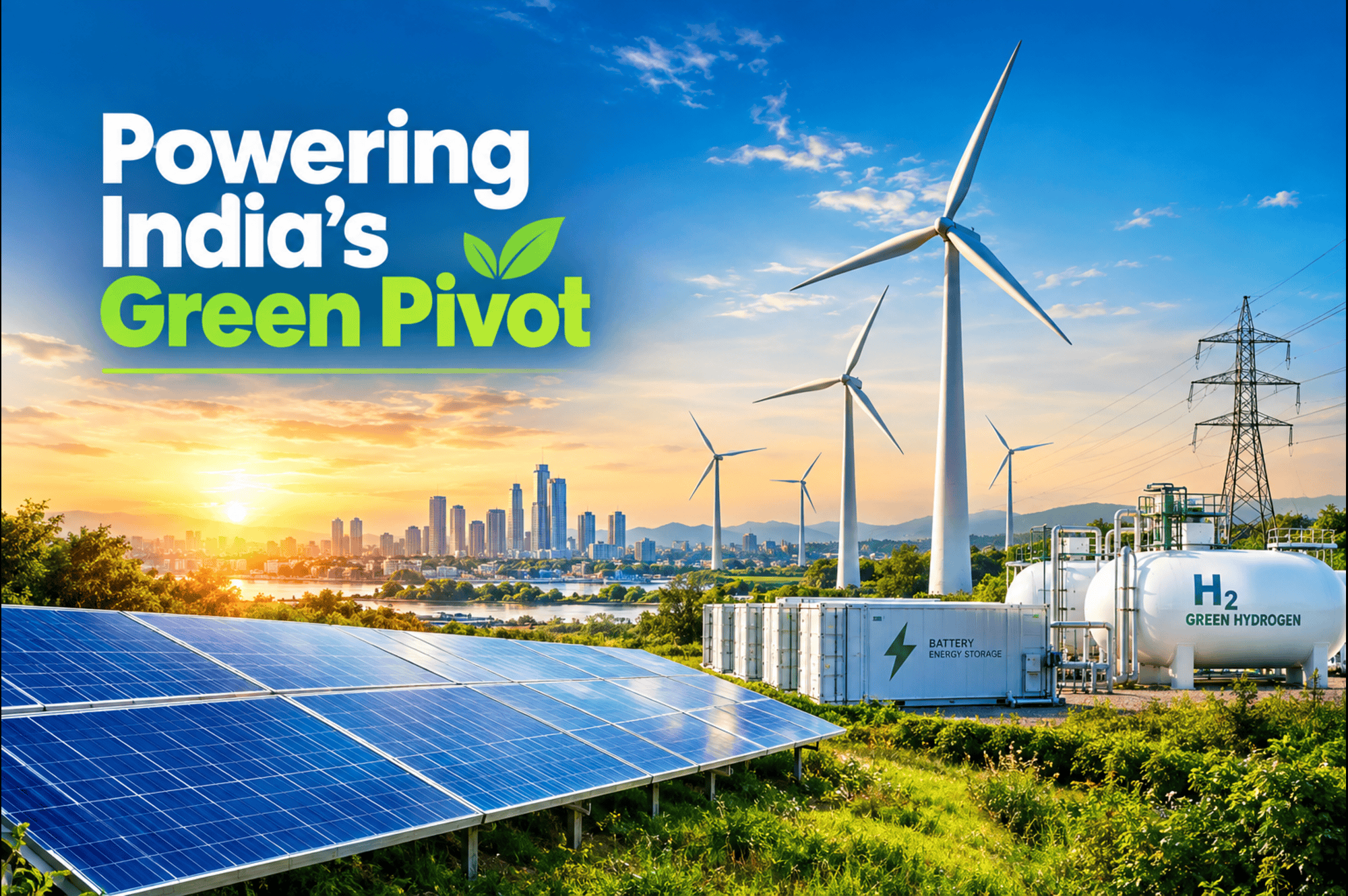
Clean Energy: Powering India’s Green Pivot

Renewables are moving from the margins to the mainstream, rewriting the rules of the power market. From mega solar parks to battery-backed grids, clean energy is entering its most consequential phase yet
India’s clean-energy transition is moving beyond the language of climate commitments and into the balance sheets of some of the country’s biggest businesses. Solar parks, wind farms, battery storage and green-hydrogen projects are drawing billions of dollars in investment, while companies across power, infrastructure, manufacturing and finance are repositioning themselves for an economy that is steadily becoming less dependent on fossil fuels. What was once largely a policy-driven shift is increasingly turning into a contest for capital, technology and market share.
The scale of the opportunity, however, comes with an equally complex business equation. India needs to expand renewable generation rapidly while keeping electricity affordable, strengthening transmission networks and building storage capacity for a grid increasingly reliant on intermittent power. Developers face pressure over land, financing and project execution, while manufacturers are racing to establish domestic supply chains for solar modules, batteries and other critical clean-energy equipment. The transition is therefore creating winners and risks well beyond the traditional power sector.
For corporate India, the question is no longer whether the energy transition will happen, but who will capture its economic value—and who may be left carrying the costs of a system in transition. As government incentives, private investment and global demand for low-carbon products converge, clean energy is emerging as one of the defining industrial stories of the decade. The decisions being made today—from where capital is deployed to which technologies receive backing—could determine the shape of India’s energy market, manufacturing ambitions and corporate competitiveness for years to come.
The Power Shift
India’s clean-energy story has undergone a fundamental transformation over the past decade. What was once largely viewed as an alternative to conventional power has steadily become a core component of the country’s electricity strategy. The shift has been particularly dramatic in solar, where installed capacity has risen from just 2.82 GW in March 2014 to 168.04 GW by August 2026, according to the Ministry of New and Renewable Energy (MNRE). Wind, too, has expanded from about 21 GW in 2014 to 58.52 GW, turning renewable energy from a relatively small segment into a major pillar of India’s power infrastructure.
The pace of expansion has accelerated sharply in recent years. In 2025 alone, India added 49.12 GW of non-fossil power capacity, taking total non-fossil capacity to 266.78 GW, a 22.6% increase over 2024. Solar accounted for much of that momentum, with capacity rising 38.8% during the year to 135.81 GW, while wind capacity grew 13.2% to 54.51 GW.
The growth is no longer confined to large utility-scale projects. Rooftop solar is emerging as an increasingly important part of the market, bringing households and smaller businesses into the clean-energy economy. Under the PM Surya Ghar: Muft Bijli Yojana, more than 50 lakh households had benefited from rooftop installations by August 2026, with 14.8 GW of rooftop capacity commissioned under the programme. The scheme, backed by an outlay of ₹75,021 crore, illustrates how policy is pushing renewable adoption deeper into the consumer market.
The financial scale of the transition is also becoming harder to ignore. Between FY2014 and FY2026, India’s renewable-energy sector attracted approximately $45.72 billion in foreign direct investment, while domestic financial institutions deployed ₹12.32 lakh crore towards renewable-energy projects. The capital flowing into the sector is increasingly extending beyond generation to manufacturing, transmission, storage and newer areas such as green hydrogen.
The current market numbers underline the scale of that transformation. As of 31 July 2026, India had 300.50 GW of non-fossil installed electricity capacity, representing more than 54% of the country’s roughly 552 GW total installed capacity. Renewable energy accounted for 291.72 GW, comprising 164.59 GW of solar, 58.14 GW of wind, 57.24 GW of hydropower and 11.75 GW of bio-power. During FY2025-26 alone, India added a record 55.29 GW of non-fossil capacity, including 44.6 GW of solar and 6 GW of wind.
The numbers point to a market entering its next phase. India has already crossed the halfway mark towards its 500 GW non-fossil capacity target for 2030. The challenge now is not simply adding generation capacity, but integrating increasingly large volumes of renewable electricity through stronger transmission networks, storage and flexible power systems. In that sense, India’s clean-energy evolution is moving from a story of capacity creation to one of building an entirely new energy ecosystem.
Built Different
India’s clean-energy transition is beginning to leave a physical imprint on the country’s infrastructure landscape. Across deserts, reservoirs, rooftops and transmission corridors, projects are being designed not merely to generate renewable electricity but to change how that electricity is produced, stored, transmitted and consumed. The scale of these interventions is creating a new template for renewable-energy deployment in one of the world’s fastest-growing power markets.
The Solar Parks and Ultra Mega Solar Power Projects programme was among the early moves in this direction. Introduced by the Ministry of New and Renewable Energy in 2014, the initiative shifted large-scale solar development towards purpose-built renewable-energy zones, bringing land, roads, transmission and other infrastructure together around generation capacity. The original 20 GW target was later expanded to 40 GW. Projects such as Bhadla in Rajasthan, Pavagada in Karnataka and Rewa in Madhya Pradesh have since emerged as prominent examples of India’s ability to execute utility-scale solar projects.
The next wave is pushing the boundaries of where renewable energy can be generated. In July 2026, the Union Cabinet approved the Pradhan Mantri Surya Sarovar Yojana with an allocation of ₹5,070 crore for 5 GW of floating solar projects integrated with energy storage. The programme envisages at least two hours of storage, equivalent to 10,000 MWh. With MNRE estimating India’s floating-solar potential at more than 102 GWp, reservoirs and water bodies could become an important new frontier for renewable generation.
At the other end of the spectrum, the government is taking clean energy directly to households. PM Surya Ghar: Muft Bijli Yojana has brought rooftop solar into the mainstream consumer market. By August 2026, more than 50 lakh households had benefited from rooftop installations, with 14.8 GW of capacity commissioned. The significance goes beyond the numbers: the scheme is creating millions of small-scale electricity producers while reducing the distance between energy generation and consumption.
India is simultaneously building the grid required to connect these disparate sources. The Green Energy Corridor and expansion of the Inter-State Transmission System are being developed to support the integration of more than 500 GW of non-fossil capacity by 2030. Alongside transmission, battery storage, pumped-storage hydropower and renewable-energy hybrids are becoming central to the government’s strategy for managing the variability of solar and wind power.
This combination of mega-projects and distributed generation is what sets India’s clean-energy experiment apart. Renewable power is being deployed at both ends of the spectrum: in some of the world’s largest solar installations and on individual household rooftops. The government is also attempting to connect generation with storage, transmission and consumption rather than treating each component as a separate intervention.
The emerging benchmark, therefore, is not simply how much renewable capacity India can install. It is whether the country can build an electricity system in which clean power can move seamlessly from a solar park in Rajasthan, a floating installation on a reservoir or a rooftop in an urban neighbourhood to factories, businesses and households across the grid. That is the infrastructure challenge—and potentially the defining achievement—of India’s next phase of energy transitionIndia’s clean-energy transition is beginning to leave a physical imprint on the country’s infrastructure landscape. Across deserts, reservoirs, rooftops and transmission corridors, projects are being designed not merely to generate renewable electricity but to change how that electricity is produced, stored, transmitted and consumed. The scale of these interventions is creating a new template for renewable-energy deployment in one of the world’s fastest-growing power markets.
The Solar Parks and Ultra Mega Solar Power Projects programme was among the early moves in this direction. Introduced by the Ministry of New and Renewable Energy in 2014, the initiative shifted large-scale solar development towards purpose-built renewable-energy zones, bringing land, roads, transmission and other infrastructure together around generation capacity. The original 20 GW target was later expanded to 40 GW. Projects such as Bhadla in Rajasthan, Pavagada in Karnataka and Rewa in Madhya Pradesh have since emerged as prominent examples of India’s ability to execute utility-scale solar projects.
The next wave is pushing the boundaries of where renewable energy can be generated. In July 2026, the Union Cabinet approved the Pradhan Mantri Surya Sarovar Yojana with an allocation of ₹5,070 crore for 5 GW of floating solar projects integrated with energy storage. The programme envisages at least two hours of storage, equivalent to 10,000 MWh. With MNRE estimating India’s floating-solar potential at more than 102 GWp, reservoirs and water bodies could become an important new frontier for renewable generation.
At the other end of the spectrum, the government is taking clean energy directly to households. PM Surya Ghar: Muft Bijli Yojana has brought rooftop solar into the mainstream consumer market. By August 2026, more than 50 lakh households had benefited from rooftop installations, with 14.8 GW of capacity commissioned. The significance goes beyond the numbers: the scheme is creating millions of small-scale electricity producers while reducing the distance between energy generation and consumption.
India is simultaneously building the grid required to connect these disparate sources. The Green Energy Corridor and expansion of the Inter-State Transmission System are being developed to support the integration of more than 500 GW of non-fossil capacity by 2030. Alongside transmission, battery storage, pumped-storage hydropower and renewable-energy hybrids are becoming central to the government’s strategy for managing the variability of solar and wind power.
This combination of mega-projects and distributed generation is what sets India’s clean-energy experiment apart. Renewable power is being deployed at both ends of the spectrum: in some of the world’s largest solar installations and on individual household rooftops. The government is also attempting to connect generation with storage, transmission and consumption rather than treating each component as a separate intervention.
The emerging benchmark, therefore, is not simply how much renewable capacity India can install. It is whether the country can build an electricity system in which clean power can move seamlessly from a solar park in Rajasthan, a floating installation on a reservoir or a rooftop in an urban neighbourhood to factories, businesses and households across the grid. That is the infrastructure challenge—and potentially the defining achievement—of India’s next phase of energy transition
The Tech Imprints
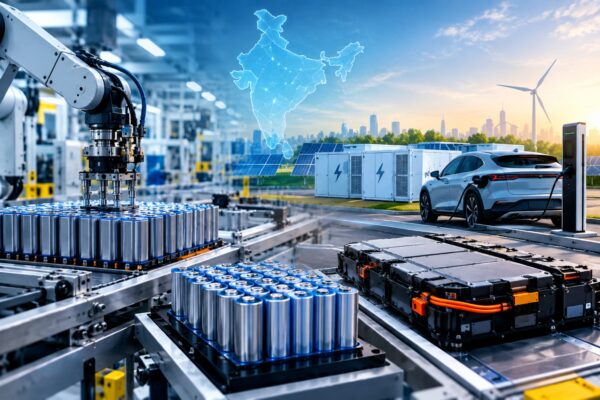
The next chapter of India’s clean-energy story is being written in laboratories, manufacturing plants and increasingly sophisticated power projects. The technology challenge is no longer simply how to generate more renewable electricity, but how to generate it more efficiently, store it for longer, move it across the grid and use it in sectors that have traditionally depended on fossil fuels.
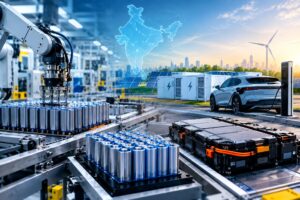
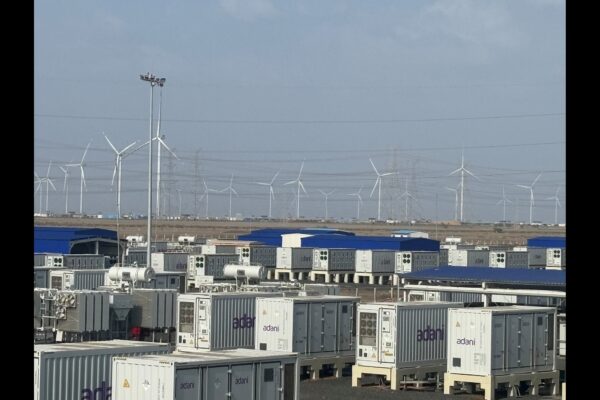
Energy storage is emerging as one of the most consequential shifts. India’s power planners estimate that the country could require 60.63 GW of storage capacity by 2029-30, comprising 41.65 GW of battery energy storage systems and 18.98 GW from pumped-storage projects. The government is therefore moving towards storage-backed renewable tenders, including projects designed to supply electricity during peak hours and firm and dispatchable renewable-energy contracts. This marks a change in the market: developers are increasingly being asked to deliver power when consumers need it, rather than simply when the sun shines or the wind blows.
Solar technology is also moving beyond conventional ground-mounted installations. The recently approved Pradhan Mantri Surya Sarovar Yojana plans 5 GW of floating solar projects paired with at least two hours of energy storage. The technology could allow reservoirs and industrial water bodies to become power-generation assets without competing for large tracts of land. With the National Institute of Solar Energy estimating around 102 GWp of floating-solar potential across suitable inland water bodies, the technology has considerable room to scale.
At the manufacturing end, India is also looking beyond today’s mainstream solar cells. MNRE-supported research programmes are exploring perovskite, tandem, thin-film and other next-generation photovoltaic technologies that could improve conversion efficiency and open new applications. Research projects at institutions including IIT Bombay are already working on flexible perovskite cells and the scale-up of perovskite tandem solar modules. At the same time, the government has extended the Approved List of Models and Manufacturers framework further upstream to solar ingots and wafers, signalling an effort to build a deeper domestic technology and manufacturing base.
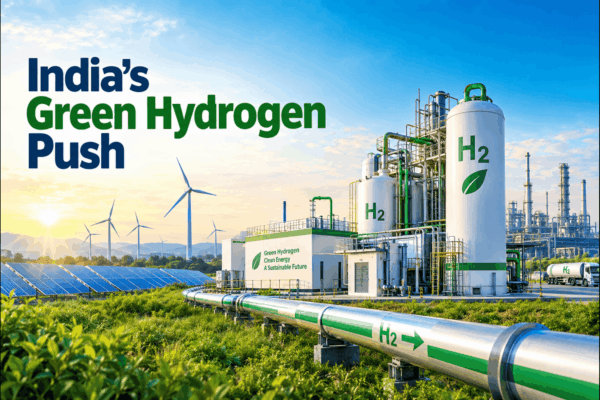
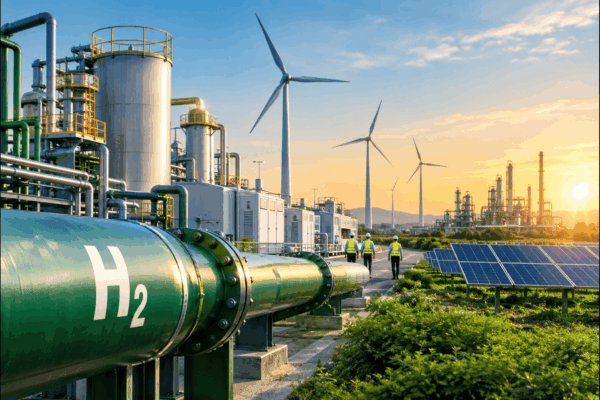
Green hydrogen represents another major technology frontier. Under the National Green Hydrogen Mission, India has awarded incentives for 3,000 MW a year of electrolyser manufacturing capacity and 8.62 lakh tonnes per annum of green-hydrogen production capacity. The technology is particularly relevant for industries such as steel, fertilisers, refining and shipping, where direct electrification can be difficult. In 2026, the government also launched hydrogen mobility pilots involving 70 hydrogen-powered vehicles across 21 routes, while India began operations of its first indigenous hydrogen fuel-cell train.
The technology shift is ultimately changing the definition of renewable energy itself. Solar panels and wind turbines remain the foundation, but the competitive edge is increasingly moving towards what sits around them: batteries, intelligent power systems, advanced materials, electrolysers, hybrid projects and digital controls. India’s clean-energy market is therefore evolving from a capacity race into a technology race—one where the ability to make renewable power reliable, flexible and industrially useful could determine the next generation of market leaders. The next chapter of India’s clean-energy story is being written in laboratories, manufacturing plants and increasingly sophisticated power projects. The technology challenge is no longer simply how to generate more renewable electricity, but how to generate it more efficiently, store it for longer, move it across the grid and use it in sectors that have traditionally depended on fossil fuels.
Energy storage is emerging as one of the most consequential shifts. India’s power planners estimate that the country could require 60.63 GW of storage capacity by 2029-30, comprising 41.65 GW of battery energy storage systems and 18.98 GW from pumped-storage projects. The government is therefore moving towards storage-backed renewable tenders, including projects designed to supply electricity during peak hours and firm and dispatchable renewable-energy contracts. This marks a change in the market: developers are increasingly being asked to deliver power when consumers need it, rather than simply when the sun shines or the wind blows.
Solar technology is also moving beyond conventional ground-mounted installations. The recently approved Pradhan Mantri Surya Sarovar Yojana plans 5 GW of floating solar projects paired with at least two hours of energy storage. The technology could allow reservoirs and industrial water bodies to become power-generation assets without competing for large tracts of land. With the National Institute of Solar Energy estimating around 102 GWp of floating-solar potential across suitable inland water bodies, the technology has considerable room to scale.
At the manufacturing end, India is also looking beyond today’s mainstream solar cells. MNRE-supported research programmes are exploring perovskite, tandem, thin-film and other next-generation photovoltaic technologies that could improve conversion efficiency and open new applications. Research projects at institutions including IIT Bombay are already working on flexible perovskite cells and the scale-up of perovskite tandem solar modules. At the same time, the government has extended the Approved List of Models and Manufacturers framework further upstream to solar ingots and wafers, signalling an effort to build a deeper domestic technology and manufacturing base.
Green hydrogen represents another major technology frontier. Under the National Green Hydrogen Mission, India has awarded incentives for 3,000 MW a year of electrolyser manufacturing capacity and 8.62 lakh tonnes per annum of green-hydrogen production capacity. The technology is particularly relevant for industries such as steel, fertilisers, refining and shipping, where direct electrification can be difficult. In 2026, the government also launched hydrogen mobility pilots involving 70 hydrogen-powered vehicles across 21 routes, while India began operations of its first indigenous hydrogen fuel-cell train.
The technology shift is ultimately changing the definition of renewable energy itself. Solar panels and wind turbines remain the foundation, but the competitive edge is increasingly moving towards what sits around them: batteries, intelligent power systems, advanced materials, electrolysers, hybrid projects and digital controls. India’s clean-energy market is therefore evolving from a capacity race into a technology race—one where the ability to make renewable power reliable, flexible and industrially useful could determine the next generation of market leaders.
Beyond Capacity
The scale of India’s renewable-energy build-out is impressive, but the transition is entering a more demanding phase. The central challenge is no longer capacity addition alone; it is making renewable power reliable, affordable and available when and where it is needed. Grid congestion, transmission readiness, land and financing constraints, intermittency and the still-developing economics of large-scale energy storage remain important hurdles. The government estimates that India could require 60.63 GW of energy-storage capacity by 2029-30, while the transmission network is being expanded to integrate increasingly larger volumes of non-fossil generation. Closing these gaps will require technology, capital and execution to move together, particularly as India moves towards its 500 GW non-fossil capacity ambition for 2030.
This is where platforms such as REI Expo 2026 can assume greater significance for the industry. As the renewable-energy market moves from a capacity race towards an ecosystem built around storage, smart grids, advanced solar technologies, green hydrogen, manufacturing and energy management, industry exhibitions can become important meeting points for technology providers, developers, investors, policymakers and buyers. The opportunity lies in turning these conversations into commercial partnerships and deployable solutions—whether through more efficient modules, battery systems, hybrid renewable projects, grid technologies or new applications for clean power. For a sector entering its next stage of maturity, REI Expo 2026 comes at a moment when the biggest opportunities may not lie in simply producing more renewable energy, but in finding smarter ways to integrate, store, distribute and use it.