
Interview: Dr. Uday Narang, Founder & Chairman, Omega Seiki Mobility

As an electric vehicle manufacturer, how do you see the charging infrastructure ecosystem in India evolving as EV adoption moves beyond the early-adopter phase?
India’s EV charging ecosystem is moving from an initial focus on creating charging points to building a more reliable, accessible and commercially viable charging network. As EV adoption moves beyond early adopters, the requirement will not simply be for more chargers, but for the right chargers in the right locations, with high uptime and a predictable charging experience. For an OEM such as Omega Seiki Mobility, this becomes particularly important as the market expands from personal mobility into commercial applications such as electric three-wheelers, buses and trucks. Commercial EV users operate on utilisation and uptime, and therefore charging infrastructure has to be integrated into the operational ecosystem rather than treated as a standalone infrastructure layer. We see the next phase being driven by a combination of public charging, workplace and fleet charging, depot-based charging and destination charging. High-utilisation segments will increasingly require dedicated charging infrastructure at logistics hubs, municipal facilities, bus depots, industrial clusters and fleet operating locations.
From an EV manufacturer’s perspective, what are the biggest gaps in India’s charging infrastructure today, particularly in terms of accessibility, availability and reliability?
The biggest gap today is not necessarily the absence of charging technology; it is the consistency and reliability of the charging experience. There are three areas that need greater attention. First is geographic accessibility. Charging infrastructure needs to expand beyond major metros and highways into Tier-II and Tier-III cities, industrial clusters, rural markets and commercial mobility corridors. This is particularly important for three-wheelers and small commercial EVs, which often operate within predictable local or regional routes. Second is availability and uptime. A charger being installed does not necessarily mean that it is available when an EV needs it. For commercial operators, an unreliable charger can translate directly into vehicle downtime and lost revenue. The industry therefore needs to start measuring charging infrastructure not just by the number of chargers installed, but also by parameters such as uptime, utilisation, turnaround time and service response. Third is grid readiness and power availability. As charging demand increases, especially for buses and trucks, charging infrastructure will require adequate electrical capacity, faster connections and better coordination with DISCOMs. In our view, the next phase should therefore move from a “charger-count approach” to an “availability-and-uptime approach.”
India has a diverse range of EVs with different charging requirements. How important are standardisation and interoperability in building a more seamless public charging ecosystem?
Standardisation and interoperability will be fundamental to scaling EV adoption. India has a diverse EV ecosystem spanning two-wheelers, three-wheelers, passenger vehicles, buses and trucks, and each segment can have different charging requirements. The objective should therefore be to create a system where consumers and fleet operators do not have to navigate unnecessary complexity between vehicle, charger, charging network and payment platforms. For the industry, interoperability should extend beyond the physical connector. It should include communication protocols, authentication, payment systems, charging information, roaming across networks and real-time visibility of charger availability. For commercial EVs, this becomes even more important. Fleet operators need confidence that vehicles can access charging infrastructure across different locations without being locked into fragmented networks. At the same time, standardisation should not restrict innovation. India needs common interoperability frameworks while allowing OEMs and technology companies to innovate in areas such as charging speed, battery chemistry, energy management and smart charging.
How do you see the role of renewable energy, smart charging and energy storage evolving alongside EV charging infrastructure as the number of electric vehicles increases?
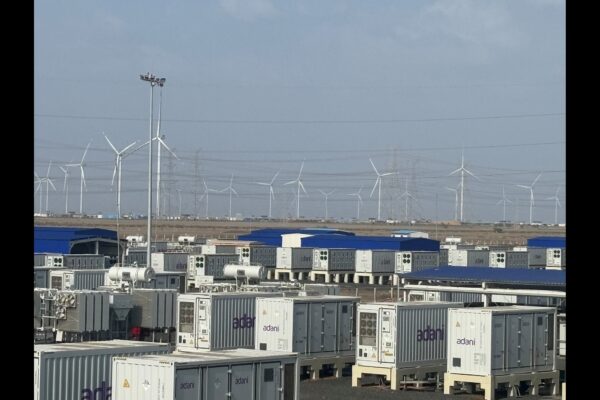
Renewable energy, storage and EV charging will increasingly need to be viewed as part of one integrated energy ecosystem. The opportunity now is to connect India’s growing clean-energy capacity more effectively with mobility. Solar-powered charging can be particularly relevant for fleet depots, warehouses, manufacturing facilities, bus depots and other locations with predictable charging patterns. Smart charging can help shift charging to periods when electricity is more available or economical, while reducing unnecessary stress on the grid. Energy storage will become increasingly important as well. Battery energy storage systems can help manage peak loads, provide power where grid capacity is constrained and support high-power charging without requiring immediate and disproportionate grid upgrades. For electric buses and trucks, this will be especially relevant because their charging loads are significantly higher than those of smaller EVs. Over time, we see charging infrastructure evolving from a simple electricity-delivery point into an intelligent energy-management system combining the grid, renewable energy, storage, charging infrastructure and vehicle batteries.
Looking ahead, what infrastructure and ecosystem changes will be most important for India to accelerate EV adoption, and what role can EV manufacturers play in supporting this transition?
India now needs to focus on building an EV ecosystem around reliability, utilisation and total cost of ownership, rather than looking at vehicle adoption and charging infrastructure as separate issues.
Five changes will be particularly important. First, charging needs to become more distributed and application-led. India needs a combination of highway fast-charging corridors, urban public charging, fleet and depot charging, workplace charging and charging infrastructure at commercial and industrial locations. Second, grid infrastructure needs to evolve alongside EV adoption. Faster electricity connections, adequate transformer and distribution capacity, renewable integration and storage will become increasingly important as buses, trucks and high-utilisation commercial EVs scale. Third, interoperability needs to become a defining principle of the ecosystem. Users should have visibility of charger availability, transparent pricing and the ability to access multiple networks through seamless digital interfaces. Fourth, infrastructure deployment should be linked to demand. Instead of deploying chargers uniformly, infrastructure should be planned around vehicle density, traffic corridors, fleet routes, logistics hubs, public transport requirements and commercial utilisation. Finally, the industry needs stronger collaboration between OEMs, charging operators, energy companies, DISCOMs, technology providers and governments.
EV manufacturers have an important role to play beyond manufacturing vehicles. OEMs can help define charging requirements for different vehicle segments, provide vehicle and battery data to improve infrastructure planning, collaborate with charging operators, support fleet electrification and develop solutions that integrate vehicles with renewable energy and storage. We believe the next stage of India’s EV transition will be defined by the integration of vehicle technology, charging infrastructure, energy systems and financing. If these four elements evolve together, EV adoption can move from being an individual consumer choice to becoming a commercially compelling mobility solution across passenger, logistics, municipal and public-transport applications.