How Infrastructure and Connectivity Are Influencing Home Buying Decisions in NCR

by Ashish Agarwal, Director, AU Real Estate
For nearly two decades, proximity to Delhi determined a property’s desirability across NCR. Buyers weighed affordability against commute time, and outlying areas paid a quiet penalty in resale value and rental demand. That calculus has changed. Infrastructure is now the biggest catalyst of residential demand, turning once-ignored corridors into some of the region’s most sought-after addresses.
The numbers reflect this shift. NCR recorded a 13 percent year-on-year rise in residential prices in the April-June 2026 quarter, the steepest among India’s major metros, driven largely by Gurugram’s premium corridors, including the Dwarka Expressway, the Southern Peripheral Road, and the Golf Course Extension Road, according to the latest ANAROCK report.
The change runs deeper than price. Today’s homebuyer chooses a home not for its location alone but for how easily that location can be reached. Expressways, metro corridors, rapid rail systems, and airports have expanded the practical boundaries of NCR’s housing market, bringing once-remote areas well within reach. As a result, micro-markets such as the Noida Expressway, Delhi – Meerut Expressway, Greater Noida West, Dwarka Expressway, New Gurugram, and the Yamuna Expressway corridor have seen unprecedented residential growth.
Connectivity Is Transforming Residential Demand
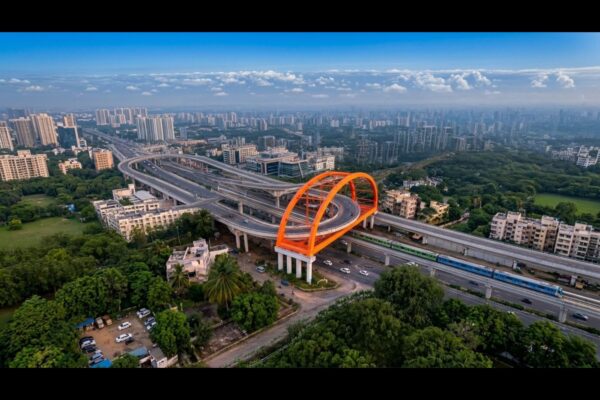
Infrastructure has always influenced real estate, but the scale of connectivity investments across NCR over the last decade has accelerated this relationship like never before. Projects such as the Delhi-Meerut Expressway, Urban Extension Road-II (UER-II), Rapid Rail Transit System (RRTS), Delhi Metro expansion and the upcoming Noida International Airport have fundamentally changed commuting patterns and buyer preferences.
The change is most visible in Noida and Greater Noida. Previously viewed as remote suburban markets, these locations now feature an integrated transport ecosystem comprising the Noida-Greater Noida Expressway, Aqua Line Metro, Yamuna Expressway and the upcoming Noida International Airport at Jewar. Improved connectivity has consistently attracted long-term end-users instead of speculative investors.
From the first quarter of 2020 to the first quarter of 2025, average housing prices increased by over 90 percent in Noida, while NCR’s overall unsold housing inventory fell by more than half during the same period. The data reflects a healthier market where residential demand is increasingly driven by genuine occupancy.
Connectivity means so much more to today’s buyers than shorter travel times. It means easier access to employment hubs, schools, hospitals, retail centres and entertainment districts and a drastic improvement in overall quality of life. As a result, buyers are increasingly willing to move further away from traditional city centres, as long as the commute is efficient.
Infrastructure, Employment and Lifestyle Drive Growth
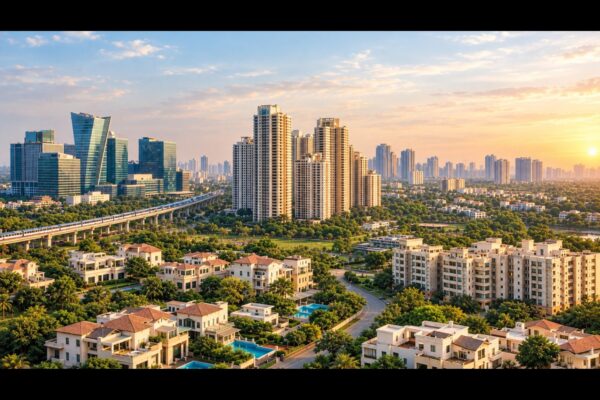
Hybrid work models have reduced the need to be located near office districts and buyers can now focus on larger homes, integrated townships and lifestyle amenities without compromising on connectivity. Developers have responded with self-sustained residential communities that combine housing with schools, healthcare facilities, retail centres, recreational amenities and green spaces.
Infrastructure has become the binding factor that connects these developments to employment centres, enabling residents to enjoy both convenience and a better quality of life. But connectivity is not the only driver of residential demand. Employment remains the bedrock of a healthy housing market and infrastructure makes this link stronger by increasing the catchment area from which professionals can commute comfortably.
Gurugram’s diversified corporate ecosystem, Noida’s growing IT and electronics manufacturing sectors and the industrial growth around the Yamuna Expressway, all generate sustained housing demand from end-users rather than short-term investors. Infrastructure also gives buyers more confidence in the long-term prospects of a location.
A completed expressway, metro corridor or airport is not just a transport asset, but also a marker of future urban development. Such projects attract commercial investment, encourage the growth of social infrastructure and reduce investment risk by signalling long-term government commitment. As a result, buyers increasingly evaluate proposed infrastructure projects before making purchase decisions, recognising that future connectivity often shapes future property values.
The Future of NCR’s Housing Market
As NCR invests further in multimodal transport infrastructure, the definition of a prime residential location will keep evolving. Infrastructure has redefined what counts as a liveable distance. A corridor once dismissed as too far from central Delhi is now judged on how quickly it connects to an airport, a metro interchange, or an employment hub. Along these corridors, schools, hospitals, retail developments and civic amenities have grown, strengthening the pull of residential demand rather than just following it. This has prompted developers to reposition mid-segment and luxury products around access instead of location, betting on the fact that connectivity now holds as much weight as location did in the past.
Future homebuyers are likely to judge properties based on an integrated ecosystem, factoring in expressways, metro access, regional rail, airports, employment centres, healthcare and education, rather than just proximity to city centres. The expansion of the Delhi Metro, RRTS corridors, Noida International Airport and new expressway networks will further decentralise residential demand, creating multiple growth centres across the NCR. As a result, the next phase of NCR’s residential evolution will be less about distance and more about accessibility. Connectivity has become a measure of quality of life, future appreciation and everyday convenience and homebuyers are increasingly opting for locations that promise not just a home for today, but a better-connected tomorrow.
Tags