Ganpati In High-Rise India: Are We Prepared for Emergency Evacuation?

by Dr Deepak Monga, Fire Safety & Evacuation Expert
India is as vibrant as a rainbow, filled with culture, traditions, religions, and festivals. Each part of India has its own celebrations and beliefs, among which Ganeshotsav is the most cherished and widely celebrated, especially in metro cities like Mumbai, Delhi, and Pune. While soaking the festive vibes, one thing we must not forget is the safety of our loved ones. This period of the year is filled with festivals such as Ganeshotsav, Navratri, Diwali, and New Year’s Eve, whereas many tragedies are reported in the same period. Because all these festivals are related to lights, decoration, and bursting of firecrackers. The missing link in celebration is precaution, preparedness, and awareness.
Now that Ganesh Chaturthi is near, pandals, homes, and mandirs are lit like a chain of shining stars. Earlier, celebrations were limited to small pandals, community halls, and low-rise buildings, but today every pandal has become a grand stage, and buildings have reached new heights. Especially in Mumbai and across Maharashtra, the festivities are increasingly spilling beyond traditional pandals into residential high-rises, gated communities and modern apartment complexes. Over several days, hundreds of residents and visitors gather as idols are erected on podiums, in lobbies, clubhouses and community spaces.
But here is a question that really deserves more attention: in the case of an emergency during the celebration, can everyone really get out safely? Do we have an appropriate emergency evacuation system in place to manage the crowd during an emergency? Have we prepared high-rise residents on fire safety and evacuation?
The answer cannot simply be found in the presence of fire extinguishers or a fire alarm. Evacuation in a high-rise building is a carefully interrelated system of building design, fire protection infrastructure, human behaviour, trained personnel and, critically, the management of crowd movement. India is a secular nation with festivals throughout the year, so should we not prepare our infrastructure — buildings, schools, hospitals, shopping malls, and commercial complexes — for emergency evacuation?
The Festival Changes the Risk Profile
A residential building that is normally occupied primarily by its residents is no longer a residents-only premises but rather filled with devotees and friends and families during Ganpati celebrations. It is the busiest time for elevators as well as staircases, where unfamiliar people arrive in large numbers. There could be elderly persons, children, pets, and differently-abled people present. This is where it becomes scary to manage such a crowd if any emergency occurs.
Your temporary decorations may contain flammable materials, electrical loads, and diyas; switchboard overloading may be higher and can turn a festive celebration into a fire incident.
Mumbai’s fire-safety rules, codified for Ganeshotsav and other religious festivals, highlight the need for unobstructed access, emergency exits, electrical safety, emergency lighting, fire marshals and trained volunteers. The Brihanmumbai Municipal Corporation (BMC) and fire authorities mandate strict electrical and structural guidelines for over 12,000 public pandals across Mumbai’s 26 administrative wards to prevent short circuits and accidental blazes.
The takeaway here is that festival safety can’t simply be down to event management. That’s a building-safety issue.
The Biggest Mistake: Thinking The Lift Is Your Way Out
A common misconception during an emergency is that people should just take the lift to the ground floor.
This can be very dangerous in a typical fire emergency. Lift operation can be affected by smoke, loss of power, heat or malfunction. Occupants should normally follow the designated evacuation strategy of the building and use protected exit staircases unless emergency procedures specifically state otherwise.
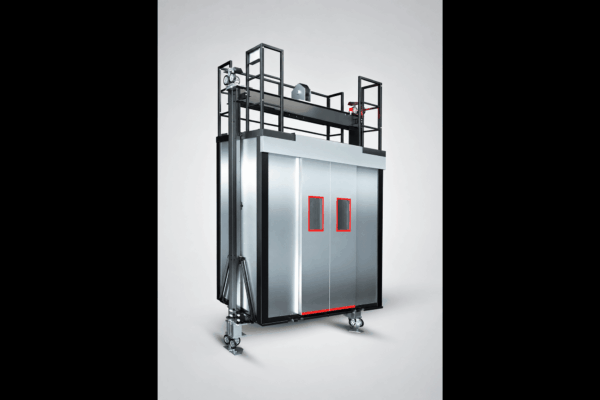
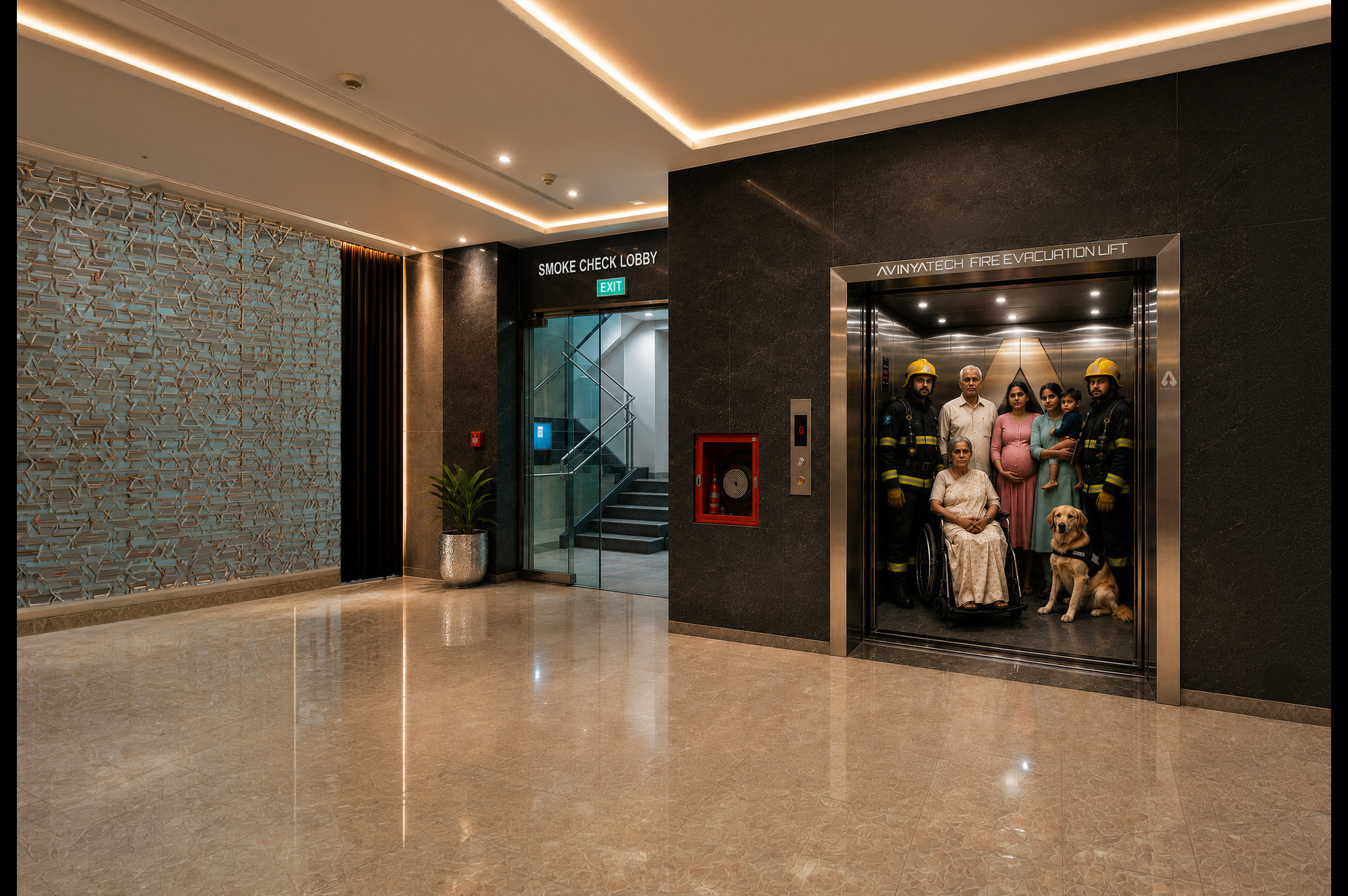
This is why the condition of having a fire evacuation lift is of great importance.
A Fire Evacuation Lift that exists on an architectural drawing is not necessarily just a lift that functions as a safe evacuation route during a real emergency. But it is the Fire Evacuation Lift that is certified by the fire department and made as per the specifications written in UDCPR. It is your greatest safety gear in an emergency, which has a two-hour fire-rated vision panel, 30-minute battery backup in case of electric failure, and a two-way communication system.
High-rise Evacuation Is About Time
At its heart, fire safety and evacuation are a race against time.
The goal is not to simply find a fire. It is designed to detect it early, alert the occupants, notify nearby fire stations, contain the fire and smoke, keep escape routes protected and move people to safety through fire evacuation lifts before conditions become untenable. It saves lives and assets during such time-sensitive emergencies.
The National Building Code of India 2016 considers fire and life safety as a composite discipline comprising means of escape, fire protection and related building systems.
This is even more critical for taller buildings with longer evacuation distances and larger numbers of occupants.
Maharashtra’s UDCPR also has specific provisions on fire lifts and additional evacuation-related provisions for taller buildings. It mandates the installation of the fire evacuation lift in buildings above 70 metres.
Ganpati preparation should include an evacuation audit
Before installing an idol or organising a large celebration, housing societies should conduct a simple but serious safety audit.
The checklist should include:
• Clear and unobstructed staircases and exit routes
• Working emergency lighting
• Operational fire alarm and detection systems
• Accessible fire extinguishers and firefighting equipment
• Clearly visible exit signage
• Functional communication/public-address systems
• Adequate access for fire engines
• No temporary decoration blocking hydrants, exits or firefighting equipment
• Proper management of electrical wiring and additional loads
• Trained fire wardens or volunteers
• A defined emergency assembly area
• Adequate Fire Evacuation Lift
Most importantly, residents should know what to do.
The real test is not compliance. It is behaviour.
A building can still perform poorly in an emergency even with every regulation certificate if the occupants don’t know how to respond.
People get panicked, leading to overcrowding of the exit routes. They race along familiar paths. They try to catch near lifts. They come back for things. Visitors may not know the location of the evacuation paths or evacuation lift.
That is why evacuation drills are not just a formality. These are behavioural trainings.
A Ganpati celebration, in this context, should be an occasion for housing societies to conduct a short evacuation briefing, identify trained volunteers and inform residents and visitors about the location of emergency exits and assembly points. Most importantly, get the fire evacuation lift installed as your life-safety gear.
The real test of a good high-rise is not how spectacular it looks at a festival, but how predictably it behaves when things go wrong.
The most meaningful way for modern high-rise communities to honour the festive spirit is to remove one of the most dangerous obstacles of all: complacency about life safety.
Because when hundreds gather under one roof, preparedness is not optional. It is part of responsible celebration.
Tags