
Interview: Vimal Nadar, National Director & Head, Research, Colliers India

What factors are driving the growth in institutional investments in Indian real estate, and how is investor confidence evolving amid changing market dynamics and the emergence of new asset classes?
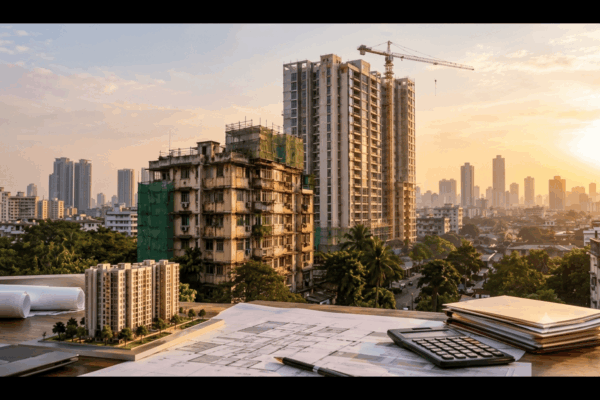
According to Colliers, institutional investments in Indian real estate rose 29% year-on-year to USD 8.5 billion in 2025, up from USD 6.6 billion in 2024. This sustained growth is being driven by a combination of factors, including a significant rise in domestic capital deployment, stable returns, improving asset quality, and the broader resilience of India’s economy. While office and residential assets remain key investment destinations, supported by strong occupier demand and favourable long-term growth prospects, alternative sectors such as data centres are increasingly attracting capital as investors look to diversify portfolios. India’s resilience amid global economic uncertainty, coupled with a maturing real estate sector and an expanding domestic investor base, continues to strengthen the market and drive investments. Looking ahead, easing of global uncertainties, sustained demand across asset classes, and a broader range of compelling investment opportunities are likely to support continued investor participation in India – both at the institutional and retail level.
How is infrastructure development, including highways, metro rail, airports and industrial corridors, influencing real estate growth across residential, commercial and industrial segments in India?
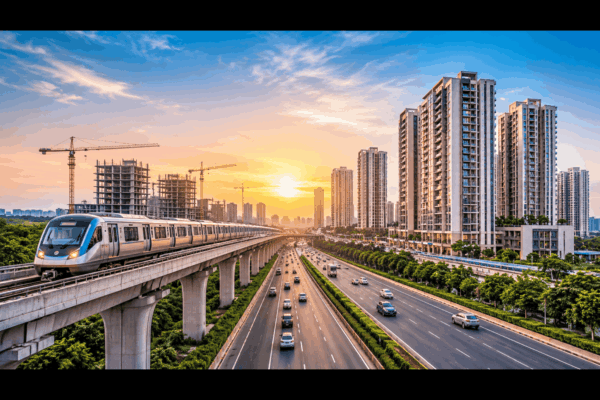
Infrastructure development is a key catalyst for India’s long-term real estate growth, with the market projected to reach USD 5–10 trillion by 2047. In the residential segment, improved connectivity is expanding housing demand across emerging urban centres and peripheral locations, while enhancing liveability, supporting land value appreciation and enabling large-scale township developments. In the commercial segment, better connectivity and the emergence of new employment hubs are driving demand for office spaces, retail and supporting social infrastructure. Meanwhile, in the industrial and warehousing segment, dedicated freight corridors, multimodal logistics parks and improved transport connectivity are enhancing supply-chain efficiency and attracting manufacturing, logistics and e-commerce occupiers. Overall, infrastructure investment will remain central to India’s real estate growth, given its multiplier effect on employment generation, economic activity and demand across asset classes.
Which cities, corridors or emerging micro-markets are witnessing the strongest real estate growth due to infrastructure development? Could you share a few examples of projects or locations where this impact is particularly evident?
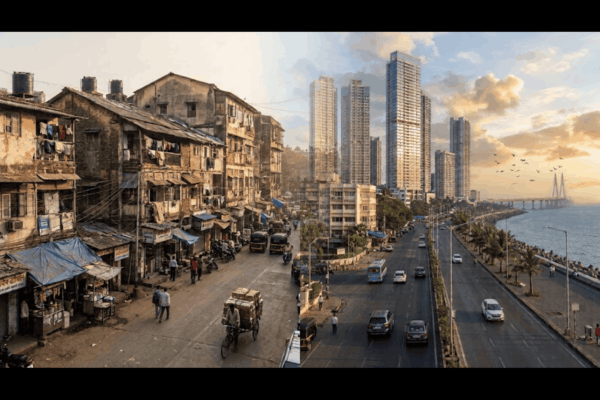
Some of the strongest real estate opportunities are emerging along major transport and industrial corridors, where connectivity improvements are converging with employment growth, urban expansion and rising housing demand. A few notable examples include: Mumbai Metropolitan Region: The Mumbai Trans Harbour Link (popularly known as Atal Setu) is significantly improving connectivity between Mumbai and Navi Mumbai, enhancing the long-term growth prospects of Navi Mumbai, Panvel and surrounding locations. Also, Mumbai 3.0 is one of the largest infrastructure-led growth corridors emerging within the Mumbai Metropolitan Region, centred around the Navi Mumbai International Airport (NMIA). The initiative is expected to provide a fillip to real estate development by unlocking new growth corridors and creating opportunities across residential, commercial and industrial segments.
Bengaluru: Micro-markets such as Whitefield, Sarjapur and Devanahalli are benefiting from ongoing infrastructure upgrades and urban expansion. Devanahalli, in particular, is well-positioned to emerge as a major airport-linked commercial, residential and industrial hub.
Delhi-NCR: Dwarka, Greater Noida, Sonipat and Golf Course Extension Road continue to gain momentum, supported by expanding road infrastructure and the decentralization of economic growth.
Hyderabad: Kokapet, Neopolis and Shamshabad are emerging as high-growth locations, driven by improved connectivity, commercial expansion and strong residential demand.
Pune and Chennai: Kharadi in Pune, along with Siruseri, Oragadam and Sriperumbudur in Chennai, are seeing strong growth due to the convergence of employment hubs, industrial activity and enhanced transport connectivity.
Beyond the established real estate markets, Tier II cities such as Coimbatore, Indore, Surat, Nashik, Visakhapatnam, Nagpur, Jaipur and Bhubaneswar are increasingly gaining traction due to improving infrastructure, supportive regulatory policies, economic development and expanding supply of high-quality assets.
How are improved connectivity and infrastructure influencing property demand, land values and development patterns beyond established urban centres, particularly in tier-II and tier-III cities?
Expanding expressway networks, freight corridors, airports and regional rail links are unlocking new residential, commercial and industrial corridors across Tier II and III cities, making them increasingly attractive for businesses, residents and investors alike. Decentralization & hybrid work models along with corporate cost optimization strategies are accelerating the emergence of these cities as alternative business destinations, with growing demand for Grade A office spaces and integrated mixed-use developments offering live-work-play environments. The growth of commercial and industrial activity in these locations is also stimulating residential demand, while improvements in accessibility and quality of life are driving township developments. With rising average income levels, urbanization and growing demand for premium housing, residential prices are projected to grow by 10-15% annually over the next few years in most of these emerging cities. At the same time, the entry of reputed real estate developers and equally strong diversity in product offerings are further enhancing the depth and maturity of these markets. As accessibility improves and economic activity expands, land values are likely to appreciate along key infrastructure corridors, particularly in locations witnessing increased residential, commercial and industrial development.
Which real estate segments – residential, office, retail, warehousing, logistics or data centres – are likely to benefit the most from India’s ongoing infrastructure expansion? What opportunities do these trends present for developers and investors?
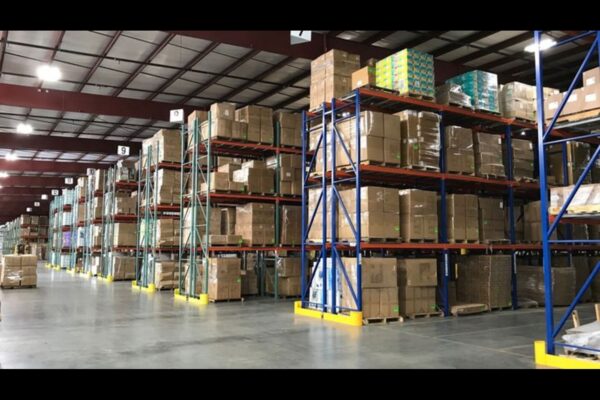
Infrastructure-led development is expected to generate widespread opportunities across multiple real estate asset classes. Multimodal logistics parks, dedicated freight corridors and improved road connectivity are expected to drive warehousing demand beyond Tier I cities and accelerate the growth of Tier II and III markets. Rising freight movement and manufacturing activity will create demand for modern logistics facilities and distribution hubs across multiple locations. The office sector is also poised to benefit from stronger regional connectivity and expansion of GCCs foraying into newer markets driven by infrastructure augmentation, talent availability and policy push. Emerging office markets can offer occupiers greater scalability and cost efficiencies, while developers have opportunities to create new office clusters around transport nodes and employment centres. With infrastructure growth catalyzing employment and economic activity, residential demand, retail consumption and social infrastructure requirements are likely to rise in parallel. Growing urbanization in peripheral areas and improved accessibility can support neighbourhood retail, shopping centres, hospitality projects and tourism-linked developments. At the same time, data centres are increasingly emerging as a key investment theme, supported by digital infrastructure expansion, growing data consumption and stricter data localization norms. For developers and investors, the opportunity lies in identifying markets and asset classes where infrastructure investment translates into measurable economic growth and sustained demand.
Looking ahead, what role will planned infrastructure investments and government initiatives play in shaping India’s real estate landscape over the next five years, and what challenges must be addressed to ensure sustainable, infrastructure-led growth?
Infrastructure investments and government initiatives will promote more equitable development in the country and unlock new growth corridors beyond established Tier-I cities. Improved connectivity and industrial infrastructure will boost real estate demand, attract global occupiers and support business expansion, creating opportunities across residential, office, retail, industrial & warehousing, and other emerging asset classes. The resulting economic activity and demand growth are also expected to support price appreciation across markets and asset classes. However, sustaining this infrastructure-led growth will require timely project execution, coordinated urban planning and effective integration of transport networks with employment centres, utilities and social infrastructure. Developers and investors must also assess infrastructure readiness and underlying demand carefully, while ensuring access to essential services. Efficient land use and environmental sustainability will gain further prominence. Ultimately, aligning infrastructure development with economic activity and long-term urban planning will be critical in creating resilient, well-connected and sustainable real estate markets.