Karnal’s Transformation from Transit City to Investment Hub

by Santosh Agarwal, Executive Director & CFO, Alpha Corp Development
For years, investors looking to reap good real estate returns have considered the established NCR market as a preference. Characterised by its strategic location and premium ticket size, the NCR has long justified its appeal to the investors. However, with increased urbanisation, limited land availability, and rising prices, the momentum has reached saturation. Buyers are now looking for alternative locations, which are not characterised by inflated prices and high density of residential spaces in Tier 1 cities. Cities that belong to the bracket of Tier 2 cities, are emerging as preferred options in this context. Buyers view the Tier 2 cities as the next logical and viable options that can provide a better standard of living when compared to the congested metropolitan cities. According to the data from Anarock and PropEquity for FY 2023-24, housing sales in tier 2 cities have grown by 11 per cent, thus signalling an emerging shift in the real estate landscape of India. Cities, like Karnal, which offer the confluence of strategic positioning and diverse real estate developments, are set to be at the forefront of this shift.
The Advantage Big Cities Can No Longer Offer
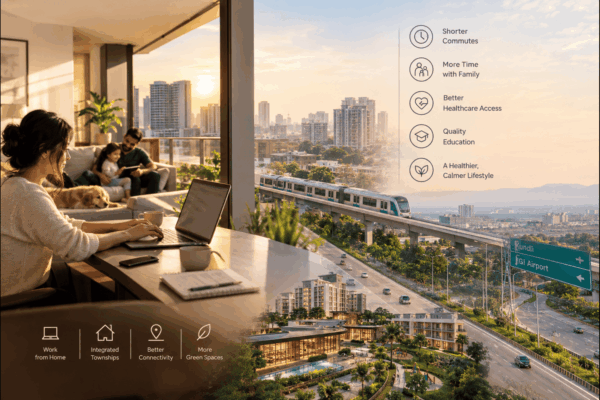
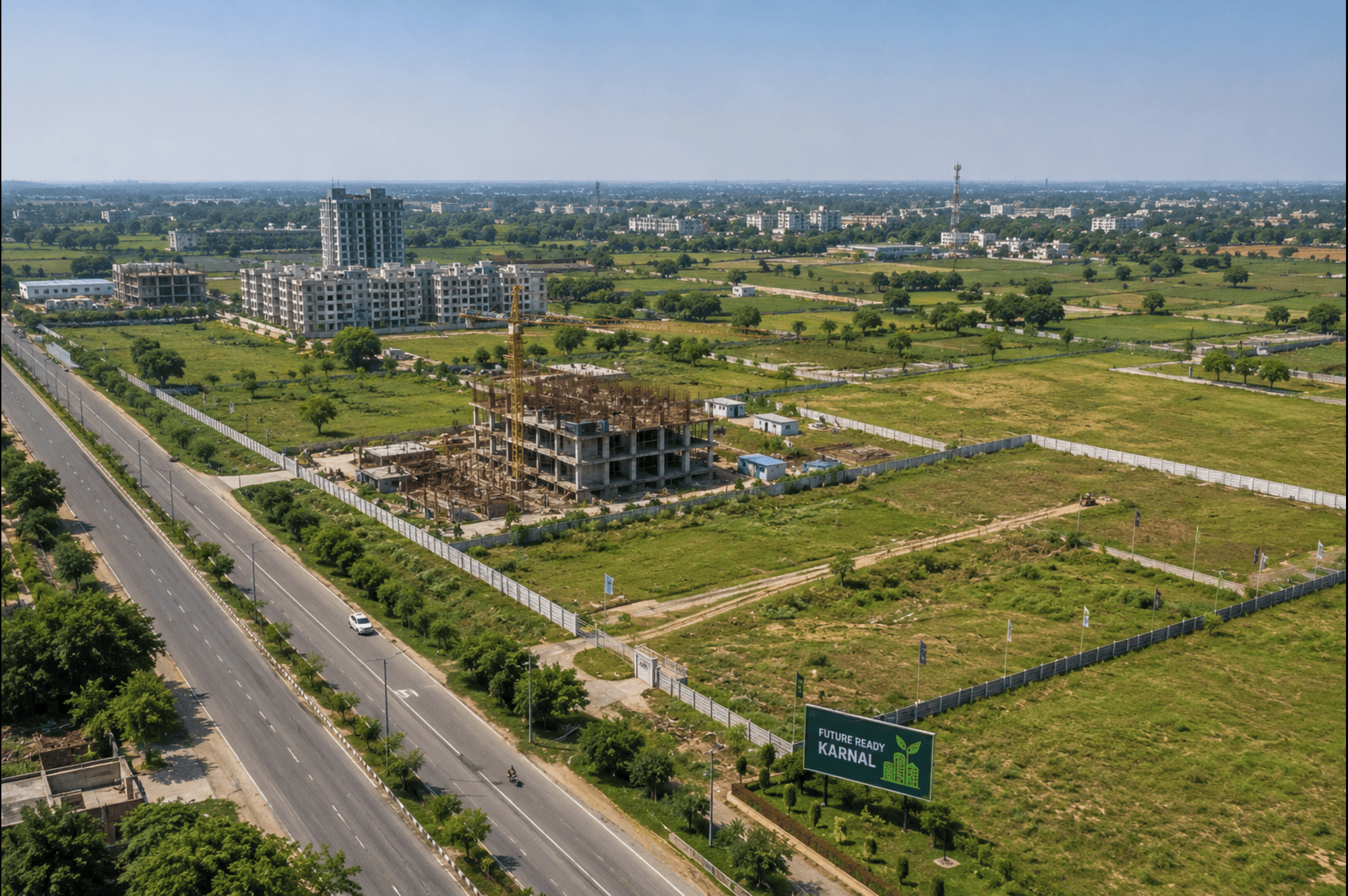
One of Karnal’s most strategic advantages is something that cannot be replicated in large cities: the availability of land at better prices than Tier 1 cities. The city is replete with large land parcels, which are enabling the development of plotted communities, integrated townships, and SCO plots in a planned manner. These developments are preferred by buyers since they provide a seamless ecosystem of living. Prime amenities, such as access to spaces of health, wellness, entertainment and commerce provided by these integrated townships reduce the need of travel for the users.
This allows them to experience amenities akin to Tier 1 cities from the comfort of Tier-2 cities. In addition to this, Tier-2 cities also provide accessible costs pertaining to residential spaces. Cities like Karnal also have better scope of facilitating new developments from scratch as opposed to Tier-1 cities that rely majorly on modifying existing infrastructure due to land congestion. Lower density in residential spaces and layouts anchored in modern design have now become key metrics for investment considerations.
Infrastructure That Enables, Not Just Connects
Land availability provided by Karnal is not the only reason for its positioning as a strategic investment location. The accompanying infrastructure, which is turning the city into a viable economic zone, is a significant contributor to its appeal to investors. Connectivity also remains one of the key drivers for facilitating the city’s strategic advantage. Located along the NH-44, the city enjoys easy access to Delhi and Chandigarh. Additionally, the upcoming Delhi-Panipat-Karnal corridor under the Regional Rapid Transit System (RRTS) is expected to facilitate travel from Sarai Kale Khan to Karnal in approximately 90 minutes. Thus, by virtue of its being at a commutable distance from the NCR, Karnal has emerged as a destination, which is being chosen by investors and end-users alike for its distinctive merit.
The Rise of SCO: A New Commercial Language for Karnal
The increased residential activity in Karnal has also induced growth in the commercial sector. With the increase in economic activity, commercial momentum in Karnal is being led by formats, which prioritise operational efficiency and cost optimisation over legacy commercial conventions. Against this backdrop, formats such as Shop-cum-office (SCO) have registered an increased traction in Karnal. The format offers the unique advantage of combining retail and office functionalities within a single, self-contained unit. The functionality of the format thus facilitates reduced maintenance costs, streamlined operations and maximum property utilisation. The benefits appeal to small and medium enterprises by offering a single address for activities pertaining to customer facing and back-end operations. As businesses increasingly seek locations which can offer cost optimum growth prospects, Karnal is emerging as the preferred location for SCO commercial developments.
A Market Built on Stability, Not Speculation
Karnal’s urban growth is unfolding in a planned manner. The urban development of the city is following the structured planning framework of the Karnal Master Plan 2031. The aim of the master plan is to ensure that Karnal evolves into a well-connected, modern city. The plan gives credibility to the infrastructure ambitions of the city, thus assuring investors to invest confidently. The masterplan should serve as a clear signal to the market about the planned and assuring growth prospects of Karnal. For investors, the plan will act as a major reassurance, facilitating them to make more confident decisions.
A Rare Alignment of Growth Drivers
The city’s real estate landscape thus carries a unique value proposition characterised by land availability, infrastructure development, and healthy demand. SCO plots offering an opportunity to build office spaces and retail outlets are an attractive option for investors, thanks to the city’s better connectivity and high ROI that this segment brings forth. As end-users and businesses shift towards tier-2 cities in search of an accessible and efficient ecosystem, Karnal is poised to emerge as the preferred destination. For investors who recognise a structural opportunity before the wider market does, the window is open. The fundamentals are in place, the momentum is real, and the direction is unmistakably forward
Tags