What Defines a Luxury Home Today? A Shift from Amenities to Lifestyle

by Pavan Kumar, Founder & CEO, White Lotus Group
For many years, luxury housing was defined by what could be seen immediately.
A premium address. Imported finishes. A grand lobby. A rooftop pool. A private gym. A long list of amenities that looked impressive in a brochure and even better in a show apartment.
Luxury was visible, measurable, and easy to communicate. But I believe that definition has changed.
Today’s luxury homebuyer is asking a far deeper question: not just “What does this home offer?” but “How will this home allow me to live?”
That shift is important, especially for HNIs, NRIs, entrepreneurs, global professionals, and well-travelled families who have experienced different standards of living across the world. For this audience, luxury is no longer only about possession. It is about privacy, time, wellbeing, community, and a sense of belonging.
In many ways, the conversation has moved from amenities to lifestyle.
A home may have every possible feature, but if it does not understand the rhythm of everyday life, it will eventually fall short. The real test of luxury is not whether a residence impresses you in the first five minutes. It is whether it continues to feel intuitive, personal, and deeply relevant five years later.
This is a subject close to me because my own journey in real estate began with a personal search. Before White Lotus became a company, I was looking for a home that felt more considered. I was not looking only for a good address or better specifications. I was looking for calm, rootedness, and the quiet comfort of coming back to a space that felt like me.
That belief became the foundation of White Lotus. Over time, it has only become stronger: a home is not a product, a configuration, or four walls. It is a personal sanctuary. It is where families grow, where memories are created, and where life quietly unfolds.
That is why I have always believed that developers in the luxury segment cannot simply be builders. We have to be custodians of life experiences.
The Amenity Conversation has Matured
There was a time when luxury housing was driven by scale. Larger clubhouses, more facilities, grander entrances, longer feature lists.
But evolved buyers are no longer impressed by abundance alone. They are looking for relevance.
Does natural light reach the spaces where the family actually spends time? Is there enough privacy between work, rest, and social areas? Does the layout allow people to gather, retreat, entertain, and recharge? Does the community feel intimate, or does it feel crowded? Does the home work as beautifully on a Monday morning as it does during a curated walkthrough?
These are no longer secondary questions. They are central to the decision.
The pandemic made this even clearer. When homes became offices, schools, wellness spaces, entertainment zones, and retreats all at once, people quickly understood which homes were genuinely well designed and which ones only photographed well.
Luxury is now less about what a home displays and more about what it quietly solves.
Quiet luxury is designed, not decorated
The future of luxury, in my view, is quiet luxury.
It is not about excess. It is about restraint. It is not about adding more to a home, but about making every design decision count.
A gym does not automatically create wellness. A clubhouse does not automatically create community. A landscaped garden does not automatically create a relationship with nature.
These spaces become meaningful only when they are part of a larger lifestyle philosophy.
At White Lotus, this has shaped how we approach homes from the beginning. Before design becomes a drawing, it must become a conversation. We spend time understanding how a family lives, how they gather, how they host, how they work, and what they seek when they return home. True personalisation cannot begin with finishes. It has to begin with people.
For HNIs and NRIs in particular, this matters deeply. Many of them are not looking for another impressive asset. They are looking for a home that reflects who they are, supports their family’s lifestyle, and carries emotional value over time.
Wellness begins with planning
Wellness in real estate was once reduced to a gym, spa, swimming pool, or jogging track. Today, wellness begins much earlier.
It begins with orientation, ventilation, density, green cover, privacy, walking paths, shaded pauses, and the relationship between indoor and outdoor spaces.
A well-designed home should support its residents almost invisibly.
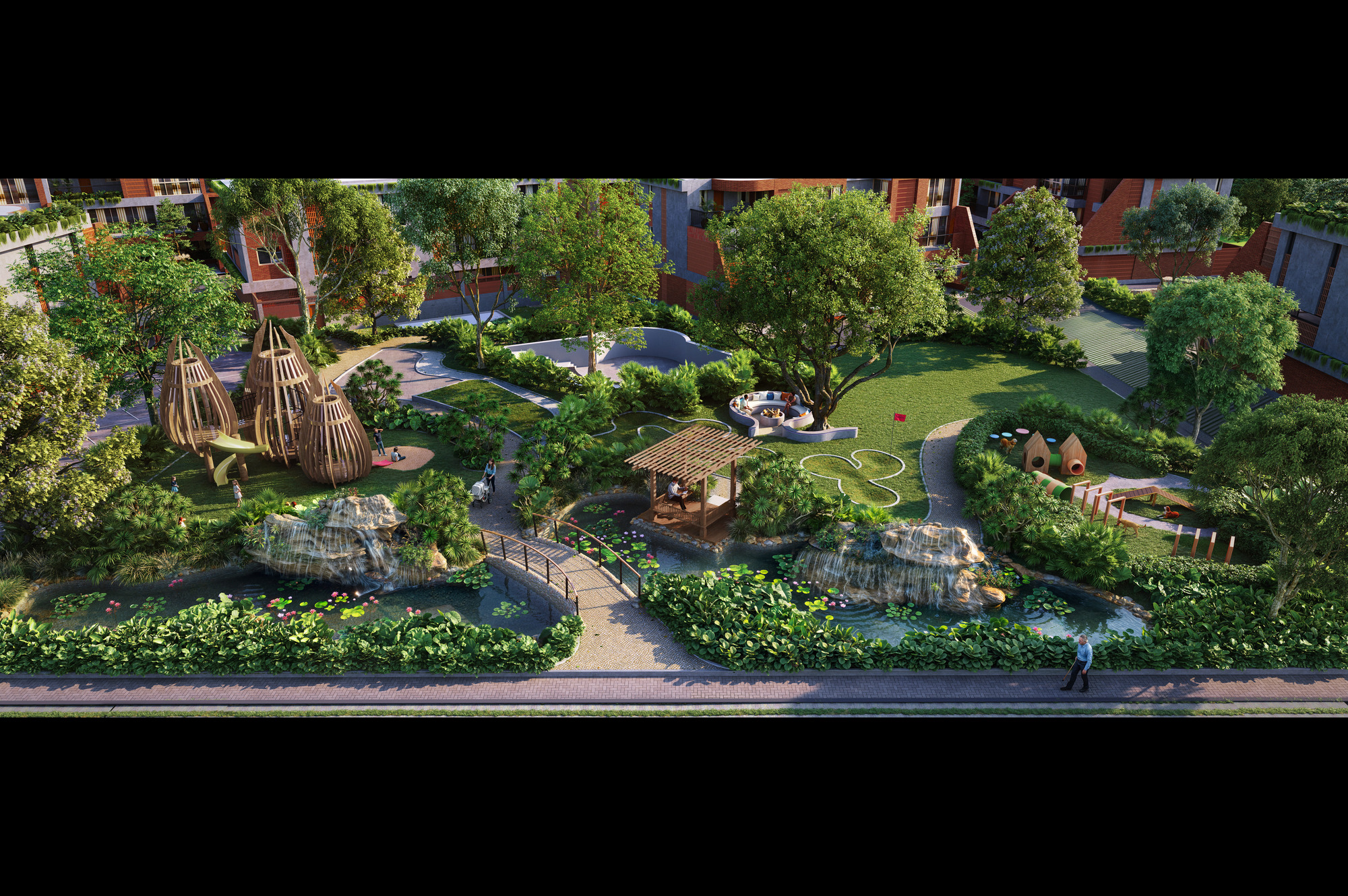
In our upcoming nature-led community, Amanvana in North Bangalore, this thinking is being explored through the masterplan itself. The idea of 70% open space across 14 acres, a consciously low density of 7 homes per acre, landscaped greens between villas, private backyards, lagoon-edge seating, shaded gazebos, and a Green Spine is not just about creating a beautiful environment. It is about making nature part of daily life.
The co-working lounge, amphitheatre, open-air yoga decks, jogging and cycling tracks, and spaces for quiet reflection are not isolated amenities. They are part of a larger rhythm – one where solitude and community can co-exist.
That, to me, is the difference between amenity-led luxury and lifestyle-led luxury.
Sustainability is now part of desirability
Luxury is also becoming more conscious.
For today’s premium buyer, especially those looking at homes as long-term legacy assets, sustainability is no longer a niche preference. Energy efficiency, water sensitivity, climate-responsive design, responsible landscaping, and long-term maintenance are all part of how a home will age.
The future of luxury will not be defined by who offers the longest amenity list or the most dramatic façade. It will be defined by who understands life more deeply.
A luxury home today is not defined only by what it has.
It is defined by how it allows people to live.
Tags