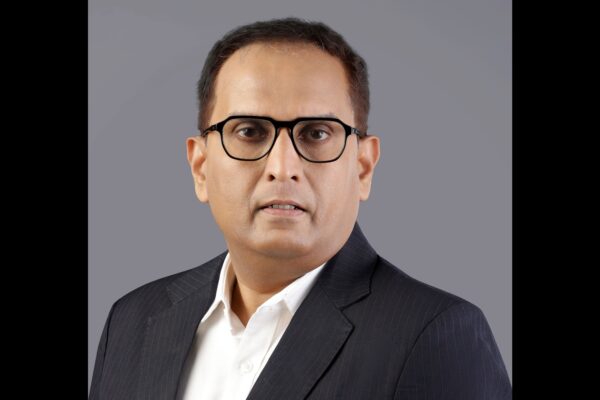
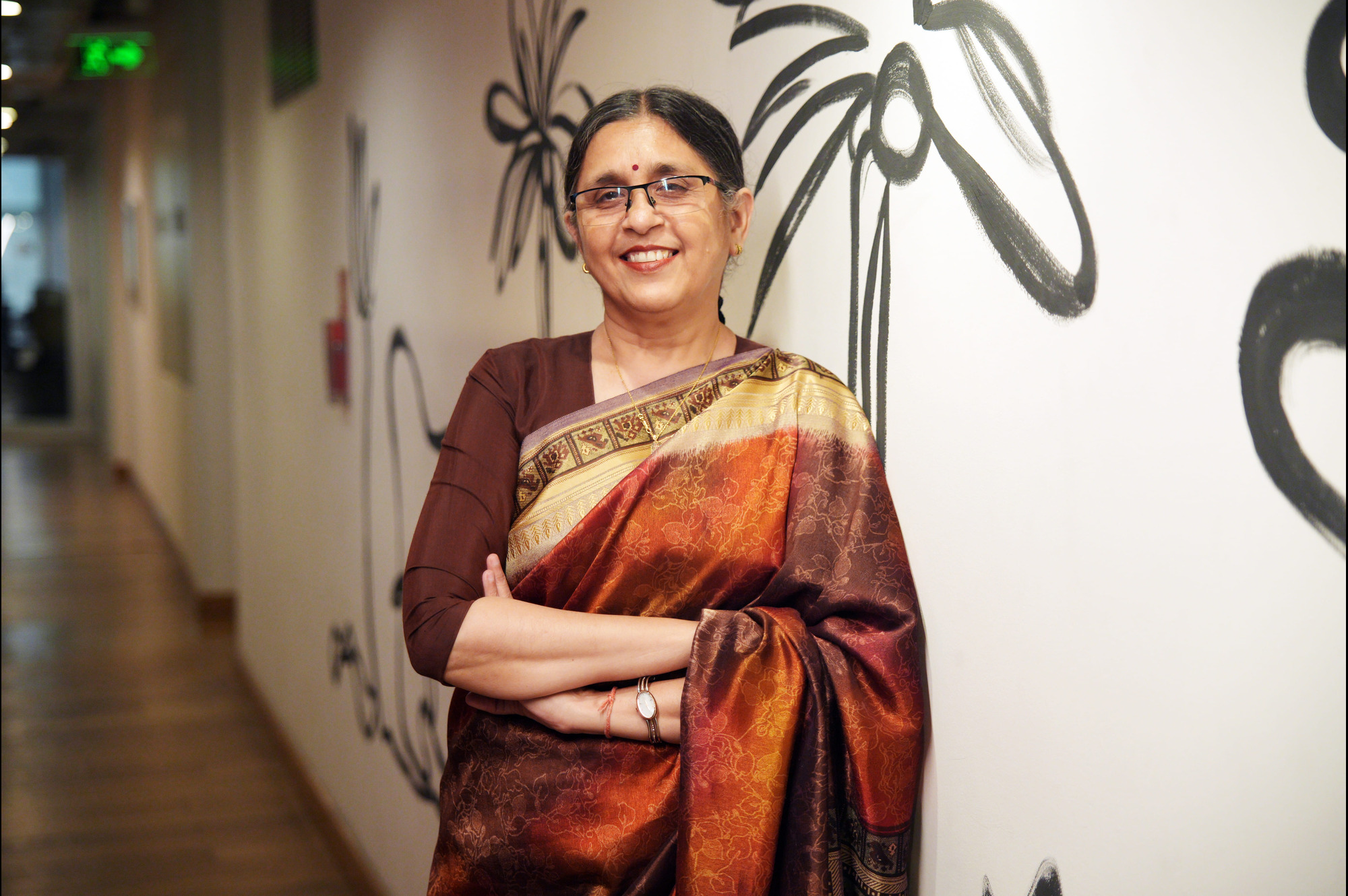
Interview: Archana Bhatnagar, Director, Market & Project Development, South Asia, Wärtsilä Energy

India’s Semiconductor Mission 2.0 is expected to drive investments in semiconductor manufacturing, where even brief power disruptions can impact production. How important are power reliability and grid resilience for such energy-intensive industries, and what role can flexible power solutions play in reducing reliance on diesel backup?
Reliability and grid resilience are related but separate problems for a semiconductor manufacturer, and both matter. A fabrication facility (fab) built under India’s Semiconductor Mission 2.0 depends on power that is available every second, because a brief interruption mid-process can damage a wafer. These facilities also draw large, steady loads from grids that are absorbing a rising share of variable renewable energy. As a result, voltage and supply fluctuations on the wider grid can directly affect operations on the fab floor. Diesel generators have long served as the default backup for critical industrial loads, but they are expensive to run, inefficient, and polluting. Flexible gas engine power plants offer a more capable alternative. Wärtsilä’s engines reach full load in two minutes, have no minimum up or down time, and can operate at loads as low as 10% of full output. This means the same plant can serve as primary power, backup, or both. They also maintain output at ambient temperatures of up to 50 degrees Celsius, where gas turbines derate, which matters for fabrication facilities in most of India’s high-temperature locations.
India is witnessing large-scale investments in mining, metals and integrated industrial projects, often in remote locations. How are these industries rethinking their captive power strategies, and what are the key considerations when moving beyond conventional coal- and diesel-based generation?
Remote industrial sites have always faced a difficult trade-off: build captive generation close to the load, or rely on a limited grid connection. Today, mining and metals projects face an additional complexity: decarbonising operations that run 24 hours a day, often in locations where reliability is already a challenge. As a result, industrial operators are rethinking captive power from a simple baseload question to a broader system-design question. Conventional coal and diesel plants are built for steady operation and struggle to integrate variable renewable energy. Facilities need solutions that balance reliability, cost, fuel flexibility, and long-term sustainability. Wärtsilä’s project experience reflects this shift. For example, Oil India Limited awarded Wärtsilä an engineering, procurement, and construction contract for a 30 MW gas engine power plant in Assam, running on gas from its own fields to power an off-grid liquefied petroleum gas (LPG) bottling facility. Similarly, Wärtsilä engines deliver reliable power under extreme heat at Australia’s McArthur River zinc mine. The common thread is flexibility. Flexible engines accommodate changing load profiles, integrate with renewables where needed, and scale in modular steps as a project grows. This gives operators operational resilience today, alongside a clear pathway to lower emissions.
Cement, steel and other process industries are rapidly investing in renewable energy, solar power and waste-heat recovery. How can these industries balance the growing share of variable renewable power with the need for reliable, uninterrupted electricity for continuous operations?
Cement, steel, and other process industries face a specific version of the reliability challenge: production lines that cannot tolerate an interruption, sitting alongside a growing share of on-site solar, wind, or waste-heat recovery that is inherently variable. The practical question is how to keep the line running when the sun goes down or the waste heat drops.
Closing that gap depends on how the technologies work together, rather than on renewable capacity alone. Industrial operators need to assess the right mix of renewables, storage, and flexible generation for their specific load profile. Through Wärtsilä’s Decarbonisation Services, we help customers make those decisions using system-level modelling and optimisation. This approach can increase renewable energy use while preserving the reliable, high-quality power that continuous industrial processes require.
In Saudi Arabia, Wärtsilä’s engines power the Yamama Cement plant, where waste-heat recovery improves overall plant efficiency, and flexible generation helps maintain reliable operations when output from other energy sources varies.
Engines work alongside renewables and waste-heat recovery in these settings, holding output steady when those sources cannot carry the full load. For process industries, reliability and decarbonisation reinforce each other when the system is designed for both.
What role can flexible and fast-ramping generation technologies play in supporting India’s energy-intensive industries as they pursue decarbonisation while maintaining operational reliability and productivity?
Flexible, fast-ramping generation matters because industrial decarbonisation and industrial reliability are too often treated as competing goals. It is worth being direct about what gas-based flexible generation can and cannot promise. Engines fuelled by gas are significantly cleaner and more efficient than diesel or coal, and gas serves as a transition fuel on the way to sustainable fuels such as hydrogen. What Wärtsilä offers first is reliability and quality of power at a load profile suited to the site, with a clear pathway to deeper decarbonisation as sustainable fuels become available. That reliability is what makes it possible to add renewables without gambling on continuity of supply. Engine power plants have no minimum up or down time, so they run only when needed, and they deliver up to 48% efficiency across a wide load range, where coal plants and combined-cycle gas turbines lose efficiency sharply at part load. That combination lets an industrial user add as much renewable capacity as the business case supports, while keeping a right-sized, efficient source of dispatchable power in reserve. For India’s energy-intensive sectors, that is what makes decarbonisation and productivity work together.
As India’s Green Hydrogen Mission gathers momentum, how do you see hydrogen-ready engine technologies contributing to the country’s future industrial power landscape? What are the key challenges to large-scale adoption?
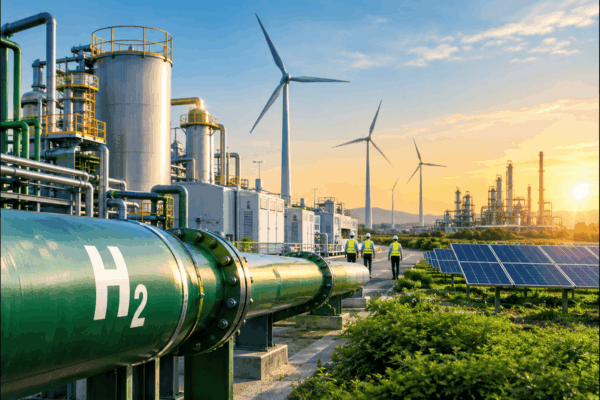
Green hydrogen and hydrogen-ready engines are advancing toward the same destination from different starting points. India’s National Green Hydrogen Mission targets five million tonnes of annual production by 2030, and Wärtsilä’s engines are built to make that supply usable in industrial power as it scales, rather than waiting for a separate generation of hydrogen-specific hardware to be developed. Wärtsilä’s gas engines already run on natural gas blended with up to 25 vol% hydrogen, with a conversion path to 100% hydrogen operation. In June 2026, Wärtsilä demonstrated a large-scale 100% hydrogen engine supplying power to Spain’s national grid at our Bermeo laboratory, the world’s first demonstration of a large-scale engine running on pure hydrogen. The principal obstacle to industrial adoption in India is cost. Renewable electricity typically accounts for 50 to 70% of the cost of producing green hydrogen, and until that input cost falls, hydrogen will remain a premium fuel. The practical path is to install hydrogen-ready engines now and run them on gas, so the same asset can be converted as green hydrogen becomes commercially available, rather than becoming a stranded investment.
How can advanced power system modelling help industrial consumers assess the right mix of renewable, flexible and dispatchable power? What are the potential operational and financial risks of getting this energy mix wrong?
Power system modelling turns a mix-of-technologies decision from a guess into a calculation. Instead of comparing renewables, storage, and flexible generation on cost per unit in isolation, it shows how they interact hour by hour, including transmission constraints, reliability under peak demand, and total system cost, which is what determines whether an industrial consumer’s power supply holds up. For an industrial user, that means testing operating scenarios against the site’s real demand profile and finding the lowest-cost route to a higher renewable share without compromising the process. Getting the mix wrong carries real risk. Undersizing flexible capacity means exposure to diesel backup costs, production downtime, or expensive short-term purchases. Oversizing renewables and storage without enough flexibility means paying for capacity that still cannot guarantee round-the-clock supply.
From your experience, what are the biggest challenges Indian industries face today in integrating renewable energy without compromising power quality, reliability and grid stability?
For an industrial consumer, the biggest challenge when integrating renewable energy is keeping the disruptions caused by its intermittent nature at bay. Such disruptions not only affect production efficiency but also cause faster wear and tear on machinery, if left unchecked. The practical barriers include limited grid connectivity at some industrial sites, legacy captive assets, the capital cost of retrofitting existing systems, and uncertainty about how much flexible capacity is actually required. A coal power plant built for steady baseload operation performs poorly when asked to cycle up and down to fill renewable gaps. It runs less efficiently, wears out faster, and, in many cases, was never intended to operate that way. On the other hand, diesel-based backup plants are expensive to operate, inefficient, and lead to higher emissions for the production facility. Power quality and voltage stability deserve more attention than they get. As more variable resources connect, systems lose inertia and short-circuit strength. Once flexibility is recognised as the missing ingredient alongside renewable capacity, the conversation shifts from adding more generation to adding the right complementary technology, sized correctly for the site’s actual load profile. Gas engines can complement renewable energy and support continuous operations without disruption.
How is Wärtsilä working with Indian industries and utilities to develop flexible power systems that can adapt to changing energy requirements and increasing renewable penetration?
Wärtsilä works with Indian industrial customers directly, and increasingly with utilities on the flexibility studies that inform how the wider grid will absorb renewable growth. For example, at Tamilnadu Petroproducts Limited, a 15.5 MW gas-fuelled captive power project replaced heavy fuel oil (HFO) generation at the Chennai chemicals complex, building on more than three decades of experience operating HFO engines at the site. The contract includes a long-term operations and maintenance (O&M) agreement alongside the engineering, procurement, and construction scope, because reliability is something we commit to over the life of the plant. Beyond supplying equipment, our Decarbonisation Services diagnose a customer’s system, model the optimal mix of generation, storage, and renewables, and implement it through our GEMS Digital Energy Platform under outcome-based agreements. The approach is technology- and manufacturer-agnostic, which matters when an operator already has assets in the ground. Globally, Wärtsilä has delivered 81 GW of power plant capacity in 180 countries. In India, Wärtsilä has been in operation for more than four decades, and we have delivered about 430 power plants totalling over 4 GW, supported by our Expertise Centre in Navi Mumbai.
What policy and regulatory measures could help accelerate the transition from diesel and coal-based captive power towards cleaner, flexible and reliable power solutions for industrial users?
Policy is already moving in the right direction, and renewable energy consumption has been made mandatory for high-power-consuming industrial customers. India’s Draft National Electricity Policy 2026 mandates resource adequacy planning across utility, state, and national level, and promotes renewable expansion supported by energy storage and flexible generation. Several states have begun applying similar thinking to captive power. Rajasthan’s 2026 alignment with the Centre’s revised captive power rules broadens the definition of a captive user and clarifies ownership structures. This is a welcome step towards recognising flexible, hybrid captive generation as a category in its own right. Greater clarity in state-level captive power policy and regulation would help industrial consumers build a stronger investment case for purpose-built flexible capacity.
Looking ahead, how do you see India’s industrial power landscape evolving over the next five to ten years, particularly across sectors such as semiconductors, metals, mining, cement and manufacturing?
Over the next five to ten years, I expect India’s industrial power landscape to look far less like a single grid connection and increasingly like a portfolio: on-site renewables, storage for short bursts, and flexible generation for the hours and duty cycles those two cannot cover, tailored to each sector’s load profile. Semiconductor and data centre operators will demand continuous, high-quality power with no room for interruption. Mining and metals projects will keep pushing captive generation into cleaner, more efficient forms as remote sites decarbonise. Cement and steel will lean further into waste-heat recovery and hybrid renewable integration while maintaining the reliability that continuous processes require. Running through all of this is the hydrogen pathway. The gas-based flexible engines being installed today are the same assets that can be converted to run on green hydrogen as the availability increases and costs fall. That is what makes today’s investment decisions durable. India has the ambition and the industrial momentum. We at Wärtsilä are geared up to support this ambition, making sure India’s industrial power systems run smoothly and keep pace with that growth.
Tags