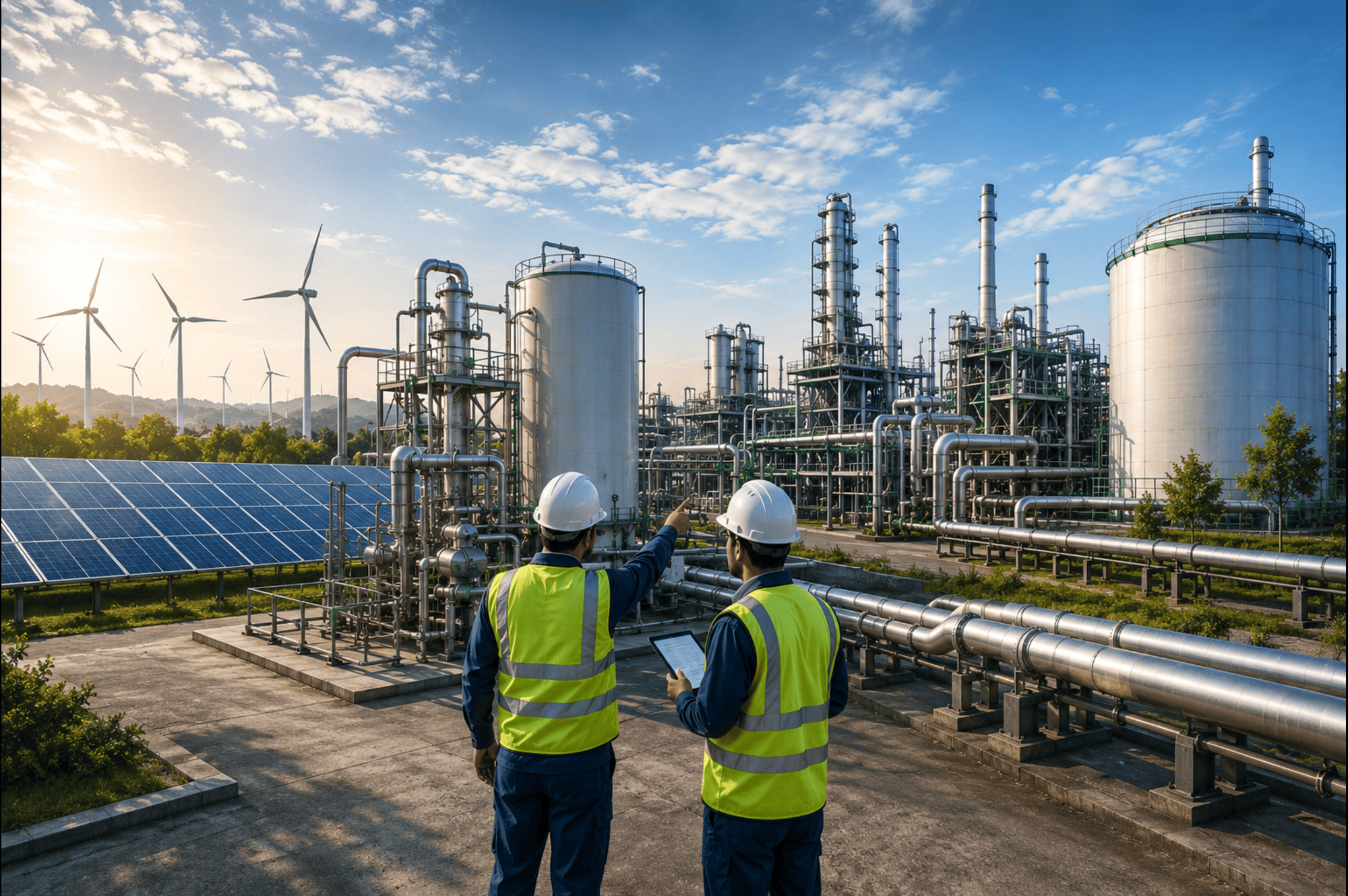
Building the Green Colossus: Why India’s Green Hydrogen Mission is the Ultimate Engineering Frontier

by Aashutosh Aggarwal, CEO, Simon India
For decades, the global energy landscape was defined by the extraction of molecules from beneath the earth. Today, the paradigm is shifting toward the engineering of molecules above it. At the heart of this shift is green hydrogen, a zero-carbon fuel produced by splitting water using renewable energy. For India, the National Green Hydrogen Mission is not merely an environmental imperative; it is the genesis of the biggest industrial engineering opportunity the country has witnessed since its refining and petrochemical boom in the early 2000s.
When the Indian government announced its target of producing 5 million metric tons of green hydrogen by 2030, the narrative largely centered on energy security and climate commitments. However, beneath these macro-level objectives lies a staggering physical reality. Translating this target into reality requires the installation of over 100 gigawatts of renewable energy capacity and 60 to 80 gigawatts of electrolyzer capacity. This is not a plug-and-play scenario. It is a mega-scale industrial engineering challenge that demands a complete reimagining of how we generate, store, transport, and consume energy.
The true opportunity lies in the complexity of the execution. Green hydrogen projects are inherently intricate process plants. They require the seamless integration of variable renewable energy sources (solar and wind) with highly sensitive electrochemical equipment (electrolyzers), followed by the compression, liquefaction, or conversion of the resulting gas into derivatives like green ammonia or green methanol.
To understand the magnitude of this engineering frontier, one must look at the specific technical hurdles. First, there is the challenge of balancing the grid. Electrolyzers operate optimally at steady-state conditions, but solar and wind power are inherently intermittent. Engineering a plant that can dynamically ramp up and down without degrading the expensive electrolyzer stacks requires advanced process control systems and sophisticated power electronics.
Second, there is the infrastructure bottleneck. Transporting hydrogen is notoriously difficult due to its low volumetric energy density and its tendency to cause steel pipelines to become brittle through hydrogen embrittlement. Engineering new pipeline networks, specialized cryogenic storage tanks, and pressurized containers requires material science innovations and heavy civil and mechanical engineering prowess.
This is where the mission transcends the realm of startups and research labs and enters the domain of heavy-duty industrial engineering. Building a green hydrogen ecosystem requires the capabilities of seasoned Engineering, Procurement, and Construction (EPC) players who understand the nuances of handling hazardous fluids, high-pressure systems, and mega-scale project execution.
The EPC Imperative: Strategic Positioning
In this unfolding industrial revolution, the role of established EPC contractors is paramount. A green hydrogen plant is, at its core, a complex chemical process facility. Companies that have spent decades building high-pressure, high-temperature process plants for the oil and gas, petrochemical, and fertilizer sectors possess a distinct structural advantage.
Simon India, a leading name in the Indian EPC landscape, exemplifies this transition. With a legacy of executing complex, large-scale industrial infrastructure projects, Simon India possesses the exact foundational competencies required to build the green hydrogen backbone of the future. The company’s deep domain expertise in process engineering, project management, and the safe execution of hazardous fluid projects makes it a critical enabler in this ecosystem.
For a renewable energy developer who knows how to set up a solar farm, building a green hydrogen generation facility is entirely foreign territory. They require an EPC partner who can navigate the intricacies of water treatment systems, cooling water loops, transformer yards, rectifier systems, and hydrogen purification units. Simon India’s engineering bandwidth allows it to bridge this exact gap. By leveraging its existing prowess in executing integrated process plants, Simon India is uniquely equipped to handle the end-to-end EPC of green hydrogen and green ammonia plants, ensuring that pilot projects can be scaled into commercial mega-plants efficiently, safely, and within stringent timelines.
Furthermore, the integration of green hydrogen into existing industrial clusters, such as the refineries in Gujarat or the fertilizer plants in the Gangetic plains requires meticulous retrofitting engineering. Feeding green hydrogen into existing reformers or ammonia synthesis loops without disrupting current operations requires a level of precision that only experienced industrial engineers can provide.
Catalyzing the Supply Chain
The ripple effects of this engineering opportunity extend far beyond the plant boundaries. The mission is acting as a catalyst for a massive domestic supply chain revolution. To build these plants, India needs millions of square meters of specialized steel, advanced valves, specialized compressors, and high-purity water treatment modules.
EPC leaders like Simon India act as the nexus for this supply chain mobilization. By setting stringent qualification standards and fostering partnerships with local fabricators and vendors, established EPC players inadvertently bootstrap an entire ancillary industry. This localization of the supply chain is crucial for India to achieve the mission’s secondary goal: becoming a global export hub for green hydrogen and its derivatives. If India can engineer these plants at a lower capital expenditure than the West or the Middle East, the economics of green hydrogen become viable much faster.
The Road Ahead: From Blueprints to Steel
India’s Green Hydrogen Mission is a clarion call for the country’s engineering community. We are moving from an era of assembling imported components to an era of pioneering complex, end-to-end industrial systems. The initial phase of the mission will be defined by technological skepticism and high capital costs. However, as engineering companies like Simon India bring their execution rigor to the table, the “green premium” will inevitably fall.
The biggest industrial engineering opportunity of the 21st century is not in building taller skyscrapers or longer bridges; it is in building the infrastructure that will sustain human life on a warming planet. India’s Green Hydrogen Mission has laid the blueprint. Now, it is up to the industrial engineers, the project managers, and the EPC vanguards to convert this ambitious policy into tangible steel, concrete, and flowing green molecules. The companies that master this complex choreography will not just profit from a new sector; they will literally build the foundation of India’s future energy economy.
Tags