Wires & Cables: The Battle Intensifies

The entry of new players and intensifying competition are reshaping India’s wires and cables industry. Beyond expanding market choices, this competitive push is expected to encourage better products, advanced technologies and manufacturing capabilities, while strengthening India’s potential to emerge as a global hub for quality cable manufacturing and exports. Read on…
The Indian wires and cables industry is witnessing the entry of new players with deep pockets, intensifying competition in an expanding market. Aditya Birla Group’s entry into the segment through UltraTech Cement under its Ultravolt brand, featuring Bollywood superstar Shah Rukh Khan in its launch campaign, has added a new dimension to the competitive landscape. More recently, Bengaluru-based Gopalan Metals launched Gopalan Wires and Cables, marking its entry into the building-wires segment and extending its presence downstream from copper manufacturing. The Adani Group, too, has entered the segment through Kutch Copper, a subsidiary of Adani Enterprises, which formed a 50:50 joint venture with Praneetha Ventures to establish Praneetha Ecocables. The venture will focus on the manufacturing, marketing, distribution and trading of metal products, cables and wires. Alongside these new entrants, several regional players are expanding their capacities and modernising manufacturing facilities to strengthen their presence in the market. The entry of new players, however, has not triggered an immediate defensive response from established and well-entrenched manufacturers. Rather than rushing into aggressive capacity additions or large-scale modernisation programmes to counter the new competition, existing players appear confident about their market position and the industry’s growth prospects. The reason is not difficult to understand. India’s wires and cables market is large, diverse and expanding, offering opportunities for both established manufacturers and new entrants.
According to Mordor Intelligence, the India wire and cable market size is expected to increase from USD 23.13 billion in 2026 to USD 25.21 billion in 2027 and reach USD 39.47 billion by 2032, growing at a CAGR of 9.38% over 2027-2032. “The entry of large corporate groups validates the long-term growth potential of India’s wires and cables industry. Rising investments in infrastructure, power generation and distribution, urbanisation, renewable energy and digital infrastructure are creating sustained demand for reliable, high-performance cable solutions,” says Rajesh Kabra, Joint Managing Director, RR Kabel. Sharing a similar perspective, Frederic Andre M. Trefois, Chief Executive Officer, Sterlite Electric, says, “We welcome competition that brings investment, strengthens manufacturing, and raises industry standards.” He, however, emphasises that while capital enables capacity building, sustained success also depends on technical expertise, the ability to meet industry requirements, dependable execution and a proven operating track record.
Rise of Specialised Cables
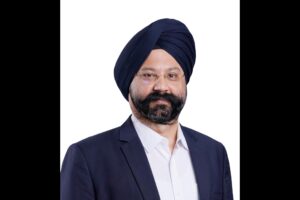
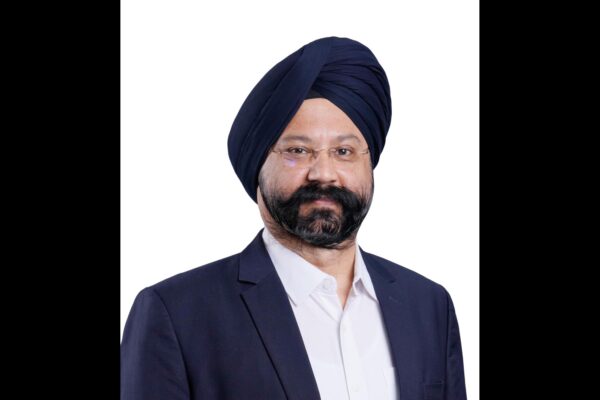
India’s wires and cables industry is witnessing sustained growth, driven by rising electricity consumption, rapid urbanisation and investments in infrastructure development. The expansion of power generation, transmission and distribution networks is creating demand for a wide range of electrical products, including low-, medium-, high- and extra-high-voltage cables. The government’s focus on strengthening the power sector is further supporting this growth. The National Electricity Plan (Transmission), 2024, envisages a significant expansion of the country’s transmission network, with its length expected to increase from 5.09 lakh circuit kilometres in June 2026 to 6.48 lakh by 2032. Transformation capacity is also projected to rise from 1,478 GVA to 2,345 GVA during the same period, creating opportunities for manufacturers of power cables and associated products. However, the industry’s growth is not limited to conventional power cables and building wires. The changing nature of infrastructure development is creating demand for specialised cables designed for specific operating conditions and applications. The expansion of solar and wind power projects, for instance, is increasing the requirement for solar DC cables, medium-voltage cables and other products capable of withstanding high temperatures, ultraviolet exposure and demanding outdoor conditions. “The changing nature of power infrastructure is creating demand for cables with more specialised performance characteristics. Renewable energy projects require solutions suited to their operating environments, while data centres need reliable electrical infrastructure to support high power loads and increasingly complex installations. Infrastructure development, railways, metro networks and EV charging are also creating requirements for application-specific cable solutions,” says Manjit Singh Sethi, President & SBU Head – Cables Segment, Havells India. Similarly, the development of high-voltage transmission networks is driving demand for EHV cables, while metro railways, airports, tunnels and commercial buildings require fire-resistant, fire-survival and low-smoke cables to meet stringent safety requirements. Data centres and telecom networks, meanwhile, need optical fibre cables, data communication cables and specialised power cables to support high-speed connectivity and uninterrupted power supply. Electric vehicle charging infrastructure and industrial automation are adding to the demand for charging, control and instrumentation cables.
Government initiatives are also providing further impetus to these segments. The Revamped Distribution Sector Scheme (RDSS), with an outlay of ₹3.03 lakh crore, aims to modernise distribution networks, reduce losses and improve the operational efficiency of distribution companies. Investments in feeder separation, substation augmentation, smart metering and network upgrades are supporting demand for conductors and power cables. The government’s target of achieving 500 GW of installed non-fossil fuel-based energy capacity by 2030 is creating opportunities in renewable-energy cables and power evacuation infrastructure. Schemes such as PM Surya Ghar: Muft Bijli Yojana and PM-KUSUM are also encouraging rooftop and decentralised solar installations. The broader infrastructure push, supported by the ₹12.2 lakh crore capital expenditure allocation in the Union Budget 2026–27, is expected to sustain demand across construction, transportation, power and industrial sectors. Alongside this, the expansion of 5G networks, data centres and digital infrastructure is strengthening the market for communication and optical fibre cables.
Strengthening Market Presence
With large corporate groups bringing substantial financial resources, business acumen and aggressive expansion plans into the wires and cables segment, competition is entering a new phase. Established players, meanwhile, are strengthening their market positions through capacity expansion, including greenfield and brownfield projects, modernisation of manufacturing facilities and wider distribution networks. Alongside these investments, they are leveraging their brand equity, manufacturing expertise and longstanding customer relationships to consolidate their presence across retail and institutional markets. “Our strategy rests on three key pillars: organisational readiness, technology readiness and backward integration. We are strengthening leadership capabilities at our manufacturing facilities, investing in digital and process improvements, and increasing control over critical inputs to reduce supply-chain dependencies” says Manjit Singh Sethi.
Capacity expansion is also a key part of this strategy, with manufacturers investing in both greenfield and brownfield projects to increase production capabilities, improve operational efficiencies and cater to growing demand across different product segments. At the same time, companies are looking to deepen their presence in existing markets and enter new geographies by strengthening their dealer and distributor networks. Expanding retail reach remains important, while a stronger focus on institutional customers and infrastructure projects is helping manufacturers tap opportunities beyond the conventional building-wire segment.
Several leading manufacturers have announced significant capital expenditure plans to strengthen their manufacturing capabilities. Finolex Cables, for instance, has outlined a capital expenditure of ₹300 crore for FY2026–27, of which ₹200 crore is earmarked for new capacity additions and ₹100 crore for completing its optical fibre expansion project. The company is also strengthening its backward integration in optical fibre manufacturing to cater to the growing requirements of data centres and digital infrastructure. Similarly, Ram Ratna Wires has approved a capital expenditure of approximately ₹86 crore to expand capacity and improve processes at its Silvassa manufacturing facilities. The project is expected to add 3,600 tonnes per annum to its existing capacity of around 45,500 tonnes, with completion targeted by March 2027. The investment will help the company improve operational efficiency and cater to rising demand. Universal Cables is also augmenting its manufacturing capabilities across voltage categories. In August 2026, the company increased the outlay for its ongoing capacity expansion programme from ₹550 crore to approximately ₹617 crore, primarily to enhance medium- and high-voltage cable production through debottlenecking. It is separately investing around ₹74 crore in technological upgradation and modernisation of its extra-high-voltage cable manufacturing facility at Satna, Madhya Pradesh
KEI Industries is developing its greenfield manufacturing facility at Sanand, Gujarat, under a planned investment of approximately ₹1,900–2,000 crore. The first phase, covering low- and high-tension cables, commenced commercial production in December 2025, while the second phase, which includes extra-high-voltage cable manufacturing, is expected by March 2027. Polycab India, meanwhile, has outlined an investment of ₹6,000–8,000 crore over five years under its Project Spring growth roadmap, focusing on capacity expansion, backward integration, digitisation and technology upgrades.
Expanding Market Presence
As competition heats up, manufacturers are stepping up efforts to capture a larger share of the growing wires and cables market. In this race, dealers and distributors remain a vital link between manufacturers and end-users, playing a key role in expanding market reach, strengthening brand visibility and driving sales. A well-established distribution network enables companies to make their products accessible across geographies, including smaller cities and emerging markets, while building stronger relationships with electricians, contractors, builders and retail customers. “A simple principle of distribution will govern the growth process – dealers and distributors will gravitate towards brands that are certified, available and supported. The Wires and Cables segment already caters to electrical dealers, distributors, contractors, builders, infrastructure projects, OEMs and end users and will build on this network. The emphasis will be on developing strong relationships with electrical dealers and distributors in key markets, who in turn will have reliable inventory and timely delivery through the integration of SAP and a range of products with ISI marks,” says Pramod C, Director, Gopalan Metals.
Beyond ensuring product availability, dealers and distributors also help manufacturers understand regional market requirements, introduce new products and respond to changing customer preferences. Consequently, companies are focusing on expanding their dealer base, strengthening relationships with existing channel partners and providing them with better technical support, product knowledge and marketing assistance. At the same time, a stronger institutional sales network is helping manufacturers reach infrastructure developers, EPC contractors, utilities and industrial customers.
Advancing Technology
While capacity expansion and wider distribution networks are important for strengthening market presence, manufacturers are increasingly recognising that technology, product quality and innovation will be equally critical to sustaining growth. The changing requirements of infrastructure projects, coupled with the growing adoption of advanced electrical systems, are driving demand for cables that offer higher performance, greater durability and enhanced safety. Applications such as renewable energy, data centres, metro rail, airports, industrial automation and power transmission require products designed to operate under specific conditions, often involving high temperatures, voltage variations, moisture, fire risks and demanding installation environments. This is encouraging manufacturers to invest in advanced production technologies, automated processes, testing facilities and product development. Greater emphasis is also being placed on compliance with national and international quality standards, as project owners and institutional customers increasingly look for reliability, consistent performance and longer service life. The ability to develop application-specific solutions, maintain stringent quality controls and offer technical support is becoming an important differentiator, particularly in the high-voltage, extra-high-voltage and specialised cable segments. As the industry’s requirements evolve, manufacturers that combine scale with technological capabilities and quality assurance are likely to be better positioned to tap emerging opportunities.
Wiring for Growth
The industry, however, continues to face challenges, particularly from fluctuations in the prices of key raw materials such as copper and aluminium. Since these metals account for a significant share of cable manufacturing costs, price volatility can affect procurement strategies, working capital requirements and profit margins. Manufacturers must also contend with intense price competition, particularly in the retail market, where organised players face competition from regional and unorganised manufacturers. Geopolitical uncertainties and the conflict in West Asia have added another layer of complexity, with potential implications for energy prices, shipping routes, freight costs and global supply chains. The availability of skilled manpower is another concern as manufacturers expand production capacities and adopt advanced manufacturing technologies. The industry requires trained personnel across production, quality control, testing, maintenance and technical operations. Bridging this skill gap through workforce training and capability development will be important to improving productivity, maintaining quality standards and supporting the sector’s expansion.
Despite these challenges, the long-term outlook for the wires and cables industry remains encouraging. The government’s continued focus on infrastructure development, backed by higher capital expenditure, is expected to sustain demand across power transmission and distribution, renewable energy, transportation, construction and industrial sectors. The expansion of data centres, digital networks and electric mobility infrastructure will further widen the market for specialised cable solutions. As India advances its infrastructure and energy transition goals, the industry is poised to benefit from a growing requirement for reliable, high-performance electrical and communication networks.
Tags