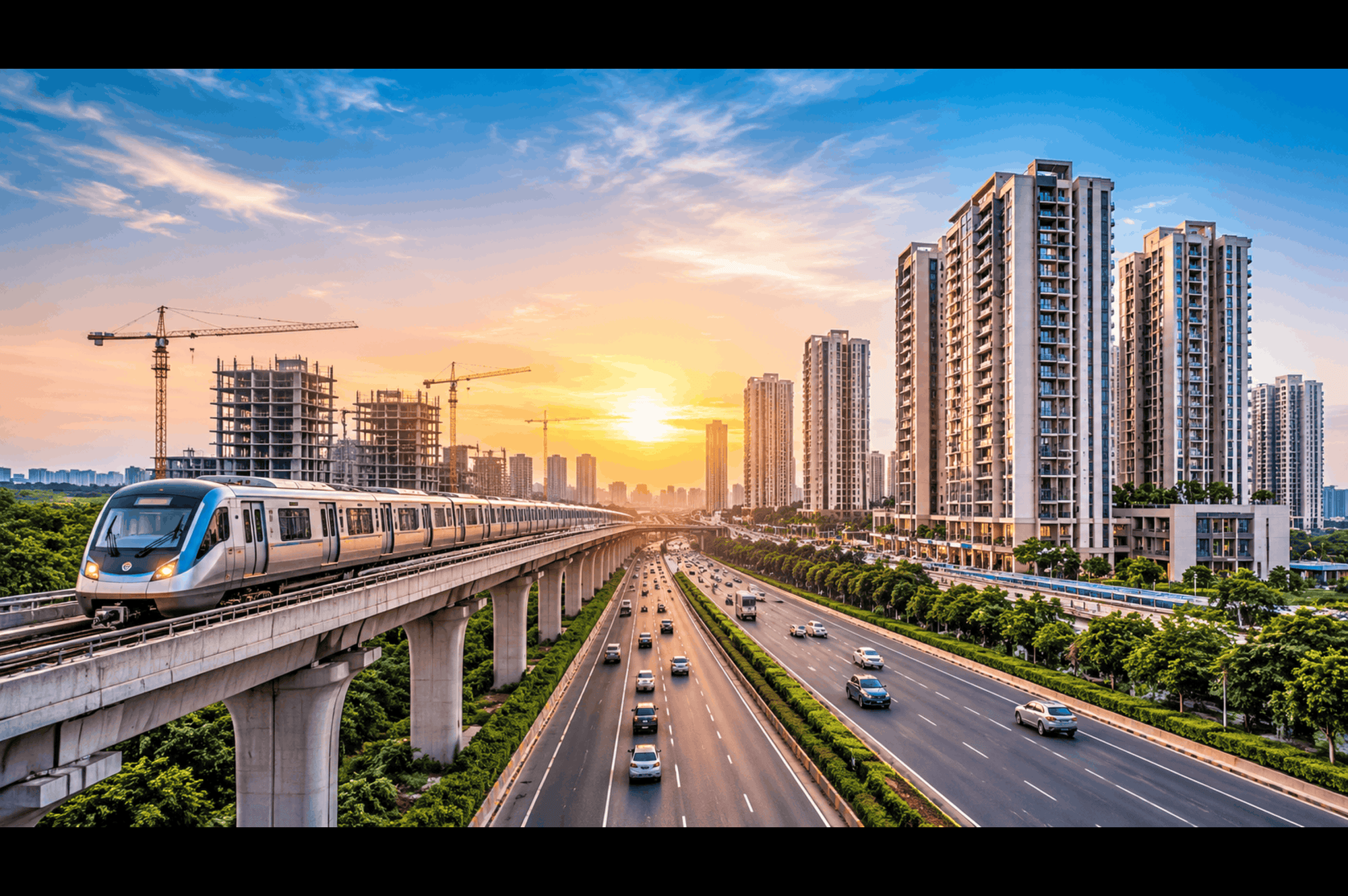
Real Estate: Riding the New Infrastructure Wave

From expressways and metro networks to airports and freight corridors, improved connectivity is creating fresh opportunities for developers, businesses and investors. Backed by domestic and foreign institutional investment, supportive government policies and large-scale infrastructure projects, this momentum is opening up new growth corridors and transforming emerging urban centres into promising real estate destination. Read on…
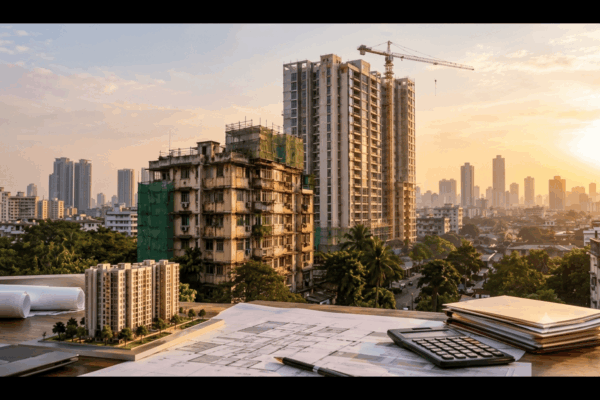
India’s infrastructure landscape has undergone a significant transformation over the past decade, with the expansion of national highways into six-lane corridors, the rapid growth of metro rail networks across cities, the development of new airports and the emergence of industrial corridors reshaping the country’s connectivity and economic geography. These developments have not only improved access to major urban centres and emerging growth destinations but have also given fresh impetus to real estate investment. “Infrastructure is redrawing India’s real estate map. Its impact is most visible where mobility, access to talent, freight connectivity, and planned urban development come together,” says Anshuman Magazine, Chairman & CEO, India, Southeast Asia, Middle East & Africa, CBRE.
Better connectivity, improved logistics and the development of supporting infrastructure are making previously peripheral locations more attractive to homebuyers, businesses, developers and institutional investors, creating new opportunities across residential, commercial and industrial real estate. “In the residential segment, improved connectivity is expanding housing demand across emerging urban centres and peripheral locations, while enhancing liveability, supporting land value appreciation and enabling large-scale township developments. In the commercial segment, better connectivity and the emergence of new employment hubs are driving demand for office spaces, retail and supporting social infrastructure. Meanwhile, in the industrial and warehousing segment, dedicated freight corridors, multimodal logistics parks and improved transport connectivity are enhancing supply-chain efficiency and attracting manufacturing, logistics and e-commerce occupiers,” says Vimal Nadar, National Director & Head, Research, Colliers India.
India’s real estate market has consequently emerged as an increasingly attractive destination for long-term global capital. “The investment trajectory has continued to strengthen, with equity inflows reaching USD 18.6 billion in the first nine months of 2026, already surpassing every full-year total since 2018. Q3 2026 alone recorded USD 9.5 billion, the strongest quarter on record. Three factors are driving this momentum,” says Anshuman Magazine.
Investment Trends: Where’s the Capital Flowing?
According to Cushman & Wakefield’s Q3 2026 Capital MarketBeat report, investments reached USD 2.1 billion, registering a 12% quarter-on-quarter (q-o-q) and 20% year-on-year (y-o-y) increase. Foreign investors contributed USD 1.4 billion, accounting for 68% of total investments during the quarter, while domestic institutional investors contributed the remaining USD 700 million (32%). Foreign investments increased 64% q-o-q and 134% y-o-y, reflecting renewed interest in Indian real estate. Among the different asset classes, data centres emerged as the largest recipient of institutional capital during Q3 2026, attracting 52% of total investment and moving up from the second position in the previous quarter.
According to Colliers India, Institutional investments during the first three quarters of 2026, with capital inflows reaching USD 5.9 billion, reflecting a 39% Year-on-Year (YoY) growth. Domestic investors remained the dominant source of capital during the nine-month period, contributing USD 3.5 billion and accounting close to 60% of the total investments during the period. During these quarters, office segment attracted USD 2.2 billion in capital inflows, witnessing a 46% YoY rise. Sustained leasing momentum across high-quality Grade A office assets and long-term demand prospects continue to reinforce the segment’s attractiveness amongst investors. While office assets remained the major driver of real estate investments, accounting for 37% share during the nine-month period, mixed-use & alternative assets followed, with each of them corresponding to a share of 16-17%. During the nine-month period, alternative & hospitality assets garnered over USD 0.9 billion & USD 0.6 billion investments respectively, individually rising 6-7X times compared to the corresponding period of 2025. At around USD 0.6 billion inflows each, Bengaluru, Chennai & Delhi NCR dominated investment volumes, cumulatively accounting for nearly one-third share during the first nine months of 2026. Office assets drove majority of the investment inflows in these three cities during the same period.
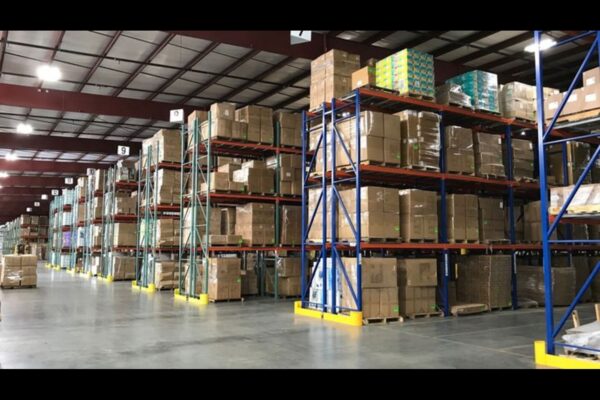
Industrial and warehousing assets are also attracting institutional capital, supported by growing demand for organised logistics infrastructure and modern storage facilities. “Warehousing and logistics to benefit most directly from India’s infrastructure expansion, as expressways, dedicated freight corridors and multimodal logistics parks improve freight efficiency and create demand for modern storage and distribution facilities,” says Ankita Sood, National Director- Research, Knight Frank India. According to Colliers India, the segment attracted USD 371.9 million in institutional investments during the first nine months of 2026, registering a 15% year-on-year increase. Savills, meanwhile, reported that industrial and logistics assets accounted for 22% of private-equity investment inflows in Q3 2026. Institutional participation is also extending to new developments, with CBRE reporting that around 33% of new warehousing supply in H1 2026 was institutionally backed.
Infrastructure Corridors: Opening Up New Growth Locations
The impact of infrastructure development is becoming increasingly visible in the emergence of new real estate growth corridors. Expressways, airports, metro networks and dedicated freight corridors are extending the reach of established urban centres, bringing previously peripheral locations into the real estate development and investment landscape. “Infrastructure development is playing an important role in shaping real estate growth across India. Metro expansion, airport connectivity and improved road networks are opening up new growth corridors and making locations beyond established city centres increasingly attractive,” says Priyanka Raju, Director, Kalyani Developers. A clear example of this trend is the Yamuna Expressway corridor, where improved road connectivity and the development of the Noida International Airport at Jewar are strengthening the region’s appeal for residential, commercial and industrial development. The airport-led infrastructure push is also drawing attention to surrounding locations, creating opportunities for developers and investors. “The Delhi-Meerut RRTS is strengthening residential demand across Ghaziabad and Meerut by improving access to Delhi. Similarly, the Yamuna Expressway and Noida International Airport at Jewar are catalysing development across the YEIDA region, creating opportunities in residential townships, commercial real estate, warehousing and industrial parks,” says Ankita Sood. In the National Capital Region, the Delhi–Mumbai Expressway and Western Dedicated Freight Corridor are improving access to industrial and warehousing hubs, supporting the growth of logistics and manufacturing clusters.
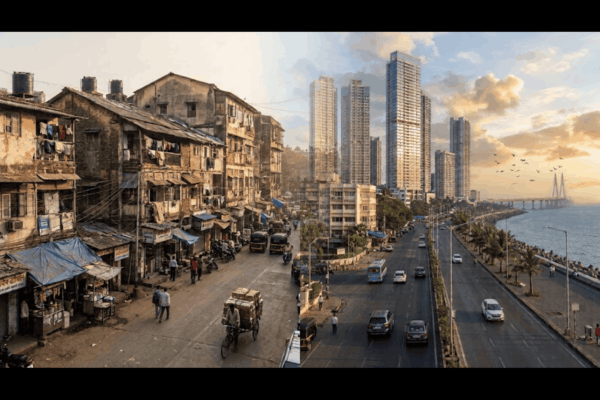
Similar developments are reshaping real estate prospects in other regions. In the Mumbai Metropolitan Region, the Mumbai Trans Harbour Link and Navi Mumbai International Airport are improving connectivity to previously less accessible locations, strengthening their potential for residential, commercial and logistics development. “The Mumbai Metropolitan Region is a strong example. The Atal Setu, the Navi Mumbai International Airport, which commenced commercial operations in December 2025, and the expanding metro network are bringing Panvel, Ulwe and the wider Navi Mumbai belt into the region’s core economic geography. Navi Mumbai is also emerging as one of India’s leading data center hubs, supported by the availability of large land parcels, power, and network connectivity,” says Anshuman Magazine.
The trend is not limited to the peripheral areas of major metropolitan cities. Infrastructure investments are also improving the real estate prospects of Tier-II and Tier-III cities, where new highways, airports, industrial corridors and urban transport projects are enhancing connectivity and supporting economic activity. “Beyond the established real estate markets, Tier II cities such as Coimbatore, Indore, Surat, Nashik, Visakhapatnam, Nagpur, Jaipur and Bhubaneswar are increasingly gaining traction due to improving infrastructure, supportive regulatory policies, economic development and expanding supply of high-quality assets,” says Vimal Nadar. As Tier-II and Tier-III cities become better connected to larger consumption and employment centres, they are attracting interest from homebuyers, developers and businesses. This is creating opportunities across residential, commercial and industrial segments, while also encouraging developers to explore markets beyond the traditional metropolitan hubs. “Improved connectivity is playing an important role in shaping residential demand across Tier 2 cities by enhancing access to employment hubs, commercial centres and neighbouring urban markets. Several cities in the dataset are witnessing infrastructure development that could further strengthen their residential appeal,” says Prasun Kumar, CMO, Magicbricks.
Connectivity Reshaping Housing Demand
The expansion of transport infrastructure is having a direct bearing on residential real estate, influencing both homebuyer preferences and developers’ location strategies. Improved metro connectivity, expressways and airport links are making peripheral areas and emerging urban centres more accessible, encouraging homebuyers to consider locations beyond established city centres. Better connectivity also reduces travel time to employment hubs and commercial districts, while access to schools, healthcare facilities and other social infrastructure adds to the appeal of these locations. “In residential, metro lines, expressways and new airports are widening the radius of liveable housing. Homebuyers are willing to move further from city centers when commutes are predictable, which is why well-connected peripheral locations are attracting new launches and integrated townships,” says Anshuman Magazine. For developers, this is creating opportunities to expand into emerging residential corridors through integrated townships and projects catering to different buyer segments. As a result, infrastructure is increasingly becoming a key factor shaping residential demand, property values and the geographical spread of housing development across Indian cities. “Buyers may be willing to pay a premium for better-connected locations when the benefits are tangible and justify the price. For developers, the focus is therefore not just on connectivity, but also on the wider ecosystem, including social infrastructure, liveability and long-term growth potential. The objective is to create developments that offer convenience today while delivering lasting value over time,” says Priyanka Raju.
Connectivity Driving New Business Hubs
Improved infrastructure is also influencing the location and expansion strategies of commercial real estate developers and occupiers. ““In commercial real estate, connectivity is central to the emergence of new business districts. Occupiers, particularly global capability centers, prioritize access to talent, and well-planned, transit-linked office micro-markets are best placed to provide it,” says Anshuman Magazine. Metro networks, expressways and airport connectivity are improving access to business districts and expanding the reach of office markets beyond established commercial centres. At the same time, the emergence of new employment hubs, particularly in growing urban corridors, is creating demand for Grade A office spaces, retail developments and mixed-use projects. Better connectivity is therefore becoming an important consideration for businesses evaluating locations, while enabling developers to explore new commercial destinations. “Better connectivity and the emergence of new employment hubs are driving demand for office spaces, retail and supporting social infrastructure,” says Vimal Nadar. This shift is reflected in the growing prominence of emerging office markets across major cities. Improved connectivity is supporting the expansion of commercial developments in locations such as Whitefield and North Bengaluru, Gurugram’s Dwarka Expressway corridor and the extended business districts of Navi Mumbai.
Connectivity into Opportunity
The continued expansion of multimodal connectivity, industrial corridors and urban transport networks is expected to create new real estate growth centres, strengthen regional economies and widen the market for institutional investment. Government investment is providing an important foundation for this infrastructure-led real estate expansion. Under the Union Budget 2026–27, public capital expenditure has been increased to ₹12.2 lakh crore, with a continued focus on transport connectivity, industrial corridors and urban infrastructure. The allocation of ₹5,000 crore per City Economic Region over five years is also aimed at strengthening emerging growth centres, particularly in Tier-II and Tier-III cities. Alongside investments in highways, regional airports and industrial infrastructure, these initiatives are expected to improve connectivity, support economic activity and create opportunities for private real estate development across a wider range of markets. However, translating this potential into sustainable growth will require coordinated planning, timely project execution and supporting infrastructure. Improved last-mile connectivity, reliable power and water supply, streamlined land approvals and the integration of housing, employment centres and transport networks will be critical. Equally important will be the adoption of sustainable building practices and climate-resilient development. As infrastructure investment continues to reshape India’s economic geography, its long-term impact on real estate will depend on how effectively connectivity, urban planning and private investment come together to create well-connected, liveable and economically vibrant destinations.