
Interview: Ankita Sood, National Director- Research, Knight Frank India

What’s driving investment, and how has investor confidence evolved?
Institutional investment growth in Indian real estate is being driven by strong office demand, with gross leasing reaching a record 86.4 mn sq ft in 2025, supported by the expansion of GCCs, which accounted for 38% of office absorption. The growing role of REITs and InvITs has widened investor participation by providing income-generating investment opportunities and structured exit routes, while equity-led investments reflect investor preference for ownership stakes and platform-based investments. Investor confidence in Indian real estate has strengthened alongside resilient economic growth, improving asset performance and rising domestic capital participation. Domestic investors’ share of real estate PE investment increased from 11% during 2011-2020 to 32% over the subsequent six-year period, helping offset cautious foreign investment flows. Record leasing across office and warehousing assets, sustained residential demand and the recovery in retail have reinforced the sector’s underlying fundamentals. While global uncertainty and elevated return expectations have made investors more selective, capital is increasingly favouring income-generating assets and downside-protected investment structures.
How is infrastructure development, including highways, metro rail, airports and industrial corridors, influencing real estate growth across residential, commercial and industrial segments in India?
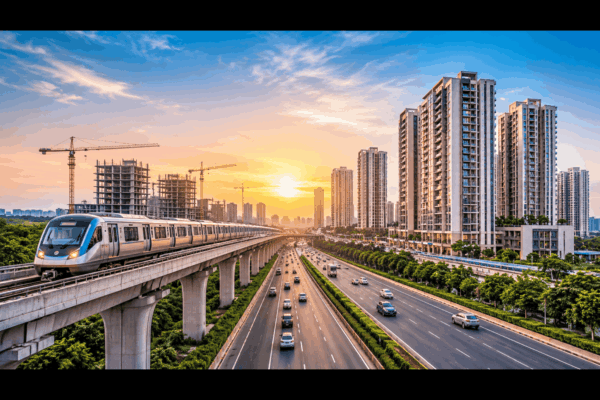
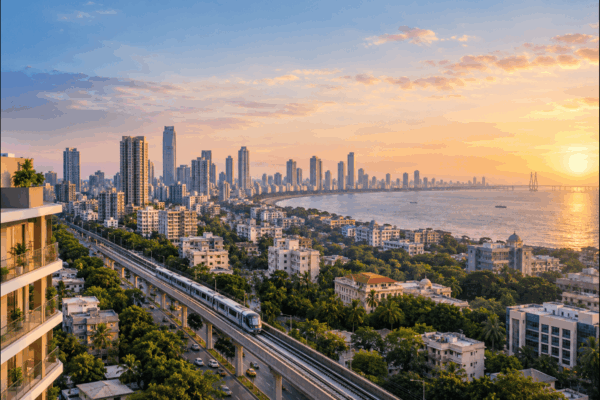
Infrastructure investment is reshaping India’s real estate market by improving connectivity, expanding urban catchments and strengthening industrial networks. Public capital expenditure has increased from Rs 2 lakh crore in FY 2015 to a budgeted Rs 12.2 lakh crore budgeted for FY2027, reinforcing infrastructure-led growth. In residential real estate, metro rail, expressways and airports improve accessibility and open up peripheral locations for housing, including mid-income and affordable segments. In commercial real estate, enhanced connectivity supports the growth of office clusters around transit networks and airports, improving employee access and occupier appeal. In industrial and logistics real estate, expressways, dedicated freight corridors and multimodal logistics parks improve freight efficiency and drive demand for warehouses, distribution centres and industrial parks along key transport corridors.
Which cities, corridors or emerging micro-markets are witnessing the strongest real estate growth due to infrastructure development? Could you share a few examples of projects or locations where this impact is particularly evident?
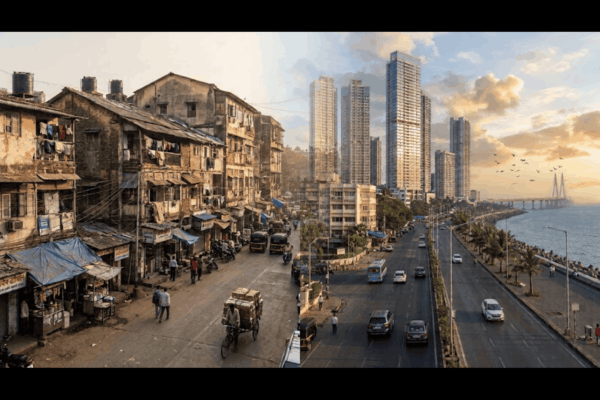
Real estate opportunities are increasingly emerging along major infrastructure corridors that improve regional connectivity and unlock new development centres. The Delhi-Meerut RRTS is strengthening residential demand across Ghaziabad and Meerut by improving access to Delhi. Similarly, the Yamuna Expressway and Noida International Airport at Jewar are catalysing development across the YEIDA region, creating opportunities in residential townships, commercial real estate, warehousing and industrial parks. In the Mumbai Metropolitan Region, the Navi Mumbai International Airport, alongside the Mumbai Trans Harbour Link, is enhancing the development potential of Navi Mumbai, Ulwe and Panvel, supporting residential, commercial, hospitality and logistics activity. These examples illustrate how trunk infrastructure is extending real estate growth beyond established urban centres, creating new investment corridors linked to improved connectivity and emerging economic hubs.
How are improved connectivity and infrastructure influencing property demand, land values and development patterns beyond established urban centres, particularly in tier-II and tier-III cities?
Improved connectivity through expressways, airports and industrial corridors is expanding real estate demand beyond established metros, with tier-II and tier-III cities emerging as alternative residential, retail and logistics hubs. As per our analysis, housing prices across 11 emerging markets rose 63% between 2021 and 2026, compared with 42% in the top eight cities. In warehousing, 13 secondary markets recorded 11.2 mn sq ft of transactions in 2025, led by Lucknow at 1.9 mn sq ft, while Nagpur recorded the fastest growth at 204%. Tier-II cities also accounted for 36 mn sq ft of India’s 134 mn sq ft organised shopping-centre stock in 2025. These trends are reshaping development patterns, with demand shifting towards integrated residential communities, organised retail and logistics facilities along major transport corridors. Land values are also rising in locations benefiting from improved accessibility. However, sustained growth will depend on cities translating infrastructure improvements into employment generation, industrial activity and stronger local economic fundamentals.
Which real estate segments – residential, office, retail, warehousing, logistics or data centres – are likely to benefit the most from India’s ongoing infrastructure expansion? What opportunities do these trends present for developers and investors?
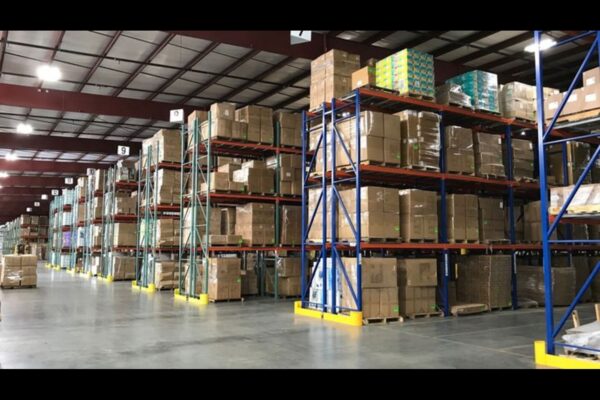
Warehousing and logistics to benefit most directly from India’s infrastructure expansion, as expressways, dedicated freight corridors and multimodal logistics parks improve freight efficiency and create demand for modern storage and distribution facilities. Office demand continues to benefit from GCC expansion and improved connectivity to employment hubs, while residential development is gaining momentum along metro, expressway and airport corridors, particularly in emerging urban centres. Retail growth is likely to follow as improved accessibility and residential expansion create new consumer catchments. For developers and investors, these trends create opportunities to develop logistics parks at transport interchanges, and residential and mixed-use projects around transit networks. Investing early in emerging corridors with committed infrastructure projects and strong economic fundamentals can offer growth potential. Meanwhile, institutional investors can build scalable office and warehousing portfolios for REITs, while the recycling of surplus public-sector real estate through dedicated REIT structures could unlock additional investment opportunities.
Looking ahead, what role will planned infrastructure investments and government initiatives play in shaping India’s real estate landscape over the next five years, and what challenges must be addressed to ensure sustainable, infrastructure-led growth?
Over the next few years, planned infrastructure investments will increasingly shape India’s real estate growth, extending development beyond established metropolitan centres into emerging urban corridors and tier-II cities. The Union Budget FY2027, Rs 12.2 lakh crore CAPEX allocation, alongside investments in expressways, metro rail, regional rapid transit systems, airports, freight corridors and multimodal logistics parks, is expected to improve connectivity, unlock land for development and strengthen links between residential markets, employment hubs and industrial clusters. Initiatives such as the National Infrastructure Pipeline and PM Gati Shakti can further improve coordination between transport, utilities and urban development. However, sustainable growth will depend on translating infrastructure investment into productive economic activity. Delays in project execution, fragmented land-use planning, land acquisition challenges, and inadequate last-mile connectivity can limit the benefits of major transport projects. Emerging corridors must also address water availability, power reliability, sewage and waste management, and climate resilience to avoid creating urban centres that are physically connected but inadequately serviced. For investors and developers, the priority should be to align development with operational or firmly committed infrastructure, employment creation, and local demand rather than speculative expectations of future appreciation. Better coordination between infrastructure agencies, urban planners and private developers will be critical to ensuring that connectivity generates durable real estate demand and more balanced urban growth.