Can Indian cities build faster without increasing pollution?

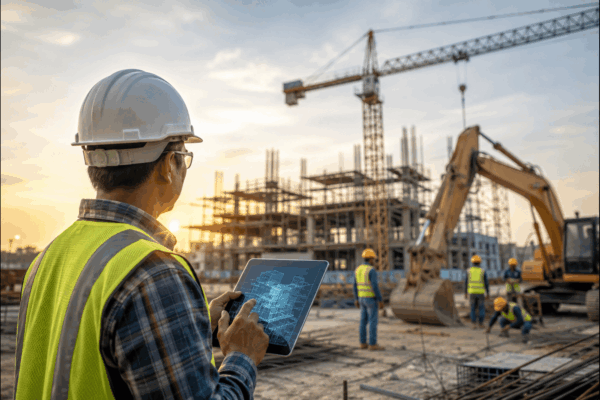
Every Indian city has a construction problem, and it is not the one the headlines usually describe. The real problem is not that we are building too slowly. It is that the way we build is, increasingly, incompatible with the cities we are building for.
Consider Delhi. In a single five-week enforcement drive ending in November 2025, the city’s pollution control committee inspected 1,262 construction sites, shut 48 of them, and imposed Rs 2.36 crore in environmental compensation for dust-control violations. Mumbai, Bengaluru and Gurugram are tightening their own rules. Source apportionment studies have for years placed construction and road dust among the top contributors to particulate matter in northern Indian cities, even as estimates of its exact share vary.
And yet the country still has to build. The Economic Survey 2023-24 projects that more than 40% of Indians will live in cities by 2030, millions of homes, roads, metro lines and logistics hubs away from where the country is now. The question is no longer whether India will build more. It is whether it can build differently.
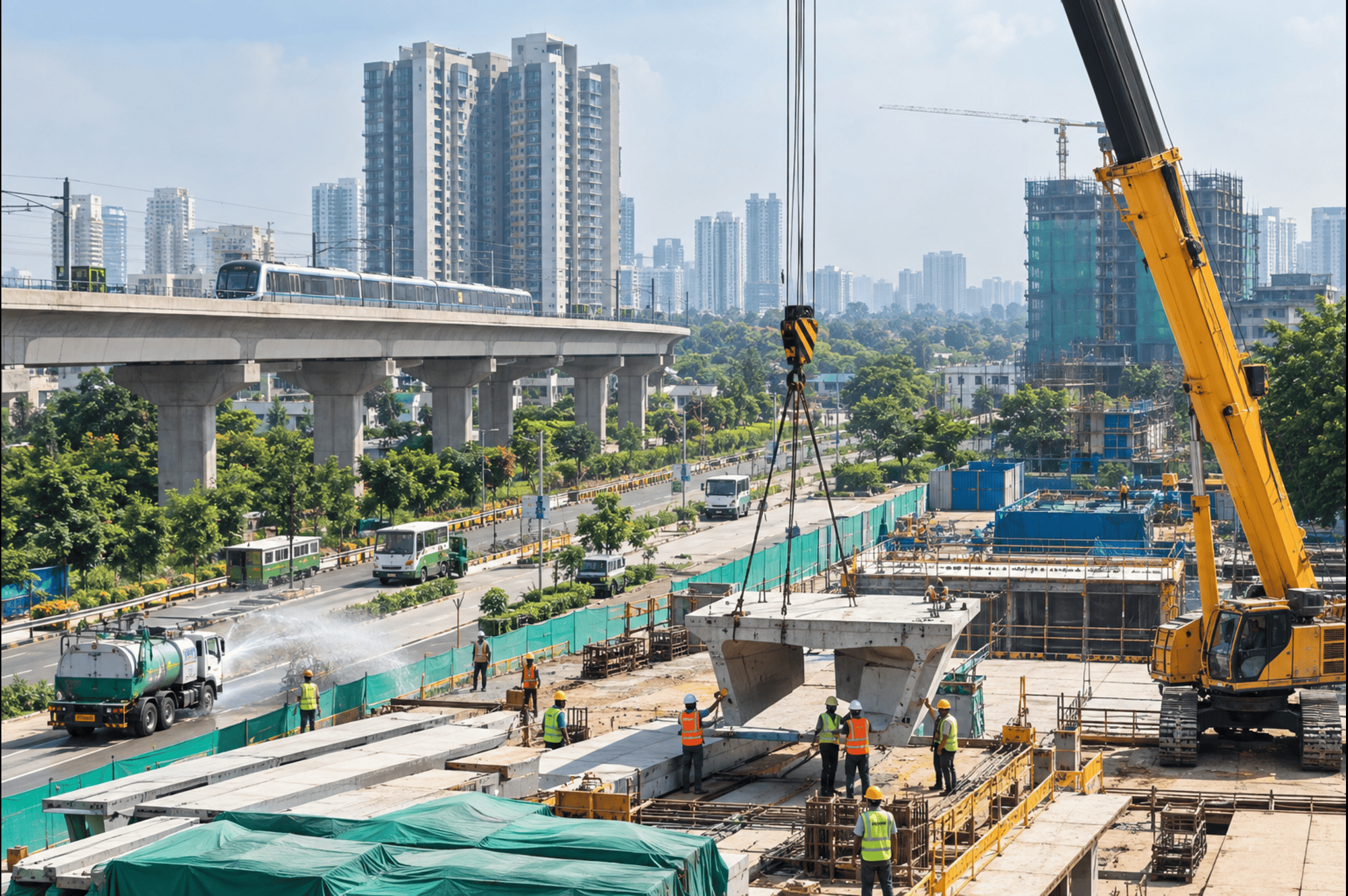
Unlike traditional construction, where most activities happen on-site over long periods, prefabrication shifts a large part of the process into factories. Walls, slabs, steel sections and structural components are manufactured in controlled environments and then assembled at the site. The difference may sound technical, but its impact on cities is visible.
For one, it significantly reduces on-site dust, debris and waste. Conventional construction sites often involve constant cutting, mixing, curing and material movement over months or even years. Prefabrication reduces much of this activity because components arrive ready to install. Fewer raw materials lying openly on-site also means lower dust dispersion — one of the biggest urban pollution concerns today.
The environmental impact goes beyond cleaner sites. A 2021 study in Buildings (MDPI) reviewing modular construction case studies found on-site waste reductions ranging from 14% to 70%, averaging around 50% – though the reduction depends heavily on how much of the structure is actually prefabricated.Since components are manufactured precisely in factories using digital models, there is less over-ordering, rework and breakage. Water usage is also lower because many prefab systems minimise wet construction processes such as on-site curing.
And perhaps most importantly for fast-growing Indian cities, prefab construction helps reduce timelines dramatically.
A shorter project duration means fewer months of diesel generators running, fewer trucks moving in and out of congested urban roads, and less prolonged disruption for residents living around project sites. In dense urban environments where construction can stretch for years, this matters more than ever.
Technology is playing a critical role in making this possible. Modern prefabrication today is not just about factory-made components. It relies heavily on digital planning tools, Building Information Modelling (BIM), and connected workflows that help teams coordinate every stage of construction before physical work even begins. This level of precision reduces errors on-site and ensures components fit together correctly during installation.
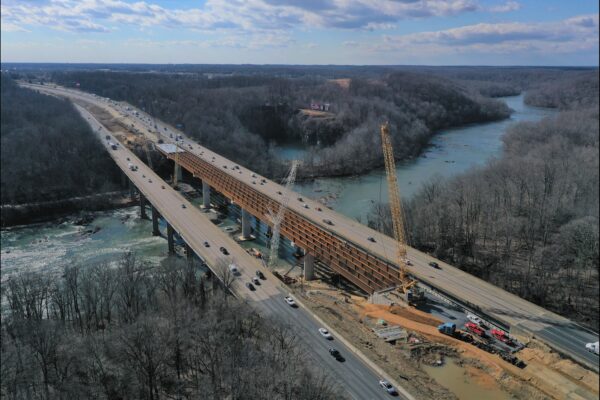
In India, several large infrastructure projects have already started adopting these approaches. Trimble’s Tekla software, for instance, has been used extensively in projects involving precast and complex structural coordination. On the Dwarka Expressway project, digital modelling helped teams manage intricate structural elements and improve coordination across stakeholders. Similarly, prefabrication-led workflows are increasingly being adopted in housing, metro rail and industrial infrastructure projects where speed and consistency are critical.
What makes prefab especially relevant for India is the scale of urbanisation ahead. Nearly 40% of India’s population is expected to live in cities by 2030. That means the country still has to build millions of homes, roads, logistics hubs and public infrastructure assets over the next decade. If these projects continue to rely entirely on conventional construction methods, cities will struggle to balance growth with environmental sustainability.
Of course, prefabrication has real limits.Costs, logistics, transportation and skill gaps still remain challenges in many parts of the country. Discussions around prefab adoption in India often highlight issues such as transport limitations, upfront investment and awareness gaps. But the shift has clearly begun, especially in large urban and infrastructure projects where speed, predictability and sustainability are becoming equally important.
The next decade of Indian construction is already booked. The homes, the metros, the warehouses, the flyovers; they will be built whether or not the way we build them changes. What is still open is the air the cities breathe while it happens: the materials, the timelines, the dust. That decision gets made one site at a time.
Tags