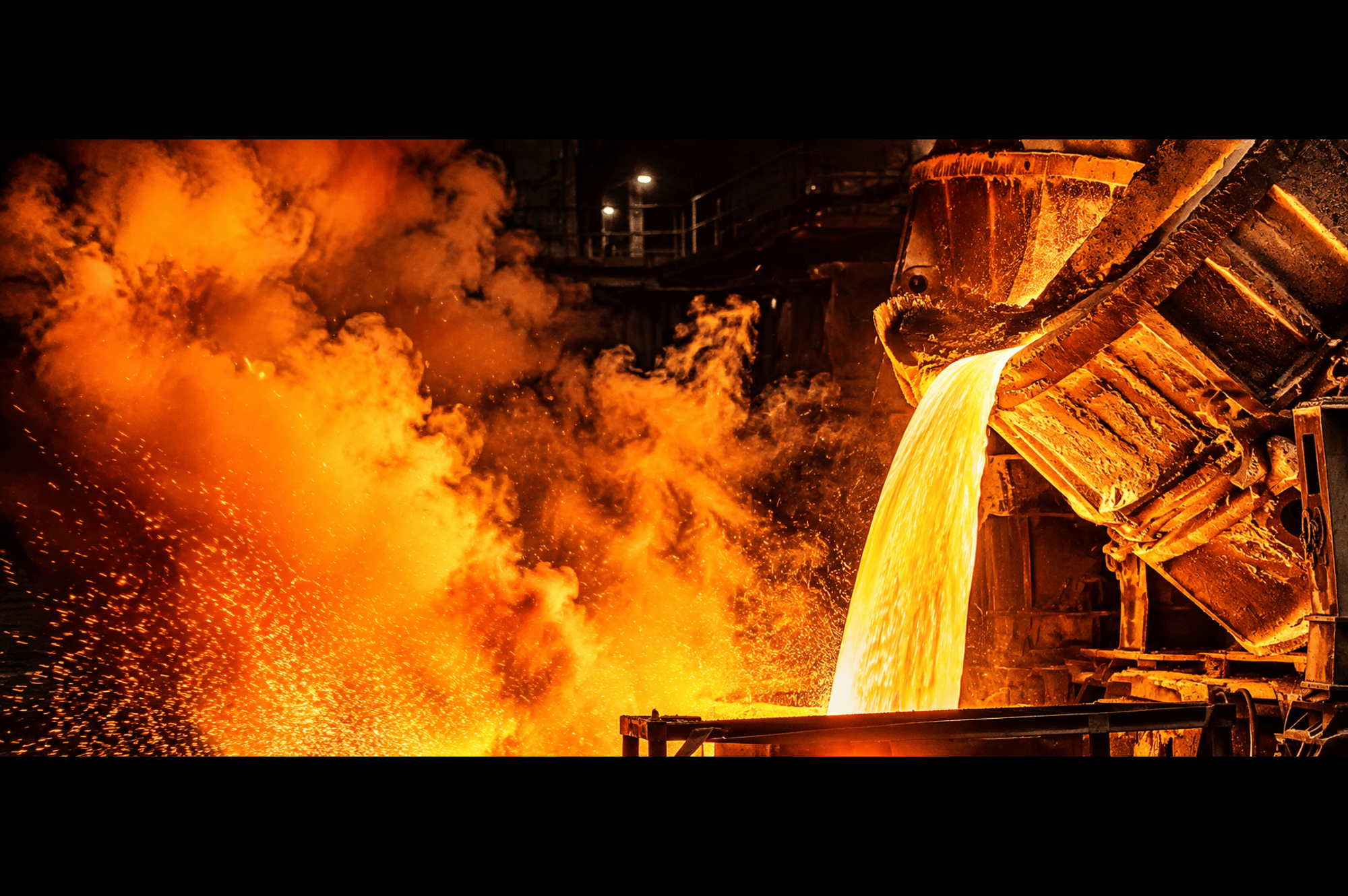
Steel Industry: Navigating Geopolitical Headwinds

India’s steel sector is entering a new phase of growth, supported by strong domestic demand, infrastructure spending and capacity expansion. However, global uncertainties, rising input costs, import pressures and the need for decarbonisation are reshaping the industry.
India is the second-largest producer of crude steel globally and one of the largest consumers of finished steel. The steel sector contributes roughly 2 per cent to the national GDP and provides direct employment to over 600,000 people and indirect employment to another 2 million. The industry acts as a key economic multiplier, driving growth across infrastructure, manufacturing and trade. According to recent Press Information Bureau (PIB) data, crude steel production increased 2.6 per cent year-on-year to 56.3 MT during April–July 2026, while finished steel production grew at a faster pace of 4 per cent to 54.3 MT. More significantly, finished steel consumption rose 7.8 per cent to 55.9 MT during the period, indicating strong domestic demand. The strong demand was also reflected in India’s trade dynamics. Finished steel imports increased 36.6 per cent year-on-year to 2.77 MT during April–July 2026, while exports rose 35 per cent to 2.29 MT.
India has set an ambitious target of crossing the US$5 trillion GDP milestone by FY2028–29, reaching approximately US$5.1 trillion. Achieving this growth will require sustained investment in infrastructure, making infrastructure development a key priority for the government. In the Union Budget 2026–27, the government has allocated a record ₹12.2 lakh crore towards public capital expenditure, up from ₹11.2 lakh crore in the previous fiscal year. The increased allocation is aimed at supporting long-term economic growth, improving logistics efficiency and promoting regional development. The continued thrust on infrastructure development is expected to provide further impetus to steel demand, given the material’s critical role across roads, railways, bridges, ports, airports, urban infrastructure and industrial projects. “The sustained government capital expenditure on Infrastructure (through PM Gati Shakti, the National Infrastructure Pipeline, PMAY and Make in India etc) continues to anchor steel consumption across construction, housing, and manufacturing. Sensing the growing demand for Steel in Indian economy, the domestic producers are augmenting the production capacities and volumes in a graded way,” says P K Mishra, Director General, INSDAG.
Strengthening the Steel Ecosystem
The government has undertaken a series of policy initiatives to strengthen India’s steel sector, with the focus extending beyond capacity creation to include specialty steel, domestic manufacturing, import monitoring and decarbonisation. The National Steel Policy (NSP) 2017 remains the broad policy framework, targeting 300 MTPA of crude steel capacity and 160 kg of per-capita steel consumption by 2030–31. The policy has provided a foundation for subsequent measures aimed at enhancing domestic production, value addition and competitiveness. Complementing the sector-specific policies, the government’s infrastructure-led growth strategy, supported by initiatives such as PM Gati Shakti and the National Infrastructure Pipeline (NIP), is providing a strong demand base for steel. By promoting integrated infrastructure planning and multimodal connectivity, these initiatives are expected to drive steel consumption across roads, railways, ports, airports, urban infrastructure, housing and industrial projects. The continued emphasis on infrastructure development is also shifting the focus towards the durability and lifecycle performance of steel-intensive assets. “India’s unprecedented infrastructure push, anchored by the National Infrastructure Pipeline (NIP) and PM Gati Shakti, is shifting the structural engineering narrative from low initial cost to long-term asset resilience and climate durability,” says Rajamani Krishnamurti, President, Indian Stainless Steel Development Association.
A key intervention has been the Production Linked Incentive (PLI) Scheme for Specialty Steel, launched in July 2021 with an overall outlay of ₹6,322 crore to promote domestic manufacturing of high-value steel and reduce import dependence. The scheme has since been expanded through two subsequent rounds. The second round, PLI 1.1, was launched in January 2025 with relaxed participation norms to encourage wider industry participation, while the third round, PLI 1.2, was launched in November 2025 to support investment in advanced steel products. Under the first two rounds, the scheme had attracted investment commitments of ₹43,874 crore by September 2025, with ₹22,973 crore already invested. PLI 1.2 further expanded the scope to 22 product sub-categories, including super alloys, CRGO, stainless steel long and flat products, titanium alloys and coated steels. The government has also strengthened measures to promote domestic manufacturing and monitor imports. The revised Domestically Manufactured Iron & Steel Products (DMI&SP) policy mandates the use of fully Indian-made steel in government procurement, while the Steel Import Monitoring System (SIMS) provides greater visibility into imported steel by requiring advance information on grades, specifications and end-use. These measures are aimed at strengthening domestic manufacturing and providing greater transparency in steel trade.
Sustainability: The Road to Greener Steel
Sustainability has emerged as an important priority for India’s steel sector, with producers increasingly focusing on reducing carbon intensity, improving resource efficiency and adopting cleaner technologies. The transition, however, is complex for an industry that remains energy- and carbon-intensive and requires significant investment in new technologies and processes. Sustainability is emerging as a key priority for India’s steel sector, with the focus shifting towards reducing carbon intensity, improving resource efficiency and adopting cleaner technologies. The Ministry of Steel’s ‘Greening the Steel Sector in India: Roadmap and Action Plan’, released in March 2025, provides a framework for the sector’s transition towards lower-carbon steel and supports India’s broader net-zero target for 2070. The roadmap covers a Green Steel Taxonomy, financial support for cleaner technologies and the adoption of green hydrogen, CCUS and renewable energy. The proposed use of green steel in public infrastructure from FY28 could further create demand for low-emission steel. “We believe sustainability is going to shape the future of India’s steel industry in a big way. With the Green Steel Taxonomy and the Ministry of Steel’s decarbonisation roadmap, there is a clear push towards better energy efficiency, renewable energy, higher scrap utilisation and cleaner manufacturing technologies. That said, the shift has to make business sense as well,” says Deepak Kumar, Managing Director, P S Raj Steels.
The industry is also beginning to translate these ambitions into technology and pilot projects. Tata Steel has conducted hydrogen-gas injection trials in a blast furnace at its Jamshedpur Works, while JSW Steel has commissioned a pilot green hydrogen project at Vijayanagar. AM/NS India has also commissioned a 5 MW hydrogen plant at its Hazira facility and initiated trials for hydrogen use in downstream applications. While hydrogen-based steelmaking is still at an emerging stage in India, such initiatives indicate the industry’s growing focus on alternative technologies to reduce emissions and move towards greener steel production.
The sustainability transition, however, extends beyond hydrogen. Steelmakers are increasingly focusing on energy efficiency, greater use of renewable energy, scrap utilisation, waste recycling and resource optimisation to lower their environmental footprint. For producers across the steel value chain, the challenge will be to balance the significant investment required for decarbonisation with cost competitiveness and the need to meet India’s rapidly growing steel demand.
From Legacy Plants to Smart Steelmaking
For decades, steelmakers have relied on established production assets, with many plants continuing to operate with technologies and equipment that were installed several decades ago. While these facilities have supported India’s steel production growth, modernising them requires significant capital investment, making financing a key constraint for producers. However, the industry’s decarbonisation imperative is now accelerating this transition. Growing pressure to reduce energy consumption, emissions and resource intensity, along with the government’s push towards greener steel production, is encouraging steelmakers to modernise existing facilities and integrate advanced technologies. Tata Steel, for instance, completed the Phase II expansion of its Kalinganagar plant, increasing capacity from 3 MTPA to 8 MTPA through an investment of ₹27,000 crore. JSW Steel has been upgrading its manufacturing base at Vijayanagar, including the expansion of Blast Furnace 3 from 3 MTPA to 4.5 MTPA.
Automation, digital process control, artificial intelligence, predictive maintenance and energy-efficient production systems are increasingly being introduced to improve plant efficiency, product quality and operational reliability while lowering the environmental footprint. “Technology is also helping improve operational efficiency across steel processing. Greater automation, process monitoring and quality control systems enable better dimensional accuracy, consistent product quality and faster turnaround times. These improvements not only enhance manufacturing efficiency but also help customers reduce processing time and improve productivity at their end,” says Rajat Kulshrestha, CBO, BMW industries.
Challenges: Navigating Costs and Global Trade Pressures
Despite the strong domestic demand outlook, India’s steel industry continues to face pressure from rising input costs, global oversupply and an increasingly protectionist trade environment. Coking coal remains a structural vulnerability, as India depends heavily on imports of high-quality, low-ash coking coal. The Ministry of Steel notes that India imported around 57.07 MT of coking coal in FY2025, highlighting the sector’s exposure to international prices, freight costs and supply disruptions. Import competition is another major concern, particularly for stainless steel producers. Low-priced imports from China and other surplus-producing countries continue to put pressure on domestic manufacturers, while volatility in nickel and ferro-alloy prices adds to uncertainty. The trade environment has become more challenging as major export markets tighten their import regimes. The European Union’s Carbon Border Adjustment Mechanism (CBAM), tighter steel import measures in Europe and the UK, and increasing competition from Chinese steel could constrain India’s export opportunities. Recent industry reports indicate that Chinese steel is being offered at significantly lower prices than Indian material, increasing competitive pressure in the domestic market as well. For stainless steel, geopolitical disruptions also have a direct operational impact. The West Asia crisis disrupted supplies of industrial gases such as propane, LPG and LNG, raising operating costs for energy-intensive producers and affecting exports to the Middle East. At the same time, the industry faces the more fundamental challenge of decarbonising while expanding capacity. Steel is a hard-to-abate sector, and the transition towards lower-carbon production requires substantial investment in energy efficiency, renewable energy, hydrogen, CCUS and other technologies. The Ministry of Steel’s roadmap itself identifies decarbonisation as a major technological and financial challenge for the sector.
Balancing Growth with Competitiveness
India’s steel industry enters the next phase of growth with strong domestic demand, rising production capacity and continued government support for infrastructure and manufacturing. The Q1FY27 performance of leading steelmakers also demonstrates the sector’s resilience despite global uncertainties and volatile input costs. However, sustaining this momentum will require more than capacity expansion. Modernisation of ageing assets, adoption of advanced technologies, greater value addition and investments in low-carbon production will be critical to improving productivity and competitiveness. At the same time, managing import pressures, raw-material dependence, energy costs and evolving global trade regulations will remain key challenges. As India advances towards its long-term infrastructure and economic ambitions, the ability of steelmakers to balance growth, cost competitiveness and decarbonisation will determine the sector’s next phase of development.
Tags
Related Posts