How Mega Infrastructure Has Shaped Navi Mumbai’s Real Estate Story

by Bhavesh Shah, Joint Managing Director, Today Group
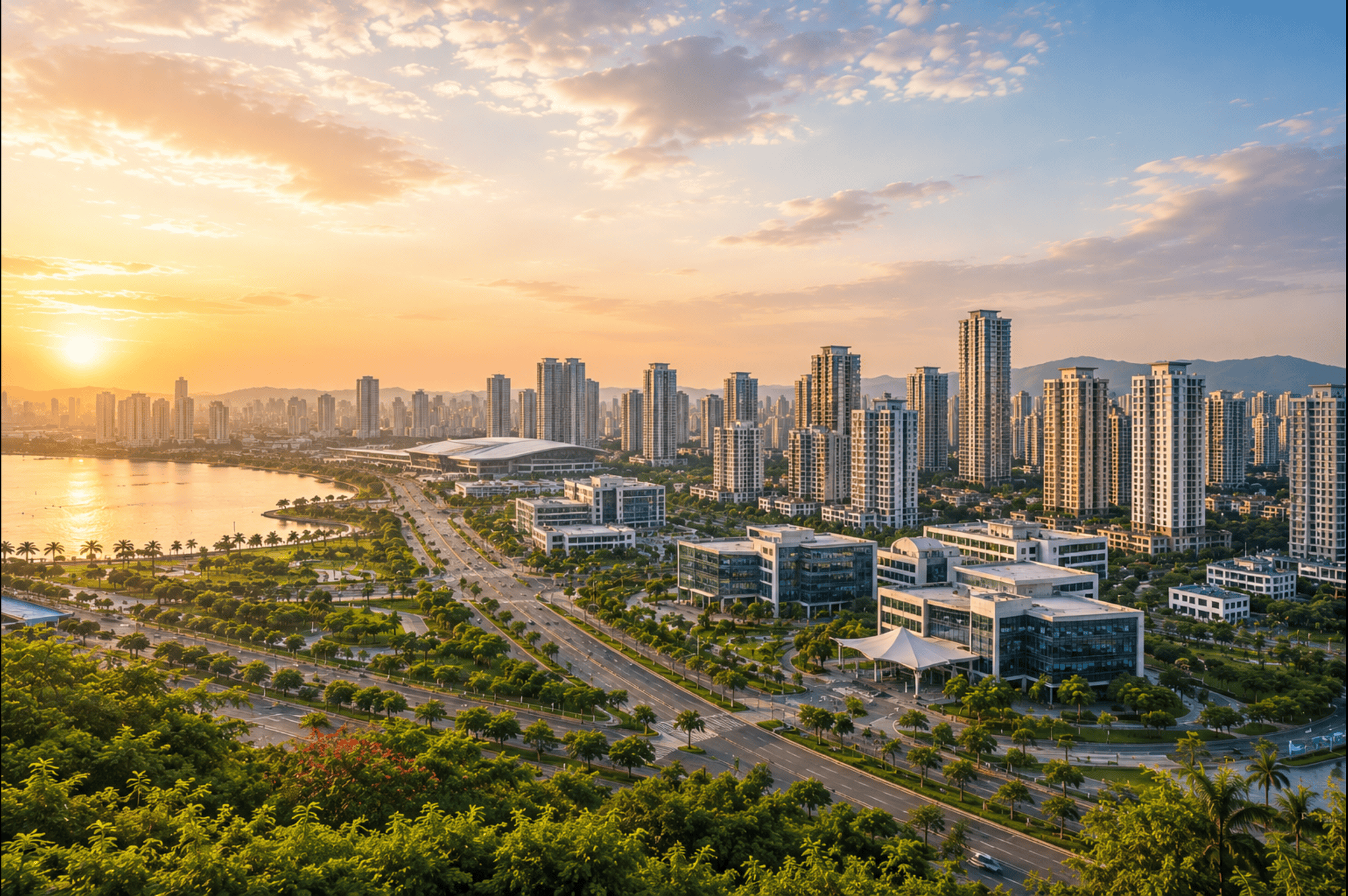
Not so long ago, Navi Mumbai was planned and developed as a satellite city to give Mumbai the much-needed breathing space. Today, this satellite city has evolved into a self-sustaining metropolis with thriving business districts, state-of-the-art infrastructure, ensuring seamless connectivity not only within the city but also beyond its boundaries, along with a mature and regulated real estate market.
How has Navi Mumbai Transformed?
As opposed to other Indian cities that expand in a haphazard manner, Navi Mumbai boasts organised land use, superior and wide roads, demarcated residential zones, commercial zones and abundant green open spaces. This has created a strong foundation for growth that is sustainable, making Navi Mumbai an investment-friendly and liveable Indian city. It has also helped in the execution of large-scale infrastructure projects that have shaped the realty landscape of the city.
Multimodal Connectivity Paves the Way for Real Estate Growth
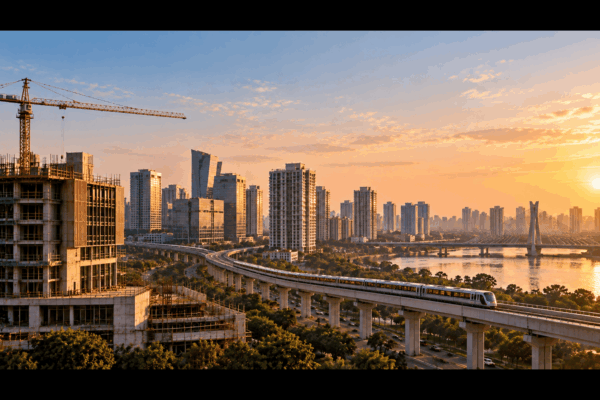
Real estate follows infrastructure, and this pattern is clearly visible in Navi Mumbai. The presence of well-developed infrastructure plays a pivotal role in driving the growth trajectory of the city. It has been observed that land prices and real estate values have appreciated each time an infrastructure project has been commissioned.
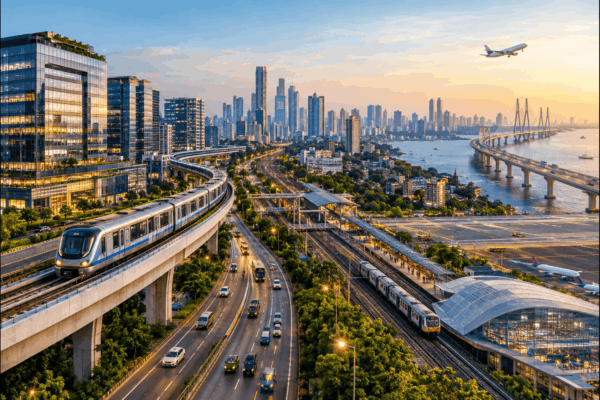
Well-planned and executed projects such as the Navi Mumbai International Airport (NMIA), Atal Setu, Navi Mumbai Metro Line 1, the suburban railway network and the Sion-Panvel Highway have expanded accessibility and unlocked new development corridors across the city. The same is expected from upcoming projects such as the Navi Mumbai Coastal Road, the additional metro lines and the water taxi services.
Further, regional infrastructure projects will accelerate the progress of Navi Mumbai. For instance, the 126-km Virar–Alibaug Multimodal Corridor will help areas such as Pen, Uran and Khopta emerge as large commercial, logistics and industrial hubs.
The under-construction Panvel–Karjat Suburban Rail Corridor will strengthen the connectivity between Navi Mumbai and Raigad. This corridor will decongest both road and existing rail networks, thus becoming the spine of urban expansion in the region across Navi Mumbai and Mumbai 3.0.
In addition to enhanced integration, robust infrastructure has reduced travel time, increased commercial activity, generated employment opportunities and strengthened residential demand. This has encouraged investor confidence, allowing both homebuyers and developers to identify future-ready real estate destinations. Thus, commercial, residential and mixed-use developments are now expanding into newer locations across the city, rather than being limited to their traditional areas.
How Atal Setu Helps in Seamless Connectivity and Influences Buyer Perception?
One of the most transformative infrastructure projects in the Mumbai Metropolitan Region (MMR), the 21.8-km-Atal Setu (India’s longest sea bridge), connects Chirle in Navi Mumbai with Sewri in Mumbai, significantly reducing travel time to South Mumbai.
This alternate route to Mumbai has reshaped homebuyer psychology. Areas such as Ulwe, Dronagiri, Pushpak Nagar and Chirle which were once overlooked by homebuyers and investors are seeing renewed interest as their long-term benefits have become increasingly evident.
Additionally, the Atal Setu has reinforced Navi Mumbai’s role in the regional economic ecosystem by strengthening logistics, warehousing and commercial activity across the region.
Take off Towards a New Growth Wave with Navi Mumbai International Airport
Worldwide, airport-led development has always shaped the growth trajectory of cities and their peripheral areas.
The NMIA is envisaged to become much more than a transport hub. This will help drive lifestyle transformation in Navi Mumbai by attracting investments in premium residential developments, hospitality including five-star and seven-star hotel properties, educational institutions, healthcare facilities, retail destinations and commercial infrastructure. This will create a vibrant live-work-play ecosystem that ups the lifestyle quotient of residents here.
With the phase 1 of Navi Mumbai International Airport operational with flights now operating to international destinations from here, the airport is emerging as the nerve centre of a new economic corridor, paving the way for investments in segments such as aviation, logistics, warehousing, hospitality, retail, manufacturing and corporate services.
The airport’s impact will be further amplified by the existing and upcoming infrastructure such as the Mumbai Metro Gold Line, which will connect both the airports, the Targhar Railway Station and the proposed water taxi services that will soon be launched.
According to CIDCO, the NMIA will handle over 90 million passengers annually, making it one of India’s largest airports. Over the next 10 years, the airport will be one of the biggest catalysts in helping Navi Mumbai evolve from a planned satellite city into a globally connected economic hub, making it one of India’s most significant infrastructure-led real estate markets. Businesses emerging around the airport are fuelling the market appetite for residential, commercial and mixed-use developments. Panvel, Kharghar, Upper Kharghar, Ulwe and Pushpak Nagar are believed to be the biggest gainers from this infrastructure.
Navi Mumbai’s High-Growth Micro-Markets
Being a planned city, Navi Mumbai is home to several high-growth micro-markets that cater to a variety of buyer segments. Vashi, Nerul and Seawoods are premium residential destinations. Kharghar is driven by its strong educational ecosystem and Ulwe has become a sought-after destination owing to its proximity to South Mumbai. Upper Kharghar has emerged as a prominent affordable housing market that is convenient because of the metro connectivity supported in this area. Panvel continues to be one of the largest real estate nodes because of its strategic location connecting Mumbai, Pune and the Konkan Region. Among the newer nodes in Navi Mumbai, Dronagiri and Pushpak Nagar have an early-mover advantage thanks to the NMIA and are slowly attracting investor interest.
Homebuyers’ Evolved Aspirations and the Future
Over the years, the well-planned infrastructure has laid the foundation for businesses to establish their presence in Navi Mumbai. Belapur CBD, Vashi, Turbhe MIDC, Mahape and Airoli are major employment hubs housing IT parks, financial institutions, business parks, industrial clusters, manufacturing units, etc., thereby providing direct and indirect employment opportunities. These are also fuelling demand for residential hubs near places of work.
Also, the economic transformation has had an impact on the profile of the homebuyer. While initially, Navi Mumbai was seen as an affordable location when compared to Mumbai, today that’s no longer true.
Today, buyer decisions are driven by far more than affordability. Excellent healthcare and educational institutions, open green spaces, fast interconnectivity and availability of homes across multiple configurations with modern lifestyle amenities are attracting a diverse homebuyer audience ranging from young professionals, entrepreneurs, NRIs, investors, retirees among others.
Tags