When Ageing Elevators Become a Liability: Why Repair Isn’t Always the Smartest Choice

by Akhilesh Satre, Director and Elevator Personality, Avinyatech Elevators
While India’s skyline is growing, India’s urban landscape is ageing. Yes, though the urban landscape is going under rapid vertical transformation, at the same time, there are thousands of buildings, commercial spaces, and societies built 25 to 40 years ago. And those are yet home to many, but one vital infrastructure component often goes unnoticed until it breaks down or takes a life — the elevator.
Elevators are becoming a frequent maintenance problem for many housing societies. The common realities are frequent breakdowns, increasing costs of repair and non-availability of spare parts compatible with the existing ones. Societies often try to keep ageing lifts alive by repairing them again and again, but this might not be the most practical or economical solution anymore.
The Monsoon Story
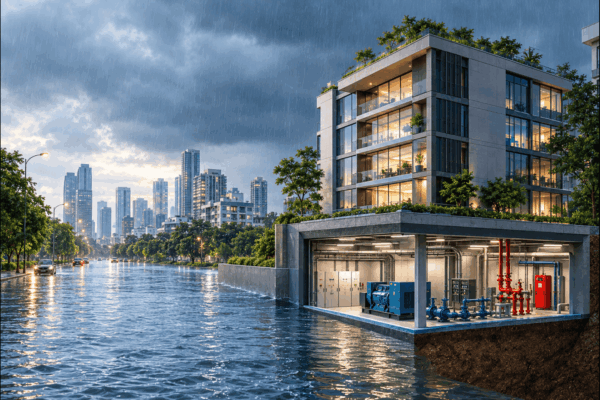
Since the monsoon season has already started, many ageing elevators stop functioning for one reason or another. The season exposes the vulnerabilities of older elevator systems. Wet umbrellas, rain-soaked footwear and dripping clothes are brought into lifts by residents. This allows moisture to enter lift pits, door mechanisms and electrical components. Water ingress, inconsistent power supply, humidity and worn-out wiring multiply the risks of sudden stoppages and operational failures. What seems to be a seasonal nuisance is often a symptom of years of ageing infrastructure that is unable to keep up with the modern operating conditions.
The Maintenance Chaos
Another major concern is the availability of parts. The manufacturers may discontinue older models, making it hard to find genuine parts. Often, in an effort to keep the lift running, societies use refurbished or incompatible parts. This may provide a temporary remedy, but tends to result in repeated failures, higher maintenance costs and increased safety risks. When a motorbike starts costing more in maintenance than it loses in value each year, we usually choose to replace it – for both safety and financial reasons. It should be the same with Elevators, as it is our everyday transport system at the office, at home, at the mall or in any building.
Ageing Story Behind
Most Indian states already regulate lifts through their respective Lift Acts. These rules necessitate registration of lifts, prior approval of the government before operation, periodic inspection, licensing, adherence to the standards of the Bureau of Indian Standards (BIS) and clearly defined maintenance responsibilities for building owners. But the real challenge is in the execution. Inspection schedules tend to slip, maintenance contracts are awarded based solely on cost, modernisation is postponed, and safety audits become a matter of routine paperwork rather than a detailed engineering exercise.
An ageing elevator is not necessarily an unsafe elevator. An unmaintained elevator is.
Building owners and housing societies need to understand the difference between fixing a fault and fixing the problem. In the case of a lift that has been in service for two or three decades, frequent repairs often become a cycle of recurring expenditure without solving the underlying reliability issues. The cost of repeated breakdowns over a number of years can sometimes add up to a significant proportion of the investment required for a full replacement. Also, the old lifts/elevators do not comply with the new standards, especially IS 17900, which specifically has made safety compliance a must to avoid elevator accidents like car overspeed, safety during power failure, sensor failure, and unguarded shaft.
The Change We Need
Immediate replacement of old elevators with the new ones. Modern lifts provide big long-term benefits. They have energy-efficient drives, advanced safety systems, smoother operation, remote diagnostics and improved accessibility features. More importantly, newly installed elevators come with an AMC, lowering maintenance and repair costs. Second, the risk factor is almost zero unless there is a technical glitch, but the elevator still includes safety features for rescue. New elevators come with eight to ten years of life, which results in predictable operating costs and better reliability for residents.
The Execution We Need
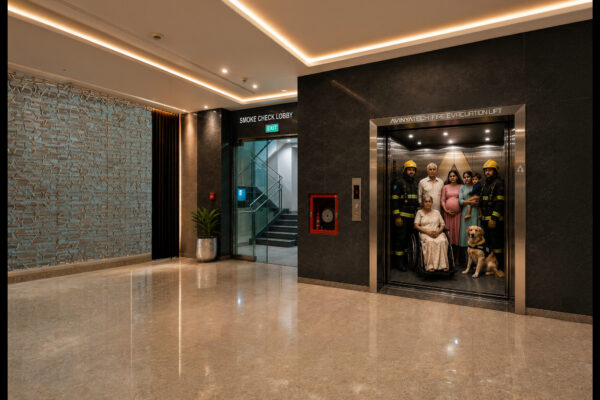
Replacing an old elevator should not be seen as a luxury or mere aesthetics by housing societies. Instead, it is an investment in safety, uninterrupted operations, confidence of residents, and a long-term financial plan. Modernisation of elevators serves to improve property value and quality of life in buildings where elevators are used by elderly people, kids, pregnant women, pets, and differently abled people daily.
As the Infrastructure is moving vertically high in India, the need for elevator modernisation should not be seen as an emergency measure but as a necessary part of real estate asset management. Postponing inspections, ignoring maintenance warnings, and delaying replacements lead to an increase in operational risks for residents and cost us more lives.
It’s not about whether old elevators can be repaired or not. The real question is whether such repairs are the safest option and the reasonable solution.
Tags