Towards Smart Fulfilment

Driven by the growth of e-commerce, quick commerce, organised logistics, and manufacturing, India’s warehouses are rapidly adopting intelligent and sustainable material handling solutions to enhance speed, efficiency, and fulfilment capabilities. As logistics networks expand into Tier-II and Tier-III cities, smart warehouse automation is emerging as the backbone of future-ready supply chains
India’s warehousing sector is undergoing a rapid transformation, driven by the explosive growth of e-commerce, organised retail, manufacturing, pharmaceuticals, cold chain logistics, and third-party logistics (3PL) services. As businesses race to meet faster delivery timelines and rising consumer expectations, warehouses are evolving from conventional storage facilities into highly automated, technology-driven fulfilment centres. This shift has accelerated the adoption of intelligent material handling systems that combine automation, robotics, data analytics, and smart software to streamline operations and enhance efficiency. Modern warehouses today are increasingly focused on achieving greater speed, accuracy, inventory visibility, and operational flexibility.
The rise of organised logistics and the expansion of Grade-A warehousing infrastructure across India have further strengthened demand for advanced material handling equipment (MHE). From automated storage and retrieval systems (AS/RS) and conveyors to electric forklifts, autonomous mobile robots (AMRs), and AI-enabled warehouse management systems, companies are investing heavily in intelligent solutions to optimise warehouse productivity while reducing labour dependency and operational costs. With supply chains becoming more complex and delivery cycles shrinking, intelligent material handling systems are emerging as the backbone of next-generation warehousing, enabling businesses to achieve higher throughput, improved safety, and sustainable logistics operations.
Automation Takes a Leap
According to Mordor Intelligence report, the India Warehouse Automation Market size is expected to grow from USD 560 million in 2025 to USD 659.96 million in 2026 and is forecast to reach USD 1.5 billion by 2031 at 17.84% CAGR over 2026-2031. The rapid growth of India’s warehouse automation market reflects the broader transformation taking place across the country’s logistics and supply chain ecosystem. The rise of e-commerce, quick commerce, organised retail, manufacturing, and third-party logistics (3PL) services has significantly increased the need for faster, more accurate, and highly efficient warehouse operations. Modern warehouses are no longer being developed solely as storage spaces; they are increasingly evolving into intelligent fulfilment hubs designed to handle high-volume, multi-channel distribution with minimal delays and maximum operational visibility. As delivery timelines continue to shrink and consumer expectations rise, businesses are accelerating investments in automation-led material handling technologies to enhance speed, precision, and scalability. The implementation of GST and the growing consolidation of warehousing infrastructure have further strengthened the demand for intelligent material handling systems across India. Large centralised distribution centres and Grade-A warehouses are increasingly deploying advanced technologies such as automated storage and retrieval systems (AS/RS), robotic picking solutions, conveyor automation, autonomous mobile robots (AMRs), and AI-enabled warehouse management systems to optimise warehouse throughput and reduce operational inefficiencies. In parallel, rising labour costs, increasing SKU complexity, and the growing importance of real-time inventory visibility are compelling companies to transition from labour-intensive processes towards smart, data-driven warehouse operations capable of supporting the evolving demands of modern supply chains.
Technology Gets Smarter
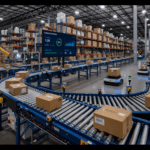
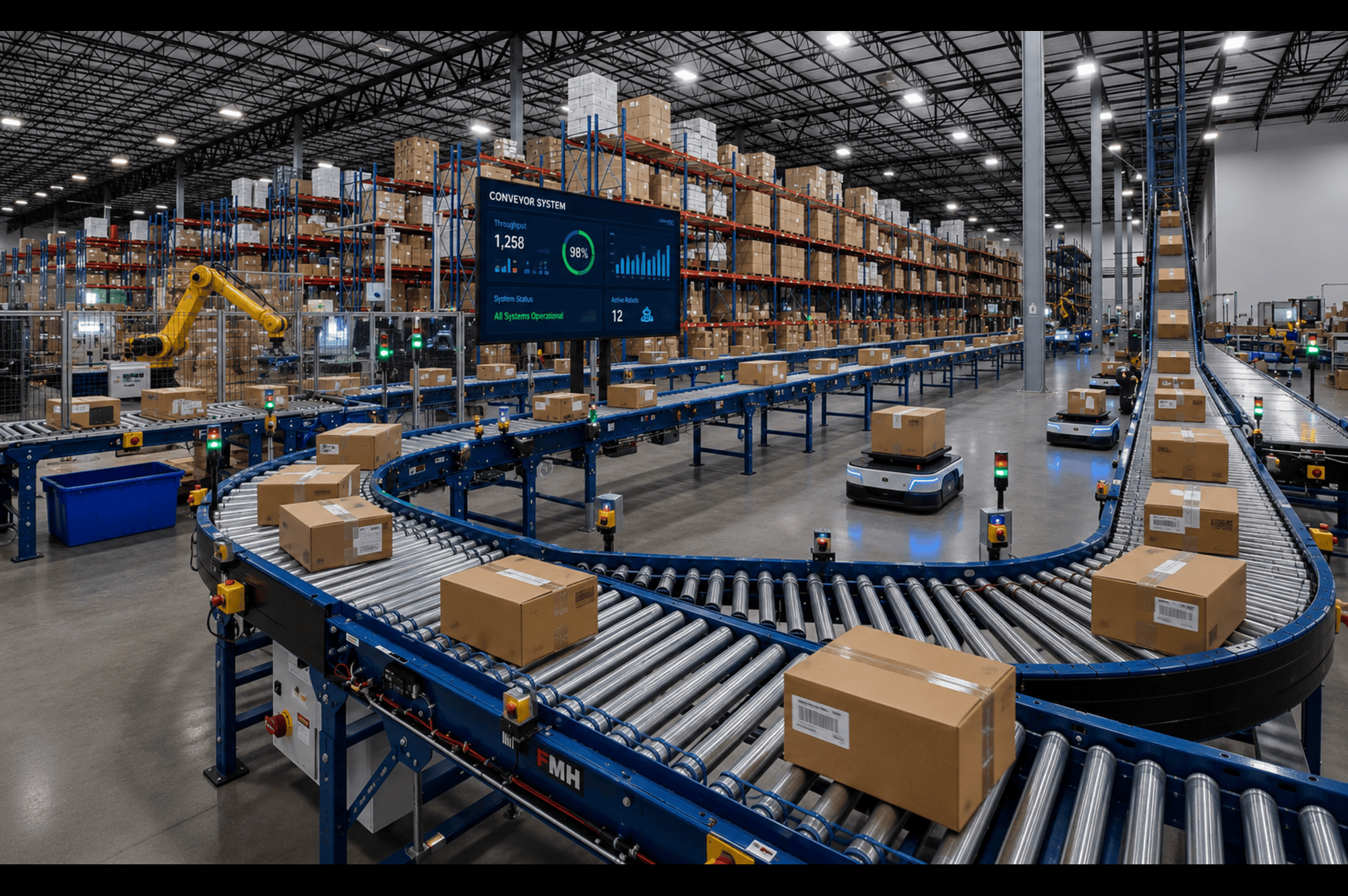
The role of material handling equipment within warehouses has evolved significantly over the past decade. Traditionally, forklifts, pallet trucks, and conveyor systems were primarily used to assist manual warehouse operations. Today, however, intelligent material handling systems are becoming deeply integrated into the core architecture of warehouse management and fulfilment strategies. Automation is no longer limited to isolated processes; it is increasingly orchestrating entire warehouse workflows ranging from inbound material movement and storage to picking, sorting, packaging, and dispatch. One of the biggest drivers behind this shift is the growing complexity of inventory management. Modern warehouses are handling significantly larger SKU volumes, higher order frequencies, and increasingly fragmented shipment patterns, particularly in sectors such as e-commerce, pharmaceuticals, electronics, FMCG, and cold-chain logistics. Manual handling methods often struggle to maintain the speed and accuracy required in such environments, leading companies to deploy intelligent automation technologies capable of improving throughput while minimising human error. Automated storage and retrieval systems (AS/RS), autonomous mobile robots (AMRs), robotic picking arms, and AI-enabled warehouse management systems are now helping operators optimise storage density, streamline picking operations, and improve real-time inventory visibility. Conveyor and sortation systems equipped with sensors and analytics are also enabling faster material flow across fulfilment centres, significantly reducing turnaround times during peak demand cycles. In many large warehouses, automation is increasingly functioning as the operational backbone that connects inventory, workforce management, and fulfilment activities into a unified, data-driven ecosystem.
Integrating Robotics & AI
Robotics and artificial intelligence are rapidly redefining the operational landscape of modern warehouses, enabling businesses to achieve unprecedented levels of speed, accuracy, and efficiency. As fulfilment operations become increasingly complex, warehouses are deploying autonomous mobile robots (AMRs), automated guided vehicles (AGVs), robotic picking arms, and AI-powered sortation systems to streamline material movement and reduce manual intervention. Recently, Swisslog unveiled its next-generation AgileStore four-way roaming pallet shuttle system designed for high-density automated storage environments. The solution enables multidirectional pallet movement across aisles and levels, allowing warehouses to achieve greater flexibility, dynamic routing, and improved storage density. ABB Robotics partnered with Jacobi Robotics to roll out AI-powered palletising solutions aimed at improving warehouse automation and fulfilment efficiency. Addverb has unveiled Elixis-W, a Made-in-India wheeled humanoid robot designed for warehouse and intralogistics applications. Corvus Robotics has introduced Corvus Trident, an AI-powered system that tracks pallet movement across warehouse operations through mounted warehouse equipment. These intelligent systems are capable of navigating warehouse environments independently, optimising picking routes in real time, and handling repetitive tasks with greater consistency and precision. AI-driven warehouse management platforms are further enhancing operational visibility by analysing inventory flows, predicting demand patterns, and improving workforce allocation. In sectors such as e-commerce, pharmaceuticals, electronics, and FMCG, where high SKU volumes and rapid order processing are critical, robotics and AI are emerging as essential technologies for improving throughput, minimising errors, and enabling round-the-clock warehouse operations.
Beyond robotics, the next phase of warehouse transformation is being driven by connected digital ecosystems that integrate material handling equipment, inventory systems, and operational workflows into a unified platform. Warehouse Management Systems (WMS), IoT-enabled sensors, cloud computing, and real-time analytics are increasingly helping operators gain deeper visibility into warehouse performance, equipment utilisation, inventory movement, and order fulfilment cycles. Bar Code India (BCI) has launched BCI NAVI, an AI-powered warehouse intelligence platform that combines WMS and edge-device data to improve operational decision-making and warehouse visibility. Dematic has launched its new “Command Center” platform, an AI-enabled warehouse intelligence solution that integrates real-time monitoring, analytics, and operational decision support for fulfilment centres. enVista has introduced enMotion WES+, a cloud-based warehouse execution and orchestration platform designed to connect WMS, robotics, and automation systems using machine learning and predictive analytics.
Smart warehouses are now capable of monitoring inventory in real time, predicting maintenance requirements, optimising storage allocation, and dynamically adjusting workflows based on demand fluctuations. This convergence of automation and digital intelligence is enabling warehouses to become more agile, responsive, and data-driven, while significantly improving operational efficiency and decision-making across supply chains.
Embedding Sustainability
Sustainability is emerging as a major focus area in warehouse operations, driving increased adoption of electric and energy-efficient material handling equipment across the logistics sector. Warehouses are gradually replacing conventional diesel and LPG-powered machines with electric forklifts, lithium-ion battery-operated pallet trucks, and energy-efficient automated handling systems to reduce emissions, lower operating costs, and improve workplace safety. Reflecting this shift, companies are increasingly introducing next-generation electric warehouse equipment. Recently, Jungheinrich launched its PTL 1.5 lithium-ion pallet truck under the “AntOn” brand, while Godrej Enterprises introduced the GEPT 20, India’s first 48-volt lithium-ion powered electric hand pallet truck designed for warehouse and logistics applications. Lithium-ion technology is gaining strong traction due to its faster charging capability, longer battery life, and reduced maintenance requirements, making it well suited for high-intensity warehouse environments. In parallel, warehouse operators are increasingly integrating solar-powered infrastructure, regenerative braking systems, and smart energy management solutions to support broader sustainability goals. As companies intensify efforts towards greener supply chains and carbon reduction targets, electric and sustainable MHE solutions are expected to play a central role in the future of intelligent warehousing.
Manoeuvring Challenges
Despite the rapid advancement of warehouse automation and intelligent material handling technologies, the sector continues to face several operational and structural challenges. One of the biggest barriers remains the high upfront capital investment required for advanced systems such as automated storage and retrieval systems (AS/RS), robotics, autonomous mobile robots (AMRs), and AI-enabled warehouse management platforms. While large logistics operators and e-commerce companies are accelerating automation investments, many small and medium enterprises (SMEs) continue to rely on conventional handling methods due to budget constraints and uncertain return-on-investment timelines. The industry is also grappling with challenges related to skilled workforce availability, system integration, and infrastructure readiness. Operating and maintaining sophisticated automation systems requires specialised technical expertise, which remains limited across several logistics markets in India. In many older warehouses, retrofitting automation into existing infrastructure can be both complex and expensive. Additionally, growing SKU complexity, fluctuating order volumes, cybersecurity concerns, and the need for seamless integration between hardware, software, and supply chain platforms are increasing operational pressures on warehouse operators. As automation adoption expands, balancing technology investments with operational flexibility and workforce adaptation will remain a key challenge for the warehouse MHE sector.
Another significant challenge lies in infrastructure and technology integration. Many warehouses in India, particularly older facilities, are not fully designed to support advanced automation systems, creating difficulties in retrofitting robotics, conveyors, and automated storage solutions into existing layouts. Urban warehouses also face severe space constraints, limiting the deployment of high-density automation infrastructure. In addition, the sector remains heavily dependent on imported automation components and specialised software, exposing operators to supply chain disruptions, currency fluctuations, and higher maintenance costs. As warehouses become increasingly digitised, cybersecurity and data protection are also emerging as critical concerns. Intelligent warehouses rely heavily on connected devices, cloud platforms, AI-driven analytics, and real-time data exchange, making operational systems more vulnerable to cyber threats and software failures. At the same time, integrating multiple automation technologies from different vendors often creates interoperability challenges, particularly in large fulfilment centres operating complex multi-channel logistics networks. For many businesses, ensuring scalability, operational continuity, and long-term technology relevance remains a major consideration while planning warehouse automation investments.
Policy Boost & Initiatives
Government initiatives such as the National Logistics Policy, PM Gati Shakti, Make in India, and the Production-Linked Incentive (PLI) schemes are playing an important role in accelerating the modernisation of India’s warehousing and logistics ecosystem. The push towards multimodal connectivity, integrated logistics infrastructure, and manufacturing expansion has strengthened demand for organised warehousing and advanced material handling systems across sectors such as e-commerce, automotive, electronics, pharmaceuticals, and cold-chain logistics. GST-led warehouse consolidation has also helped drive the development of large centralised distribution centres, creating a stronger business case for automation and intelligent warehouse technologies.
However, industry stakeholders believe that several areas still require greater policy focus to accelerate wider adoption of intelligent material handling systems. High import dependence for advanced automation components, limited access to affordable financing for SMEs, and the lack of standardised automation frameworks continue to pose challenges for the sector. Industry players are also calling for stronger incentives for warehouse automation investments, faster development of logistics parks, improved skilling programmes for automation technologies, and greater support for domestic manufacturing of robotics, sensors, lithium-ion batteries, and warehouse software solutions. As India aims to strengthen its position as a global manufacturing and logistics hub, deeper policy support for smart warehousing infrastructure and automation ecosystems will become increasingly critical.
Technology: A Game Changer
India’s strong economic growth trajectory and its ambition to become a USD 5 trillion economy are expected to significantly accelerate the expansion of the warehousing and logistics sector in the coming years. As industrial activity, manufacturing, retail consumption, and e-commerce continue to grow, the demand for organised warehousing infrastructure will increasingly spread beyond metropolitan regions into Tier-II, Tier-III, and even Tier-IV cities. At the same time, the rise of quick commerce and instant delivery models is fundamentally reshaping warehouse operations, where speed, accuracy, and real-time fulfilment have become critical competitive differentiators. In an era where deliveries are expected within minutes, operating warehouses without automation is becoming increasingly impractical.
This is where intelligent material handling systems are set to play a transformative role in shaping the future of India’s warehousing and logistics ecosystem. Warehouses are rapidly embracing automation, robotics, AI, and data-driven technologies to achieve greater operational agility, scalability, efficiency, and sustainability. While challenges related to infrastructure readiness, skilled manpower, and automation costs remain, the momentum towards smart warehousing is expected to strengthen further with continued policy support, technological innovation, and rising industry investments. In the years ahead, the convergence of intelligent automation and digital logistics will not only redefine warehouse operations but also strengthen India’s position as a globally competitive manufacturing, logistics, and supply chain hub.
Tags