
Interview: Dimitrov Krishnan, Managing Director, Volvo CE India

Electrification is rapidly gaining momentum, and electric construction equipment is already being deployed on sites. From your experience, how do its operational realities differ from conventional equipment, and what challenges still remain?
Electrification is starting to show up on real construction sites, but it comes with a different way of working. Electric machines are quieter, cleaner, and better suited for urban or confined environments where emissions and noise matter. However, the transition isn’t easy. India’s construction market is large, fast moving and often in places with limited access to power. Diesel machines can basically run anywhere; electric machines must be charged as part of your operation and knowing how and when to charge will become an operational consideration. Electric machines change not only the equipment on site but also how sites are operated. Although this technology is effective, it is being used only selectively right now. It is best suited for use under predictable conditions; however, as the infrastructure develops even further, its expanded use will be possible. In the meantime, it has a practical application as long as the conditions are met.
In real project conditions, how does electric construction equipment compare with diesel machines in terms of productivity, uptime, and reliability, and how does this translate into the total cost of ownership?
When properly used and under the best settings, Electric Machines can perform similarly or better than Diesel Equipment, most often seen in small applications with regular use. Electric Machines provide greater reliability since there are fewer moving parts. However, uptime doesn’t rely solely on the machine; uptime relies heavily on the planned charging schedule. The key difference is that energy management now becomes part of daily operations instead of being a secondary activity. The official view of what constitutes cost is changing. While running costs will be lower, the initial investment will be higher. Customers are increasingly willing to move beyond just looking at purchase price when deciding on a piece of equipment, and instead, are focusing on the efficiency and usage of the unit over its entire life. As the customer base continues its transition from asking, “What is the cost to purchase?” to “What does the product deliver?”, models such as Equipment as a Service (EaaS) are becoming more popular. Customers can use the machine without having to make a high-priced upfront investment, and pay based on how much they use the machine. This will allow customers to adopt the equipment with less risk.
Within your portfolio, which electric construction equipment is seeing the strongest adoption, and what key factors are influencing customer preference?
Within our portfolio in India, we are seeing strong interest in solutions like the L120 Electric wheel loader and the EC500 Electric excavator with grid connectivity, especially for mining and large infrastructure applications. Customers are increasingly looking for solutions that can deliver high productivity while significantly reducing emissions, fuel dependency, and operating costs. Factors such as sustainability commitments, lower total cost of ownership, reduced noise levels, and energy efficiency are driving customer preference. In particular, grid-connected solutions like the EC500 Electric are gaining attention for their ability to deliver continuous heavy-duty performance with improved energy efficiency in demanding applications.
How important is data visibility – such as battery health, energy consumption, and usage patterns – in improving the efficiency and lifecycle of electric construction equipment?
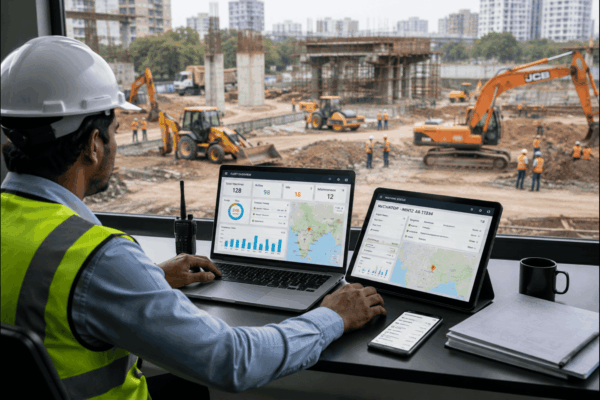
With electric equipment, data plays a much bigger role. Battery health, energy use, and machine behaviour directly affect how efficiently the equipment runs. This visibility helps operators plan better, avoid downtime, and get more productive hours out of each machine. It also supports early issue detection, which improves reliability. More broadly, the industry is already moving toward connected machines and data-led decisions. Electrification is accelerating that shift, because managing energy efficiently depends on it. In that sense, data is no longer support – it becomes part of the machine’s core function.
As electric construction equipment gains traction, how is the after-sales service ecosystem evolving, particularly in terms of maintenance, technician training, and battery lifecycle management?
Electric equipment is changing the nature of after-sales support. There’s less mechanical wear, but more focus on electrical systems and battery management. This means service teams need different skills, and support systems need to evolve. Training, diagnostics, and monitoring all become more important. At the same time, after-sales is becoming more integrated. It’s not just about fixing issues, but about maintaining performance over time using data and service support together. The shift is from reactive service to continuous performance management.
What specific policy interventions – such as subsidies, green procurement mandates, or carbon incentives – would most effectively accelerate adoption of electric construction equipment?
The implementation of policy changes may speed up adoption by closing existing cost and infrastructure gaps. Reducing upfront cost barriers through offering incentives would make an impact during early adoption, while public infrastructure projects would create demand for low-emission equipment by prioritizing such equipment in public infrastructure procurement. Energy infrastructure investments are also vital; without access to reliable electricity, the transition to greater levels of electrification will continue to be challenging. Incentives can initiate a shift, but the infrastructure is the foundation of sustaining this shift. Consistency is what is most important. Having a clear long-term policy direction will enable manufacturers and end-users of electric vehicles to plan accordingly with greater levels of confidence.
In light of the segments gaining traction, what targeted policy interventions would be most effective in accelerating broader adoption of electric construction equipment?
A focused approach will work better than trying to push electrification everywhere at once. Urban infrastructure is a good starting point. These projects are more controlled, often have better access to power, and come with stricter environmental requirements. Supporting adoption in such segments can create early momentum. From there, it can expand into more complex applications as the ecosystem improves. Scaling works best when it follows practicality, not ambition alone.
Looking ahead, how do you see the adoption of electric construction equipment evolving in India over the next 5–10 years, and what role do you expect your company to play in this transition?
Over the next ten years, the expansion of electricity use in India will happen consistently but will not be evenly distributed. The areas where electricity will expand the fastest are where electricity is already being used reliably, while traditional energy sources will continue to make up most of the power used for heavier applications. The growth of electrification will depend greatly on reductions in costs, the availability and development of physical infrastructure, the ease of using solutions (available onsite), and the usability of solutions; therefore, more importantly than intent, will be the usability of solutions. We are committed to providing a seamless transition to new technology by putting it into real-world use through the deployment of machines under real working conditions (for example, through the introduction of Equipment-as-a-Service models) and by working with customers to learn from their experiences. The intent is to not only introduce a new technology but also to ensure that it’s really working where it counts (on the job site).
Tags