
Interview: V G Sakthikumar, Chairman & Managing Director, SCHWING Stetter (India)

Electrification is rapidly gaining momentum, and electric construction equipment is already being deployed on sites. From your experience, how do its operational realities differ from conventional equipment, and what challenges still remain?
The shift from diesel to electric on Indian construction sites is far more than a fuel swap, it is a fundamental reimagining of how equipment is designed, operated, and supported. We experienced this firsthand with the launch of India’s first fully electric Shotcrete Pump, the TSR 30.10 EV, in 2024, and with our fully electric 8 cu m Truck Mixers unveiled at Excon 2025. The operational differences are immediately apparent. Electric equipment delivers instantaneous torque and virtually silent operation, making it especially effective in urban construction corridors, underground tunnelling, metro projects, and confined spaces where noise and emission norms are increasingly strict. There is no warm-up time, no complex transmission management, and significantly lower vibration improving both operator comfort and on-site productivity. However, real-world deployment has also shone a light on genuine challenges. Battery range anxiety remains a concern, particularly for high-cycle applications like concrete pumping where continuous operation is expected across extended shifts. The weight of battery packs adds to vehicle tonnage, which requires careful axle load engineering. Charging time, despite improvements, is still a variable in shift planning. And critically, the majority of our construction sites remote highway stretches, bridge projects across rivers in Assam, airport runways in Jewar lack a reliable grid connection. These are not problems we dismiss; they are the very problems we are engineering around, which I will elaborate on further.
In real project conditions, how does electric construction equipment compare with diesel machines in terms of productivity, uptime, and reliability, and how does this translate into the total cost of ownership?
The Total Cost of Ownership conversation is where electric equipment makes its most compelling case, but only when evaluated honestly across the full lifecycle, not just at acquisition price. From a productivity standpoint, electric machines demonstrate exceptional consistency. With no diesel engine to manage, fewer fluids to monitor, and significantly fewer moving parts, the maintenance footprint is dramatically smaller. In controlled project environments, urban flyovers, metro construction, airport development our electric Shotcrete Pump has demonstrated uptime comparable to its diesel counterpart, with the added advantage of zero planned shutdowns for engine servicing, oil changes, or filter replacements. The energy cost differential is substantial. Electricity – even in commercial procurement scenarios runs at roughly one-third to one-fourth the per-unit energy cost of diesel. For a high-utilisation machine running 8–10 hours a day, this translates into lakhs of rupees in annual savings per unit. The initial capital expenditure is higher typically 20 to 40 per cent above comparable diesel but the payback window is narrowing with every passing year as battery costs decline and diesel prices remain volatile. When you factor in reduced downtime, lower consumable costs, and the growing premium that green-certified projects command, the TCO equation increasingly favours electrification for medium-to-long-duration projects.
Within your portfolio, which electric construction equipment is seeing the strongest adoption, and what key factors are influencing customer preference?
Within our current portfolio, the TSR 30.10 EV India’s first fully electric Shotcrete Pump is generating the most informed interest. Its application in tunnelling, underground metro works, and slope stabilisation projects makes it ideally suited for environments where diesel emissions are a serious operational and safety hazard. Underground workspaces with diesel equipment require expensive ventilation systems; an electric equivalent eliminates both that cost and the associated health risk to workers. Our fully electric 8 cu m Truck Mixers are finding early traction with urban concrete delivery operations city-core ready-mix suppliers who face pollution-check restrictions and night-movement permits. The silent, emission-free profile is a business enabler for them, not just an environmental choice. What is most influencing customer preference is a combination of three factors: project type customers working on government infrastructure projects with green mandates are the earliest movers; operating environment indoor, underground, or urban projects where diesel is already restricted; and total operational economics sophisticated customers with their own fleet analysts are running five-year TCO models and arriving at positive conclusions for electric. The conversation has matured significantly from even three years ago.
How critical is on-site charging infrastructure in scaling electric construction equipment, particularly across remote and diverse terrains, and what practical energy solutions such as mobile charging units, battery swapping, or renewable integration are emerging?
Charging infrastructure is, without question, the most critical enabling condition for scaling electric construction equipment in India. You can have the most advanced electric machine in the world, but if there is no reliable power source on-site, the technology becomes irrelevant in the field. India’s construction geography is extraordinarily diverse from the Himalayan tunnels of the Char Dham project to the coastal bridges of Gujarat, from the urban metro corridors of Hyderabad to the remote national highway stretches of Rajasthan. A single charging solution cannot serve all of these. This is why we are actively evaluating a multi-modal approach.
Mobile charging units essentially high-capacity fast-chargers on trucks are among the most practical near-term solutions for remote sites. For very high-utilisation applications, battery-swappable architectures are technically appealing, though standardisation across the industry remains an open challenge. Renewable integration particularly solar-charged battery banks on-site is gaining real traction. At our own Cheyyar Global Manufacturing Hub, we operate a 1MW solar installation that powers operations; the same philosophy can be deployed at project sites with modular solar farms. The most promising pathway is a hybrid energy management model: daytime operations charged by solar, backed by grid or genset storage for continuous operations. This is where we see the practical breakthrough happening over the next 3–5 years.
How important is data visibility such as battery health, energy consumption, and usage patterns in improving the efficiency and lifecycle of electric construction equipment?
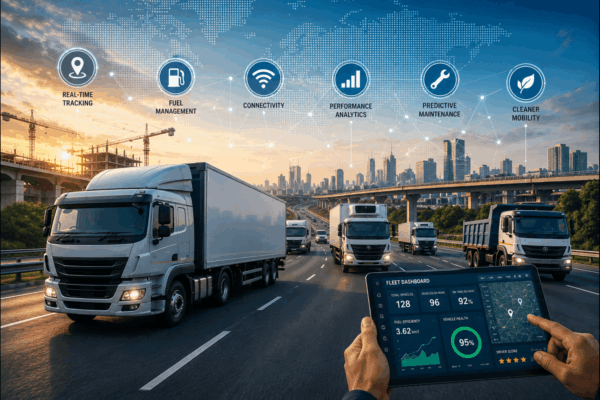
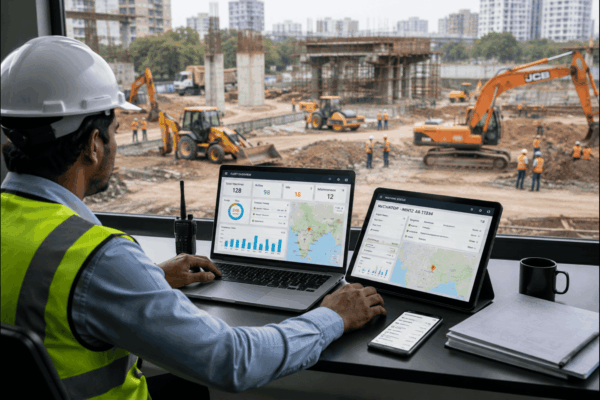
Data visibility is not a feature for electric equipment it is the foundational operating system. For diesel machines, experienced operators develop an intuitive sense of the machine’s condition. For electric equipment, this intuition must be replaced by real-time digital intelligence. We have been building our telematics and IoT framework for years our IoT In, IoT Ready, and IoT Abled classification covers the entire product range. During the Covid-19 lockdown period, our IoT-enabled machines proved their strategic value when customers could monitor batching plants and equipment remotely, maintaining production continuity without on-site access. That capability is even more critical for electric equipment today. Battery state-of-health monitoring tracking charge cycles, thermal behaviour, degradation rates, and depth of discharge is the single most impactful data stream for extending battery life. Energy consumption mapping per application type allows project managers to right-size their charging infrastructure. Usage pattern analytics help fleet managers identify whether a machine is being operated within optimal efficiency bands, preventing premature battery degradation. Predictive maintenance algorithms built on this data can forecast battery replacement needs months in advance, eliminating the risk of unplanned downtime on critical project timelines. Data visibility is what converts electric equipment from a sustainability choice into an operational advantage.
As electric construction equipment gains traction, how is the after-sales service ecosystem evolving, particularly in terms of maintenance, technician training, and battery lifecycle management?
The evolution of the after-sales ecosystem for electric construction equipment is perhaps the most underappreciated aspect of this transition and one that deserves as much investment as the machines themselves. Our service network spans 32 spare parts stores and multiple service centres across the country, built over years of systematic expansion. For electric equipment, this network is being retooled in three critical dimensions. First, technician competence: high-voltage systems require certified training that is fundamentally different from diesel servicing. We are partnering with skill councils and our own Centre of Excellence linked to IESC to develop EV-specific technician curricula. Second, diagnostic capability: electric equipment faults are overwhelmingly electronic and software-driven. Our service centres are being equipped with the diagnostic software, hardware interfaces, and trained personnel to read and respond to these fault codes remotely and on-site. Third, battery lifecycle management: we are developing structured battery assessment protocols capacity auditing at defined intervals, certified refurbishment pathways, and responsible end-of-life recycling through authorised channels. The goal is to ensure that a customer who buys an electric machine from us in Guwahati or Pune receives the same quality of after-sales support as any diesel machine customer. That parity of service experience is what will ultimately determine the pace of adoption in Tier-2 and Tier-3 markets.
What specific policy interventions such as subsidies, green procurement mandates, or carbon incentives would most effectively accelerate adoption of electric construction equipment?
Having represented the industry across ICEMA, CII EXCON, and directly with the Ministry of Heavy Industries, I can say with conviction that policy architecture will be the decisive accelerator for electric construction equipment adoption in India. The single most impactful intervention would be green procurement mandates in government-funded infrastructure projects. When National Highway Authority of India, or state PWDs specify electric or hybrid equipment as a mandatory or preferred requirement for contracts above a certain threshold, it creates immediate market pull that no amount of manufacturer advocacy can replicate. This has been proven in mining and urban transport it will work for construction equipment too. On the fiscal side, production-linked incentives extended specifically to electric construction equipment manufacturers similar to what exists for electric vehicles would help bring down acquisition costs at scale. Capital subsidy under schemes like PM Gati Shakti for charging infrastructure at project sites would unlock remote deployment. GST rationalisation bringing electric construction equipment to 12 per cent from the current higher slabs is a low-effort, high-impact measure. Carbon credit mechanisms tied to verified fleet electrification for large infrastructure contractors would create a financial instrument that sophisticated players would actively pursue.
In light of the segments gaining traction, what targeted policy interventions would be most effective in accelerating broader adoption of electric construction equipment?
Building on the broader policy framework, there are segment-specific interventions that would be particularly high-impact. For tunnelling and underground construction where the case for electric is overwhelming on health and safety grounds a regulatory mandate for zero-emission equipment in confined underground works, similar to European standards, would create an immediate and justified adoption wave. For urban construction concrete pumps, truck mixers, shotcrete machines city-specific low-emission zone regulations, as seen in cities like London and Amsterdam, would create powerful local demand signals. Several Indian cities are already considering construction equipment in their clean air action plans; accelerating this with specific electrification targets would be effective. For the financing dimension which is critical for the small and mid-size contractor segment that operates on thin margins priority sector lending status for electric construction equipment purchases, or dedicated credit lines through SIDBI and NABARD for contractor fleet electrification, would be transformative. The government’s FAME scheme has demonstrated what subsidised financing can do for EV adoption in the passenger and commercial vehicle space; a FAME-equivalent for construction equipment, possibly channelled through ICEMA and the Ministry of Heavy Industries, is a policy idea whose time has come.
Looking ahead, how do you see the adoption of electric construction equipment evolving in India over the next 5–10 years, and what role do you expect your company to play in this transition?
India is on the cusp of a genuine inflection point in construction equipment electrification. The conditions are aligning: government infrastructure spending at historic highs, battery costs on a consistent decline, grid infrastructure expanding under PM Surya Ghar and BharatNet, and a generation of contractors who are increasingly sophisticated about lifecycle costs and sustainability credentials. My projection is that by 2030, electric and hybrid equipment will account for 15–20 per cent of new equipment sales in the segments where electrification is most technically mature tunnelling, urban concrete equipment, and compact machines. By 2035, this share could approach 35–40 per cent across the broader market, with diesel remaining relevant for high-duty-cycle remote operations until battery energy density and charging infrastructure reach full maturity. Our commitment is unambiguous. We have set a clear internal target to deploy full electrification across our product lines by 2028–2030. Our Cheyyar Global Manufacturing Hub — which already runs on 1MW of solar power is the industrial template for sustainable production. We will continue to invest in our IoT and telematics ecosystem, in technician training programmes, and in battery lifecycle management infrastructure. We intend to be not merely a participant in India’s electric construction equipment market, but its defining leader. India’s infrastructure ambition is immense from the National Infrastructure Pipeline to Viksit Bharat 2047. The machines that build this India must themselves embody the values of the India being built: clean, intelligent, and world-class. That is the commitment we bring to this transition, and that is the standard by which we will measure our next decade of progress.
Tags