From Components to Systems: How OEMs Are Rethinking Equipment Design for Performance

by Dr. Balaji Gopalan, Managing Director, Carraro India
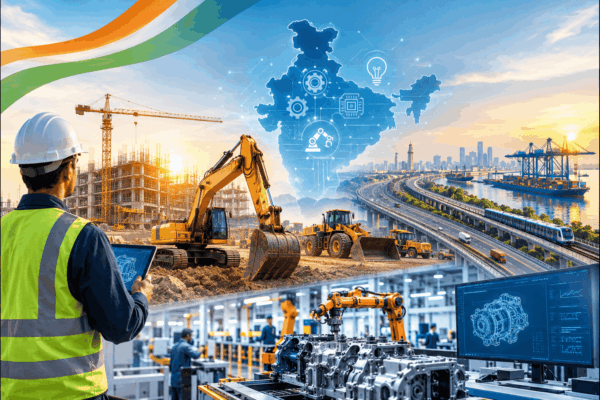
India’s construction equipment industry is shifting from component-led design to intelligent system-level engineering to meet rising infrastructure demands. Integrated technologies, automation, data analytics, and predictive maintenance are improving machine efficiency, reliability, and productivity, while enabling adaptive, connected, and future-ready equipment for complex infrastructure execution
India’s infrastructure story is no longer just about scale it is about execution. With a national infrastructure pipeline estimated at over $1.5 trillion and sustained capital expenditure driving execution intensity, the pace and complexity of project delivery have reached unprecedented levels. At the same time, India has emerged as the third-largest construction equipment market globally, with annual equipment volumes crossing 1.3 – 1.4 lakh units. In this environment, equipment is not judged by specification sheets, but by what it delivers on the ground hour after hour, cycle after cycle. Performance has become a function of consistency, not just capability, and that is precisely where the traditional approach to equipment design begins to fall short.
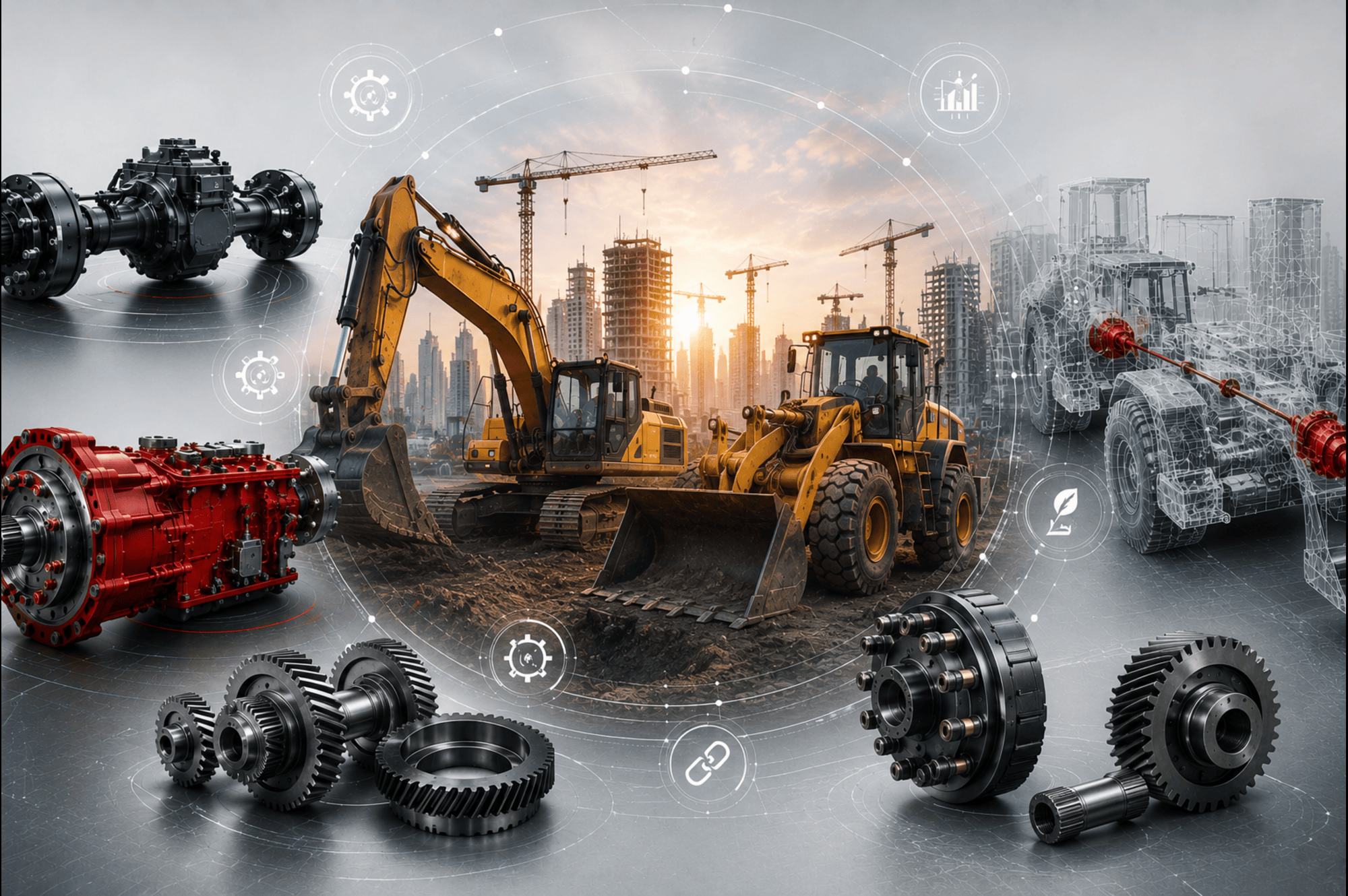
For decades, OEMs focused on optimizing individual components engines, transmissions, axles each engineered to deliver peak efficiency within its own domain. But real-world conditions rarely mirror controlled design environments. Machines operate under variable loads, across challenging terrains, and often with inconsistent operating practices. The result is a familiar pattern: performance variability, energy losses, and higher-than-expected wear. The limitation is not in the components themselves, but in how they interact. This is driving a fundamental shift in the industry from component-led design to system-level engineering, where the objective is not just to maximize individual outputs but to optimize how the entire machine performs as a cohesive unit.
The impact of this shift is most visible where it matters on the jobsite. In India, where equipment operates across diverse applications and often under high utilization, even small inefficiencies can have a disproportionate impact. As per industry reports, earthmoving equipment constitutes approximately
56% of the Indian construction equipment market share in 2025, highlighting the intensity of operations and the importance of reliability. Machines built on integrated systems behave differently; instead of reacting to load variations, they begin to adapt to them. Power delivery becomes smoother, transitions more precise, and output more consistent. Over time, this consistency translates directly into higher productivity and better project outcomes.
What is accelerating this transition further is the growing role of intelligence within equipment. Machines today are no longer purely mechanical they are becoming responsive systems capable of adjusting to real-time conditions. Software, sensors, and embedded controls are enabling dynamic optimization of performance, reducing dependence on operator intervention. Automation, therefore, is not a distant concept it is already becoming a practical necessity. As project timelines shrink and efficiency pressures rise, reducing variability in machine performance is critical, and intelligent systems help bridge that gap by ensuring machines operate closer to their optimal potential regardless of external conditions.
Data is playing an equally transformative and crucial role in this shift. Every machine today generates a continuous stream of operational insights from load patterns and fuel consumption to stress points and idle time shifting the industry from reactive maintenance to predictive decision-making. This evolution is also redefining how value is perceived, as equipment moves beyond being just a capital asset to becoming part of a performance ecosystem where uptime, efficiency, and lifecycle optimization are central.
At the same time, another layer of system thinking is beginning to emerge traceability. As machines become more complex and uptime becomes critical, visibility into component lifecycle is gaining importance. Technologies such as Radio Frequency Identification (RFID) and digital tracking are enabling better monitoring of parts, improving maintenance planning, and reducing downtime caused by inventory gaps or delayed replacements. The need for such efficiencies is further reinforced by cost pressures within the industry. At the same time, according to CRISIL report, while the industry continues to grow, expansion has moderated to around 2 – 4% in recent periods, reflecting the increasing complexity of execution and market conditions. In this context, the move towards integrated systems is not just an innovation it is a necessity.
However, this transition is not without its challenges. System-level engineering requires a fundamentally different approach to design, bringing together mechanical, electronic, and software disciplines while demanding closer collaboration across supply chains and new capabilities within organizations. There is also a growing need to upskill the workforce to manage more intelligent, connected machines. Yet, these challenges are part of a broader evolution, as infrastructure projects become more ambitious and the tolerance for inefficiency continues to shrink. Equipment must not only be powerful, but predictable not just durable, but adaptive.
Looking ahead, this shift will deepen further. Electrification will require tighter integration between energy systems and drivetrains, automation will move from assistance to partial autonomy, and data will evolve from a monitoring tool into a decision-making engine. In that future, the distinction between machine and system will become increasingly blurred. The industry is moving beyond the era of mechanical excellence to one defined by system intelligence, where performance is no longer determined by individual components but by how effectively they function together within an integrated architecture. Because ultimately, in infrastructure execution, success is not defined by peak capability but by the ability to deliver consistent, reliable performance under real-world conditions. And that is precisely what system-level thinking is designed to achieve.
Tags
Related Posts