Why India’s Digital Growth Requires a New Approach to Urban Infrastructure

India’s data centre boom represents one of the most significant infrastructure transformations of the digital era. As artificial intelligence, cloud computing, financial technology, and digital services expand rapidly, the physical infrastructure supporting these technologies is becoming increasingly important.
As per the Ministry of Electronics & Information Technology, India’s data centre capacity has grown from approximately 375 MW in 2020 to more than 1,500 MW by 2025, reflecting the rapid acceleration of digital infrastructure demand. Industry assessments indicate that the sector is expected to continue expanding significantly, with JLL projecting India’s data centre capacity to reach 1.8 GW by 2027, driven largely by cloud service providers, BFSI demand, and AI workloads. However, this growth is not only a technology challenge. Data centres are becoming a new form of urban infrastructure, with implications for energy systems, water resources, land-use planning, mobility networks and environmental resilience.
The question before urban planners is how digital infrastructure can be seamlessly integrated into the larger ecosystem of cities. According to Ar. Hardik Pandit of APICES Studio, data centres require a shift in the way cities approach infrastructure planning. “Traditionally, urban planning has focused on residential, commercial, and industrial developments. Data centres introduce a new infrastructure typology, one that may have limited human occupancy but places significant demands on energy, water, connectivity and land. Their planning needs to happen at a city and regional scale rather than only at a project level.”
Site selection beyond land availability
The location of a data centre has traditionally been viewed through the lens of land availability and development feasibility. However, these facilities require a much more complex planning framework. Reliable electricity supply, network connectivity, climate resilience, disaster preparedness and future expansion potential are now critical determinants of site selection.
Mumbai continues to remain one of India’s leading data centre markets due to its proximity to submarine cable landing stations, established business ecosystem, and connectivity infrastructure. The city accounts for a significant share of India’s data centre capacity, supported by its strategic location and enterprise demand. For planners, this concentration of digital infrastructure raises an important question: can existing urban systems support this scale of growth?
“The first design decision for a data centre is not the building form; it is the location strategy,” Pandit explains. “A technically advanced facility cannot perform efficiently if the surrounding infrastructure ecosystem is not capable of supporting it. The relationship between the data centre and the city around it must become a key part of the planning process.” Future developments will therefore require a more integrated approach where land-use decisions are aligned with power availability, connectivity corridors, water resources and long-term urban growth strategies.
Rahul Mehta, Co-Founder and Principal Architect, RM Architects, believes that data centres should be viewed as long-term civic infrastructure rather than isolated industrial assets. “Site selection is no longer simply about identifying available land. It is about understanding how digital infrastructure connects with the city’s larger ecosystem—from transportation and utilities to future urban expansion. The most successful projects will be those that are planned as part of the city’s long-term growth strategy, rather than standalone developments.”
A Robust Sustainable Foundation
Unlike conventional developments, data centres operate continuously and require highly reliable power systems with multiple layers of redundancy. As artificial intelligence workloads increase, energy demand is expected to become an even greater consideration. Industry projections suggest that AI-driven data centre expansion will significantly increase the requirement for dedicated digital infrastructure capacity in India. As Pandit says, “For data centres, electrical infrastructure is as important as the architecture itself. Substations, backup systems, renewable energy integration and utility corridors need to be considered from the earliest stages of planning. The building and the infrastructure supporting it must evolve together.” This requires cities and developers to rethink infrastructure planning through dedicated energy strategies, resilient grid connections and opportunities for renewable energy integration.
The environmental impact of data centres extends beyond electricity consumption. Cooling systems are critical to maintaining server performance, making water and thermal management important aspects of design. The Government of India has highlighted that newer cooling approaches, including direct-to-chip liquid cooling, adiabatic cooling, and immersion cooling, are being adopted to improve water efficiency and reduce energy consumption in data centres. For architects and engineers, this represents a move towards climate-responsive infrastructure rather than conventional building design.
“Cooling cannot be treated only as an engineering requirement,” says Pandit. “It must be integrated with site planning, climate analysis and architectural thinking. The next generation of data centres must respond to their environmental context.” This translates into greater adoption of efficient cooling systems, responsible water management practices, recycled water usage and designs that reduce heat impact on surrounding urban environments. Mehta also highlights the importance of contextual architectural responses. “Data centres must move beyond a one-size-fits-all design approach. Climate, orientation, landscape and local environmental conditions should inform every design decision. Sustainable architecture begins long before technology is installed. It starts with intelligent planning that reduces operational demands over the entire lifecycle of the building.”
Engineering Resilience
The complexity of data centres demands collaboration between architects, urban planners, and MEPF specialists from the earliest stages of development. Engineering systems are no longer secondary components; they are central to ensuring operational reliability. Firoj Jena, CEO of Clancy Global, asserts that the success of India’s digital infrastructure growth will depend on this integrated approach. “India’s data centre boom is a defining milestone in the country’s digital transformation, but its long-term success depends as much on intelligent planning and engineering as on advanced technology. Modern data centres demand reliable power, efficient cooling, high-speed connectivity, robust fire and life safety systems, and resilient infrastructure capable of supporting uninterrupted operations.”
He believes that collaboration between disciplines is essential to ensure that digital infrastructure integrates effectively with existing urban systems. “Urban planners, architects, and MEPF engineers must work together from the conceptual stage to ensure that these developments integrate seamlessly with existing power grids, transportation networks, water resources, and surrounding communities.”
Clancy Global’s approach reflects this philosophy through the successful delivery of the State Bank of India Global Capability Centre at Airoli, where technology infrastructure and engineering resilience were planned together. The project incorporated energy-efficient HVAC systems, resilient electrical infrastructure, DG-backed power distribution, structured cabling, advanced networking systems, CCTV and security infrastructure and server systems designed with complete backup redundancy to support uninterrupted operations.
Such projects demonstrate that infrastructure reliability is not achieved through individual systems working independently, but through coordinated planning across architecture, engineering, and technology. “Engineering solutions are not only about ensuring operational reliability,” says Jena. “They are also about optimising resources, reducing environmental impact, and enabling cities to accommodate digital infrastructure in a sustainable and future-ready manner.”
Beyond the Technical Building
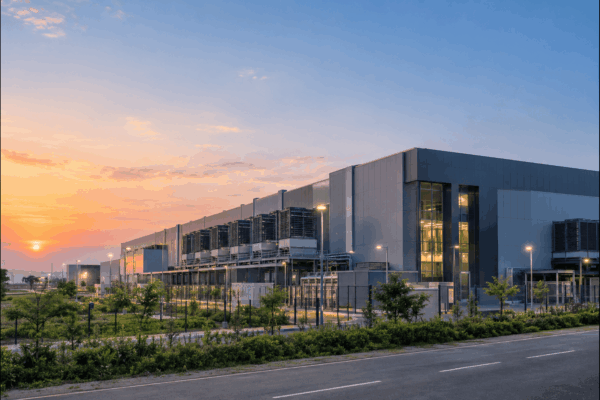
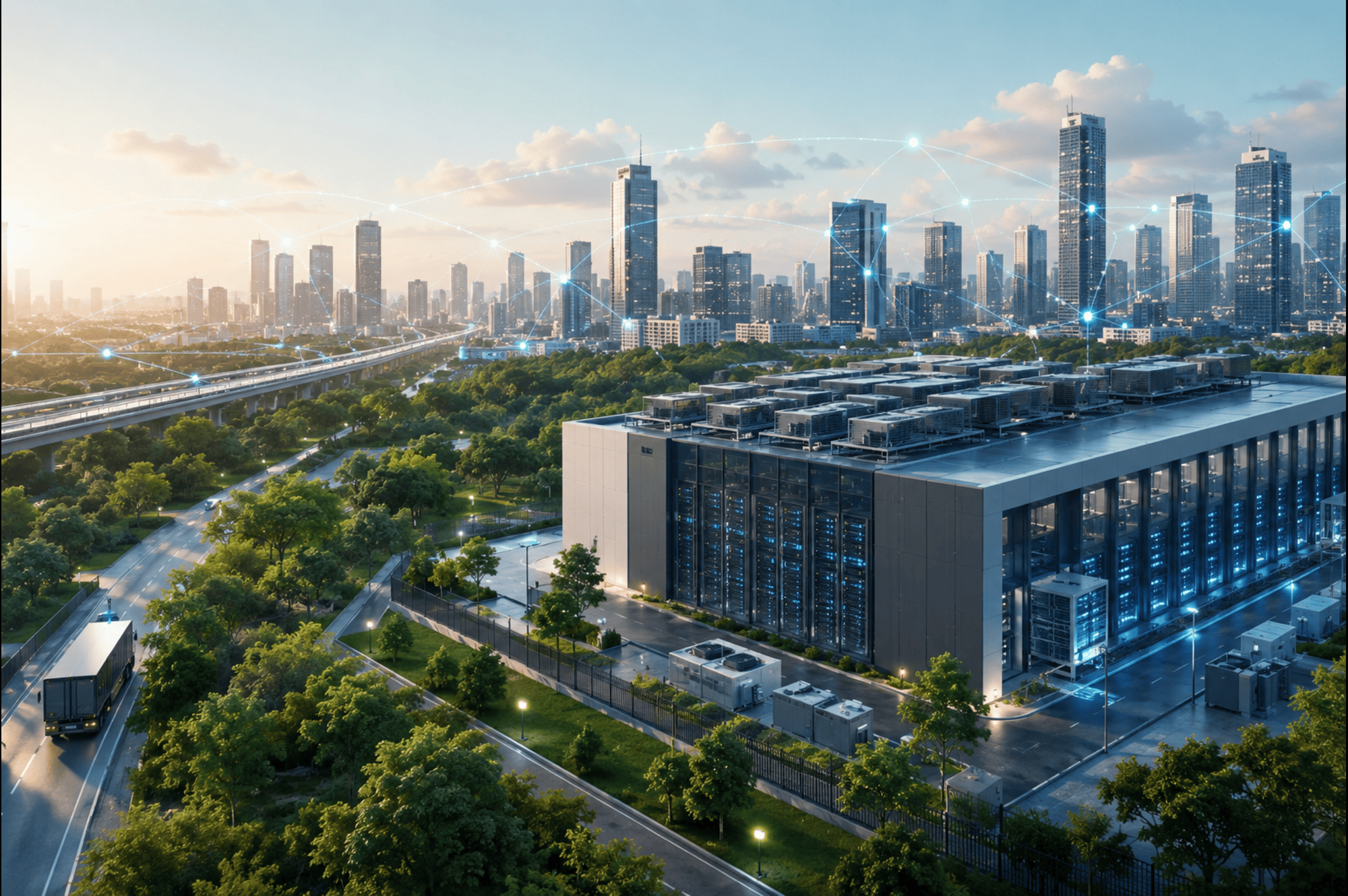
As data centres become increasingly embedded within urban regions, their architectural role is also evolving. Historically designed as secure and highly controlled technical facilities, future data centre campuses will need to address wider concerns around environmental integration, landscape design, energy performance, and their relationship with surrounding communities.
“Even highly technical buildings have an architectural responsibility,” says Hardik Pandit. “A data centre should not be seen as an isolated box; it is a campus that interacts with the city through infrastructure networks, environmental systems, and its surrounding context.” This shift presents an opportunity to redefine data centres as responsible urban assets — facilities that support digital growth while contributing positively to the cities in which they operate.
Mehta believes that the architectural identity of data centres is also evolving. “For a long time, data centres were treated as purely technical facilities with little architectural engagement. Today, they have the opportunity to become responsible urban infrastructure by evolving into projects that contribute positively to the built environment through thoughtful design, landscape integration and sustainable development practices. As cities become increasingly digital, these buildings should reflect the same design quality and long-term vision expected from any other critical public infrastructure.”
Looking ahead, Mehta sees digital infrastructure becoming an integral part of future urban development. “India’s digital economy will be built not only on technology, but on the quality of the infrastructure that supports it. The future lies in designing data centres that are efficient, resilient, adaptable, and seamlessly integrated into the urban fabric.”
Tags