Why Elevator Modernization Is Becoming Critical in Old Residential Buildings

by Navin Rajagopalan, Director, City Lifts India
As Indian cities continue to evolve vertically, thousands of residential buildings constructed decades ago are now facing a major infrastructure challenge, ie, ageing elevator systems. Older elevators across housing societies and commercial buildings are increasingly becoming unreliable, energy-inefficient, and difficult to maintain, making elevator modernization a necessity rather than an option.
Many buildings in metro cities such as Mumbai, Pune, Delhi, and Kolkata still operate elevators that were installed over 15 to 25 years ago. While these systems may continue to function, they often struggle with frequent breakdowns, slow operations, poor ride comfort, and outdated safety mechanisms. In high-density residential buildings where elevators operate continuously throughout the day, even minor downtime can significantly disrupt residents’ daily lives.
One of the biggest concerns surrounding older elevators is safety. Over time, components such as controllers, motors, door operators, and wiring systems deteriorate, increasing the risk of operational failures. Recent regulatory discussions around elevator safety in Maharashtra further highlight the need for stricter inspection and maintenance standards in the industry.
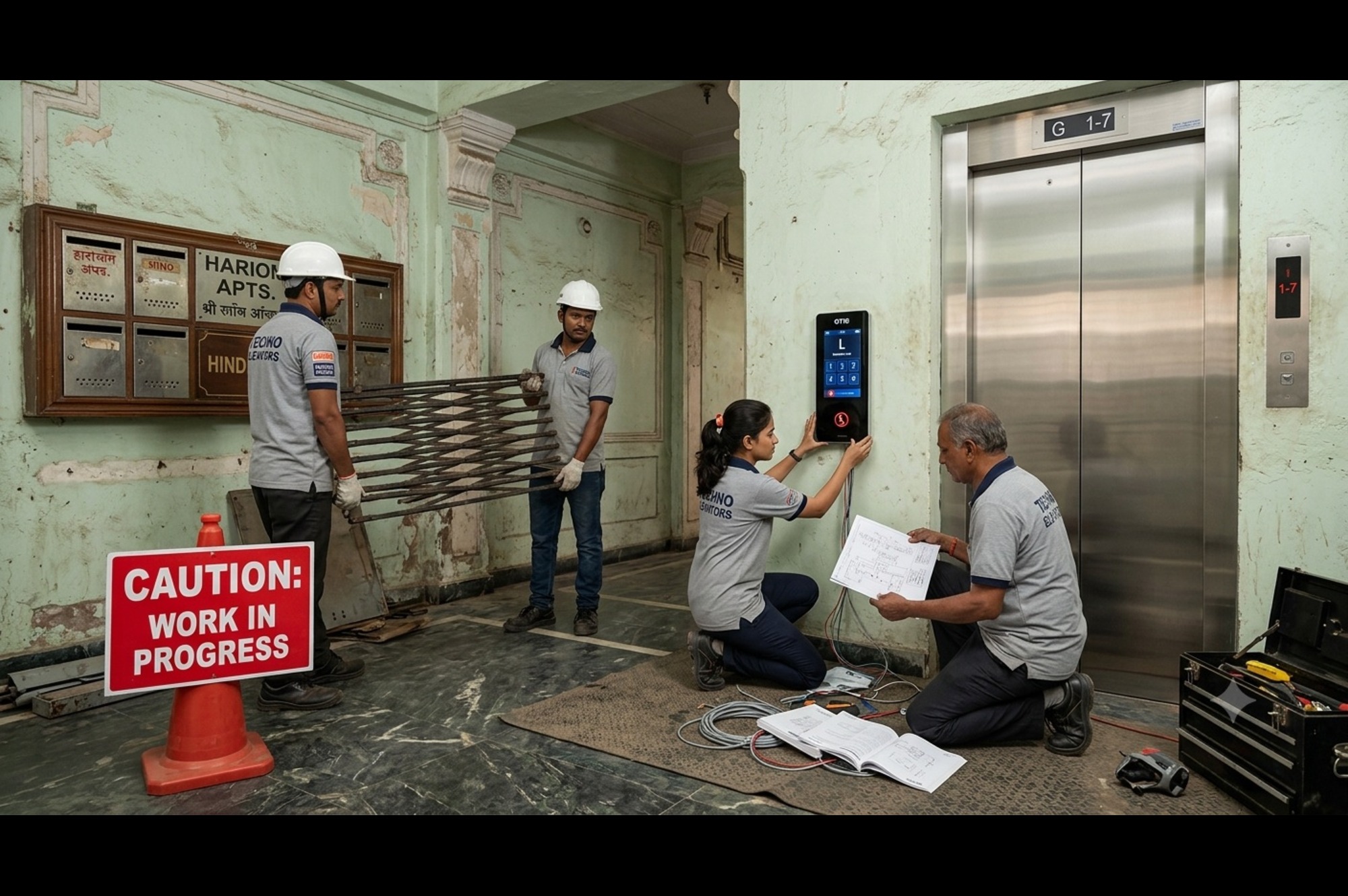
Elevator modernization enables buildings to upgrade critical systems without replacing the entire installation. By replacing outdated electromechanical systems with advanced technologies, buildings can significantly improve reliability, ride quality, energy efficiency, and passenger safety. Modernization also helps buildings comply with evolving safety regulations and accessibility requirements.
Another major advantage of elevator modernization is improved operational efficiency. Modern elevator systems are equipped with intelligent traffic management technologies, smoother door operations, and energy-efficient components that help reduce power consumption and maintenance costs over the long term. These upgrades not only improve user experience but also enhance the overall value and attractiveness of the property.
For housing societies and commercial property owners, modernization is also becoming financially practical. Completely replacing an elevator system can be highly expensive and time-consuming, whereas phased modernization allows buildings to upgrade essential components with minimal disruption to residents and occupants. Many developers and facility managers are increasingly adopting this approach to extend the lifespan of existing elevator systems while improving performance.
As India’s urban infrastructure ages and building densities continue to rise, elevator modernization will play a crucial role in ensuring safer, smarter, and more efficient vertical transportation systems across residential and commercial properties.