The Rise of Premium Senior Living in India: A Shift from Necessity to Lifestyle

by Anil Godara, Founder and Managing Director, J Estates
India’s senior living sector is amid a significant transformation. For a long time, retirement homes carried a particular connotation: a last resort for elderly people without family to fall back on. That perception is changing. Driven by shifting demographics, longer lives, rising incomes, and a generation of seniors with very different expectations, premium senior living is emerging as one of the more compelling growth stories in Indian real estate.
The market reflects this. Currently valued at USD 2–3 billion, it is projected to reach around USD 12 billion by 2030, a nearly fivefold increase. The underlying reasons are straightforward. People are living longer. Families are getting smaller and more scattered. And the population is ageing at a pace that will fundamentally reshape housing demand over the next two decades. According to Colliers India, the country’s median age will rise from 29 today to 38 by 2050, with the share of people above 60 nearly doubling from 11 per cent to 21 per cent. By mid-century, close to one in six seniors in the world will be Indian.
These are not just numbers on a forecast slide. They represent millions of households that will, over the coming years, be making real decisions about how and where to spend the latter half of their lives. The senior living sector sits directly in the path of that shift. What makes this even more distinct is not just the scale of demand, but the nature of it. Today’s seniors are healthier and more independent than previous generations. They are not simply looking for assistance. They want convenience, safety, wellness, and a social life. The conversation has moved from care to quality of life, and the best developers in this space are building accordingly.
Demographic Shifts Creating a New Demand
India is getting older and doing so faster than most people realise. The target market for senior living is expected to grow from 1.57 million in 2024 to 2.27 million by 2030. Behind that number is a quieter story: people are living longer, having fewer children, and moving to cities. The old support structures, built around large families and shared homes, are loosening. Seniors increasingly find themselves needing something the joint family can no longer reliably provide.
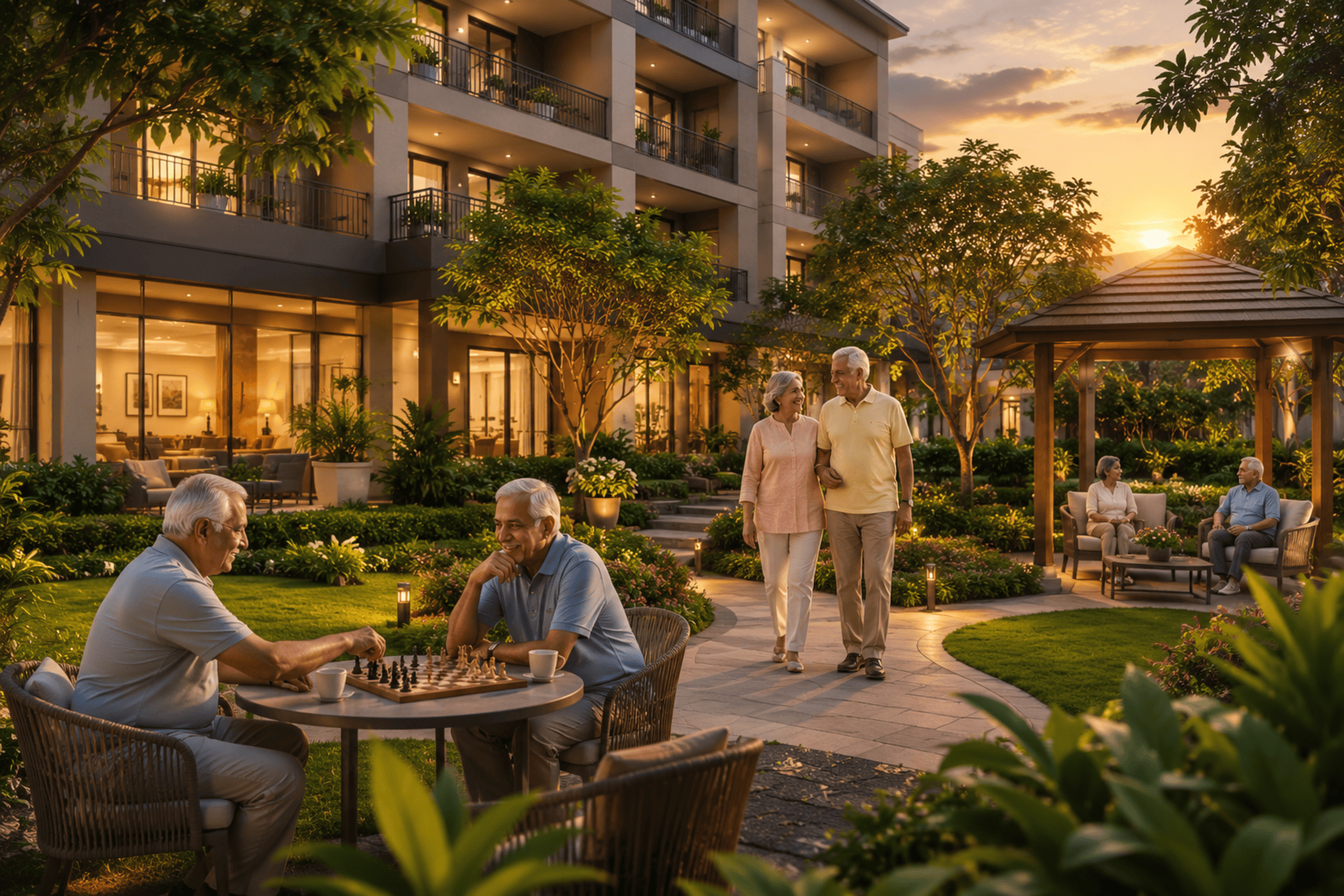
What has changed is not just the need, but the expectation. The senior living communities being built today bear little resemblance to the institutional homes of the past. Developers are creating places people actually wish to live in: wellness centres, gardens, hobby spaces, good food, and the kind of daily rhythm that keeps life interesting. Private space and a genuine sense of community offered together.
This mirrors a shift already well underway in other parts of the world, where retirement living has been reimagined around wellness, social connection, and personal freedom rather than dependency. In India, that reimagining is gaining ground. Retirees and their families are beginning to see these communities not as a step down, but as a step forward.
Premiumisation Driving Growth
Premium senior living is rising in lockstep with India’s broader premiumisation wave. Affluent retirees and high-net-worth individuals now seek residences that deliver superior amenities, integrated healthcare, and a demonstrably better quality of life, and they are willing to pay for it.
The market is responding. Some industry estimates project the organised sector reaching USD 12 billion by 2030, as developers scale supply and institutional capital enters the space. Leading operators are already developing premium projects across key urban and suburban markets, with communities increasingly resembling luxury residential developments complete with hospitality-inspired services and technology-enabled care.
Healthcare remains the critical differentiator. Lifestyle amenities attract residents; medical support retains them. The best communities now offer preventive care programmes, telemedicine, on-call assistance, emergency response, physiotherapy, and wellness monitoring, all woven in without eroding residents’ independence. Underpinning it all is a shift in consumer expectations. Today’s seniors are all about staying healthy in every way – physically, through good nutrition, and mentally. This focus has developers stepping up to build communities that support an overall healthy lifestyle for older adults, not just places for medical care.
These changes are drawing in a lot of investors too. Industry reports show that India needs a ton of investment over the next ten years to keep up with the need for suitable housing for the elderly. Right now, market penetration is pretty low compared to what we see elsewhere globally, pointing to major growth potential.
With more attention coming their way, senior living spaces are looking like a robust, long-term real estate choice. All sorts of companies such as developers, health care providers, hoteliers, and institutional investors are jumping in to discover new chances. This is helping the whole area grow into something much more structured and organized.
The Road Ahead
Premium senior living in India has quietly crossed a threshold. It is no longer a reluctant concession to old age but a considered, even aspirational, choice. Today’s retirees want independence, good health, meaningful company, and the comfort of not having to worry about the small things. Lifestyle-oriented senior communities are beginning to deliver exactly that.
With a large and growing elderly population, rising incomes, and a generation of seniors far more demanding than the last, this segment is on its way to becoming a natural part of India’s residential landscape. The future of retirement housing will not be defined by the level of care on offer alone. It will be defined by how well it helps people live.
Tags