
Premium Managed Farmlands: India’s Next High-Growth Alternative Investment

by Ashwin Kumar, Founder & Managing Director, Vibez Estates
For many years now, Indian real estate investments have had a clear path to follow – either buying urban apartment complexes, commercial offices, or developing land in the suburbs. But as the rental returns for metropolitan real estate become more and more compressed (averaging at around 2-3%) and the cost of entry being prohibitively high, the current generation of investors in India is seeking something different than what was traditionally available.
And one such investment avenue that has emerged is managed farmland.
What is Premium Managed Farmland?
Managed premium farmland is a high-end real estate and agriculture investment opportunity that sees people owning legally recognized titles for a particular piece of land, while an expert management firm will manage all farming activities and offer exclusive access to resort-style facilities. It is a model that gives city-based investors an opportunity of generating passive income from scientifically grown crops such as coffee or tea without having to engage in labor-intensive farming processes.
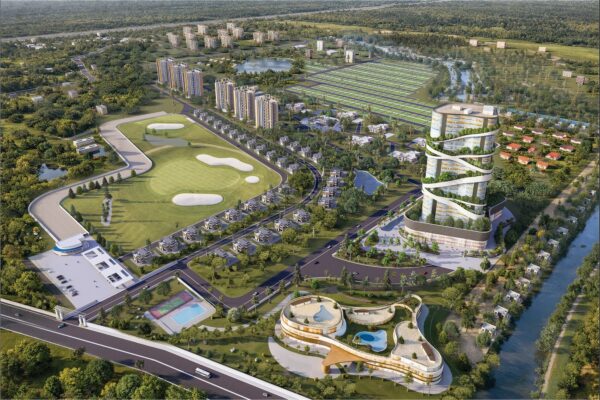
At the same time, the gated community becomes a luxury getaway with features such as round-the-clock security and club houses among others.
Traditional Urban Real Estate Vs. Managed Farmland Model
- Traditional Urban Real Estate
High Entry Capital: Requires significant initial investment.
Depreciating Asset: The physical building structure depreciates over time.
Low Rental Yields: Offers modest rental yields, typically around 2–3%.
Operational Drag: Involves active property management, maintenance costs, and potential vacancy risks.
- Managed Farmland Model
Lower Entry Threshold: Provides a more accessible entry price point.
Appreciating Land Assets: Focuses on physical land, which appreciates naturally over time.
Dual-Return Potential: Delivers value through both land capital appreciation and ongoing crop harvest returns.
Turn-Key Management: Handled entirely by professional management teams for hassle-free ownership.
Why Managed Farmland is Gaining Traction
Managed farmlands have a lot of momentum in the form of dual engine returns, tax efficiency, sustainability, and lifestyle changes. Unlike apartment complexes which will undergo depreciation in the long run and need capital upgradation, agricultural land is a limited resource and can even be improved through good management of the ecosystem. The investor gets dual engine returns since not only will the price of the land increase over time because of its strategic location near urban growth or production of plantation, but there will be additional income coming from crops such as coffee, timber, spices and organic fruit orchards.
In terms of taxes, this strategy gives amazing wealth preservation benefits. As per Section 10(1) of the Indian Income Tax Act, income from agriculture is totally free from central income tax. For those who belong to higher tax brackets, their harvest proceeds become much more profitable in comparison with the money earned from regular deposits or dividends from shares on an after tax basis. Also, direct ownership of land acts as a good natural protection from the effect of inflation in the long term.
Apart from the purely financial considerations, managed farmlands address the growing trend of sustainability and health needs of people. Estate management today includes the elements of sustainability in the form of agroforestry, drip irrigation, rainwater harvesting and soil improvement. In other words, capital that is invested into such estates helps to restore ecosystems, increase carbon capture and preserve biodiversity. Combined with lifestyle changes post pandemic period, such managed estates serve as “Plan B” assets – a place where one’s family can enjoy harmony with nature while leaving behind a multi-generational heritage.
The Infrastructure Ripple Effect and Micro-Location Dynamics
The rapid expansion of national expressways, industrial corridors, and peripheral ring roads across India is reshaping regional real estate dynamics. Farmlands situated close to tier-1 and tier-2 urban centers benefit directly from this infrastructure momentum. As urban boundaries stretch outward, strategic farmland parcels capture compounding capital gains driven by improved connectivity, regional development, and proximity to upcoming logistics hub networks. Choosing a micro-location with robust groundwater reserves and confirmed infrastructure investment provides a defensive moat against localized economic downturns.
Monetization Beyond Harvest: Eco-Tourism
The growing popularity of agri-tourism and low-impact eco-resorts allows managed estate operators to generate secondary hospitality revenue during non-harvest seasons. These auxiliary revenue streams diversify the estate’s overall yield matrix, buffering land owners against seasonal agricultural price volatility.
Structured Liquidity and Institutional Standardization
Historically, rural land transactions suffered from fragmented ownership, price opacity, and prolonged sales cycles. Modern managed farmland developers are standardizing project sizes, establishing clear legal documentation, and creating structured secondary marketplaces. By introducing standardized estate layouts, clear title histories, and ongoing professional upkeep, these platforms make entering and exiting the market far more seamless for individual investors. This gradual institutionalization transforms farmland from a static, illiquid holding into an accessible, institutional-grade portfolio component.
Important Factors for Potential Buyers
While there are many advantages to this type of investment, it is crucial that prospective buyers do a substantial amount of research prior to investing in order to secure their money.
Laws concerning land ownership in different states of India vary greatly, and therefore, it is important to verify them so as to be sure that there are no issues with land titles and that the transaction is registered by a sub-registrar and meets all the conditions required for the purchase of agricultural lands in that region.
Finally, farmland is inherently a medium-to-long-term holding, requiring a minimum time period of 5 to 10 years to allow both land appreciation and plantation maturity to compound effectively.
Looking Forward
With the rise in urban saturation levels and alternative investment options increasingly taking market share in India, managed farmlands can be seen as the point at which wealth creation, sustainability, and lifestyle come together. Managed farmlands thus become the ideal starting point for investors looking to diversify outside equities and sub-prime urban property markets.
Tags