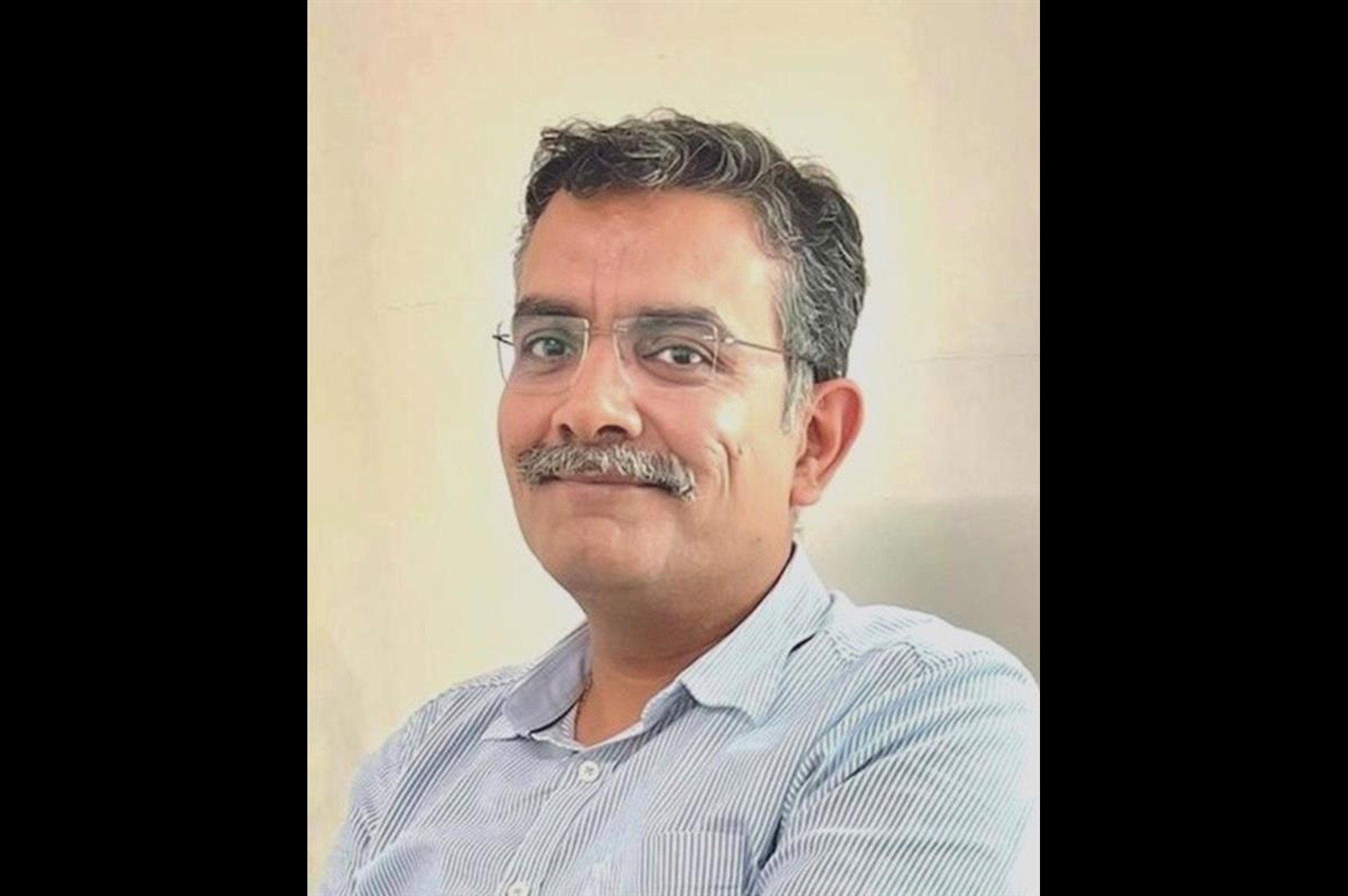
Interview: Sharad Bhushan, Executive Director, EWE India at AECOM

How do you envision your organization’s role in contributing to Viksit Bharat 2047?
We see our role extending far beyond the delivery of infrastructure projects, we see ourselves as partners in India’s journey towards becoming a developed nation by 2047. Achieving the vision of Viksit Bharat will require infrastructure that is intelligent, sustainable, resilient, and inclusive which is capable of supporting rapid economic growth while enhancing quality of life and environmental stewardship. Our focus is on helping create the physical and digital foundations that will drive industrial competitiveness, energy security, climate resilience, and equitable development across the country. By 2047, infrastructure will be more than a means of connecting locations, we believe that it will be the catalyst that connects people to opportunities, transforms aspirations into achievements, and creates a lasting legacy for future generations.
What are the key strategic drivers shaping growth in the current infrastructure cycle?
India is experiencing a once-in-a-generation infrastructure transformation, driven by unprecedented public investment, rapid urbanization, the development of integrated economic corridors, the accelerating energy transition, and the growing digitalization of infrastructure and public services. Initiatives such as the National Infrastructure Pipeline,PM Gati Shakti,Make in India,and theNational Logistics Policy are reshaping the country’s economic landscape while strengthening its position in global supply chains. Unlike previous investment cycles that primarily focused on creating physical assets, today’s infrastructure investments are strategically designed to enhance productivity, improve connectivity, accelerate industrial growth, strengthen energy security, and build long-term national competitiveness. The result is an infrastructure ecosystem that serves not only as an enabler of economic growth but also as a foundation for India’s journey towards becoming a developed nation by 2047.
How is your organization ensuring excellence in execution across scale, speed, and quality?
The future of infrastructure delivery will be defined by industrialized execution powered by data, technology, and predictive intelligence. Organizations are increasingly transitioning from traditional reactive project management approaches to predictive and outcome-driven delivery models that leverage digital project controls, AI-enabled planning and risk management, integrated command centres, real-time performance monitoring, and data-driven decision-making. This transformation enables better visibility across cost, schedule, quality, and safety parameters, allowing teams to anticipate challenges before they arise and take proactive corrective action. Ultimately, the objective is clear: deliver projects faster, safer, more efficiently, and right the first time.
In what ways is technology and digital transformation redefining project delivery?
Technology is rapidly becoming the defining force behind the next generation of infrastructure delivery, serving as a powerful multiplier of productivity, efficiency, and decision-making. The infrastructure of the future will be conceived, designed, constructed, and operated through an integrated digital ecosystem powered by technologies such as Digital Twins, Artificial Intelligence, Building Information Modelling (BIM), advanced digital engineering platforms, drones, remote monitoring systems, IoT-enabled asset management, predictive analytics, and autonomous inspection capabilities. As we move towards Viksit Bharat 2047, infrastructure projects will increasingly be built in the digital world before they are built in the physical world, enabling better planning, reduced risks, optimized costs, enhanced sustainability, and superior lifecycle performance.
How are sustainability and ESG principles being embedded within your operations?
Sustainability has evolved from a regulatory obligation to a core business imperative and a key determinant of long-term value creation. Today, the question is not whether infrastructure can be built, but whether it can be built in a manner that is environmentally responsible, socially inclusive, and economically resilient. We are embedding ESG principles across the project lifecycle through low-carbon and resource-efficient design, circular economy practices, renewable energy integration, climate resilience planning, and meaningful stakeholder engagement. As infrastructure assets are expected to serve communities for decades, every major investment must be future-proofed against climate, social, and economic risks while contributing to sustainable growth and national development.
What are the pressing challenges in the EPC sector, and what measures can address them?
The EPC sector is currently navigating a rapidly evolving landscape characterized by margin pressures, increasing project complexity, talent shortages, supply chain uncertainties, delayed approvals, and the growing challenge of equitable risk allocation. Addressing these challenges will require a fundamental shift towards more collaborative contracting frameworks, faster and more transparent decision-making processes, greater adoption of digital technologies, improved project planning and preparation, and sustained investment in talent development and capability building. As the industry evolves, the most successful organizations will be those that effectively combine engineering excellence, innovation, and digital intelligence to deliver projects with greater certainty, efficiency, and value.
How do you view the impact of evolving government policies and reforms?
Government-led reforms have fundamentally reshaped India’s infrastructure landscape, creating a more integrated, efficient, and future-ready development ecosystem. Landmark initiatives such as PM Gati Shakti, the National Logistics Policy, the National Green Hydrogen Mission, renewable energy programs, and Ease of Doing Business reforms have transformed infrastructure planning from isolated project execution to a coordinated, multimodal, and nationally aligned growth strategy. As India advances towards Viksit Bharat 2047, the next decade is expected to witness even deeper convergence of policy, technology, private investment, and infrastructure delivery, accelerating economic growth, enhancing global competitiveness, and strengthening the nation’s resilience and sustainability objectives.
What emerging opportunities do you foresee across infrastructure segments?
The opportunities ahead for India’s infrastructure sector are truly unprecedented. As the nation advances towards the vision of Viksit Bharat 2047, significant growth is expected across renewable energy, green hydrogen, battery energy storage systems, transmission and grid modernization, water security, river basin management, urban infrastructure, smart cities, data centres, digital infrastructure, high-speed rail, multimodal logistics, and climate-resilient infrastructure. These sectors will not only drive economic growth but also strengthen India’s energy security, sustainability, and global competitiveness. The infrastructure economy of 2047 will be fundamentally different from that of today and will be more connected, digital, decarbonized, resilient, and citizen-centric, creating new opportunities for innovation, investment, and nation-building.
How is your organization positioning itself in the global EPC landscape?
India is rapidly evolving from being one of the world’s largest infrastructure markets into a global infrastructure powerhouse. As the country strengthens its engineering, project delivery, and innovation capabilities, there is a tremendous opportunity to export not only infrastructure services but also world-class engineering expertise, project management excellence, digital solutions, and sustainable development models. Indian companies are increasingly positioned to become trusted partners in delivering complex infrastructure programs across Asia, Africa, the Middle East, and other emerging markets. The next phase of growth will be defined by India’s ability to transform from a consumer of global expertise to a provider of global solutions which truly embodying the vision of “Designed in India, Delivered to the World – Multi Global – Multi Local.”
What is your long-term vision and roadmap in contributing to India’s infrastructure transformation?
Our vision is to help build the infrastructure ecosystem that will underpin a developed India by 2047. We believe the next two decades will be shaped by the convergence of digital infrastructure, decarbonized energy systems, climate-resilient assets, and human-centric development. As India progresses towards becoming a global economic powerhouse, infrastructure must not only drive growth but also enhance sustainability, inclusivity, and quality of life. Ultimately, success will not be measured by the number of projects we deliver, but by the economic opportunities we create, the communities we empower, the resilience we build, and the lasting legacy we leave for future generations.
Tags