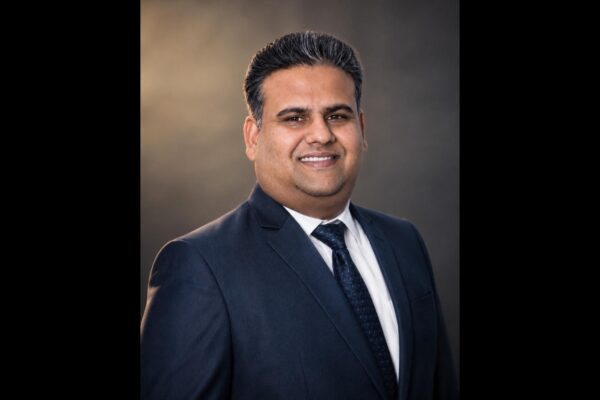

Interview: Jigarkumar G Raj, Founding Partner, KAGI Energy & Infra

India’s renewable energy sector is entering a new era of growth. How do you view the industry’s current trajectory, and what will be the key drivers of growth over the next five years?
India’s renewable-energy journey is moving from a phase dominated primarily by capacity addition to one centred on integration, flexibility, reliability and value creation. As of 31st August 2026, India had about 295.55 GW of renewable capacity, including 168.04 GW solar and 58.52 GW wind, with total non-fossil capacity exceeding 304 GW. The next phase of growth will be driven not only by capacity addition, but by utility-scale and rooftop renewables, energy storage, electrification, and green hydrogen. Storage will be especially critical, with the National Electricity Plan projecting around 47.24 GW/236 GWh of BESS by 2031–32. From my experience across government advisory, project development, rooftop solar, EV infrastructure and utility interfaces, I believe the next stage of the transition will require us to think beyond megawatts. The real measure will increasingly be how intelligently those megawatts are generated, stored, transmitted, consumed and monetised.
Which recent government policies and regulatory reforms have had the greatest impact on the renewable energy sector, and what additional measures would further accelerate India’s energy transition?
Recent policy reforms have significantly strengthened India’s renewable-energy ecosystem. Green Energy Open Access Rules, renewable and storage obligations, competitive procurement of FDRE/storage, PM Surya Ghar, the ₹24,000 crore solar manufacturing PLI scheme, ALMM expansion, and BESS VGF support have improved market access, domestic manufacturing and storage deployment. From my experience contributing to the Gujarat Integrated Renewable Energy Policy 2025 and Mission 100 GW roadmap, policy certainty remains critical for converting investment into projects. The next priority should be faster transmission and connectivity, consistent open-access implementation, bankable storage contracts, financially stronger DISCOMs and quicker approvals.
As domestic manufacturing gains momentum under the Make in India initiative, how is your organisation strengthening local manufacturing, technology leadership and global competitiveness?
India’s renewable manufacturing ecosystem has expanded rapidly, with solar-module capacity reaching around 172 GW by March 2026 and domestic-value-chain requirements progressively extending to cells, ingots and wafers. We contribute to Make in India through local engineering, system integration, EPC execution, O&M, EV charging infrastructure, vendor development and skill creation. Our focus is on building reliable, efficient and standards-compliant energy systems rather than manufacturing every component in-house. India’s next opportunity is to move beyond being a low-cost project market and become a global exporter of engineering capability, digital energy solutions, O&M expertise and skilled clean-energy manpower.
Technologies such as BESS, Green Hydrogen, Artificial Intelligence and digital asset management are transforming the sector. Which innovations do you believe will have the greatest impact on the industry’s future?
These technologies will increasingly work as an integrated energy ecosystem. BESS will be central to renewable firming, peak shifting and grid balancing, with India projected to require about 236 GWh by 2031–32. Green hydrogen will be critical for hard-to-electrify sectors such as refining, fertilisers, chemicals and steel. At the same time, AI and digital asset management can significantly improve forecasting, predictive maintenance, fault detection and asset performance. The future energy system will therefore be increasingly hybrid, digital and dispatchable, with renewables generating, storage balancing, AI optimising, smart grids managing, EVs interacting and green hydrogen enabling deeper industrial decarbonisation.
With renewable capacity expanding rapidly, what are the biggest challenges related to grid integration, financing, project execution and supply-chain resilience, and how can the industry collectively address them?
The key challenge is increasingly coordination across generation, transmission, storage, financing and execution. While renewable capacity can be added quickly, substations, connectivity, land, storage and demand must develop in parallel. Financing models must also evolve for BESS, hybrid projects, open access, merchant power and green hydrogen, where revenue structures are more complex than conventional PPAs. Major execution risks remain land and right-of-way issues, transmission readiness, approval delays, equipment lead times and skilled manpower availability. The way forward is stronger domestic capability, diversified supply chains, better forecasting, digital project monitoring and coordinated planning. In my experience, projects move fastest when policy, transmission, financing and execution are planned together, not sequentially.
Sustainability and ESG have become central to business strategy. How is your organisation integrating sustainability, decarbonisation and circular-economy practices into its long-term growth plans?
For us, sustainability is embedded in the business itself. We work across solar, energy storage, O&M, EVs and charging infrastructure directly supports electrification and lower-carbon energy use. Our next focus is stronger lifecycle asset management, improving performance through preventive and predictive O&M, extending equipment life, and enabling responsible end-of-life management of modules, batteries and electrical systems. We also see growing importance in repair, reuse, second-life applications, recycling and material recovery. Ultimately, meaningful ESG should be measurable through energy saved, renewable generation, emissions avoided, responsible asset management, skills created and economic value delivered.
What emerging market opportunities do you foresee in India’s renewable energy landscape, and which segments are likely to attract significant investment and innovation over the next few years?
The opportunity now extends well beyond conventional solar EPC. Key growth areas include solar-plus-storage, distributed energy, EV charging infrastructure and green hydrogen. C&I consumers are increasingly seeking reliable, optimised green power through rooftop solar, group captive, open access and storage-integrated solutions. Another major opportunity is green skills, India will need a large pool of trained engineers, technicians, installers, BESS specialists, EV-charging professionals and O&M personnel. In my experience, building this skilled workforce is as important as adding renewable capacity itself.
As the industry prepares for REI Expo 2026, what key innovations, collaborations and market trends do you expect to define this year’s event, and what message would you like to share with the renewable-energy fraternity?
I expect REI Expo 2026 to reflect the sector’s shift from standalone products toward integrated clean-energy ecosystems. Key themes will include high-efficiency PV, domestic manufacturing, BESS, hybrid/FDRE projects, AI-enabled monitoring, EV charging, green hydrogen, digital O&M and recycling. Beyond technology showcase, REI’s real value lies in bringing together manufacturers, EPCs, developers, utilities, policymakers, financiers and innovators. With India’s non-fossil capacity already above 304 GW, the next priority is to build a clean-energy system that is reliable, financially sustainable and globally competitive.
My message to the renewable-energy fraternity would therefore be simple: “India’s energy transition is not just about adding megawatts, but building smarter, reliable, storable and sustainable clean energy.”