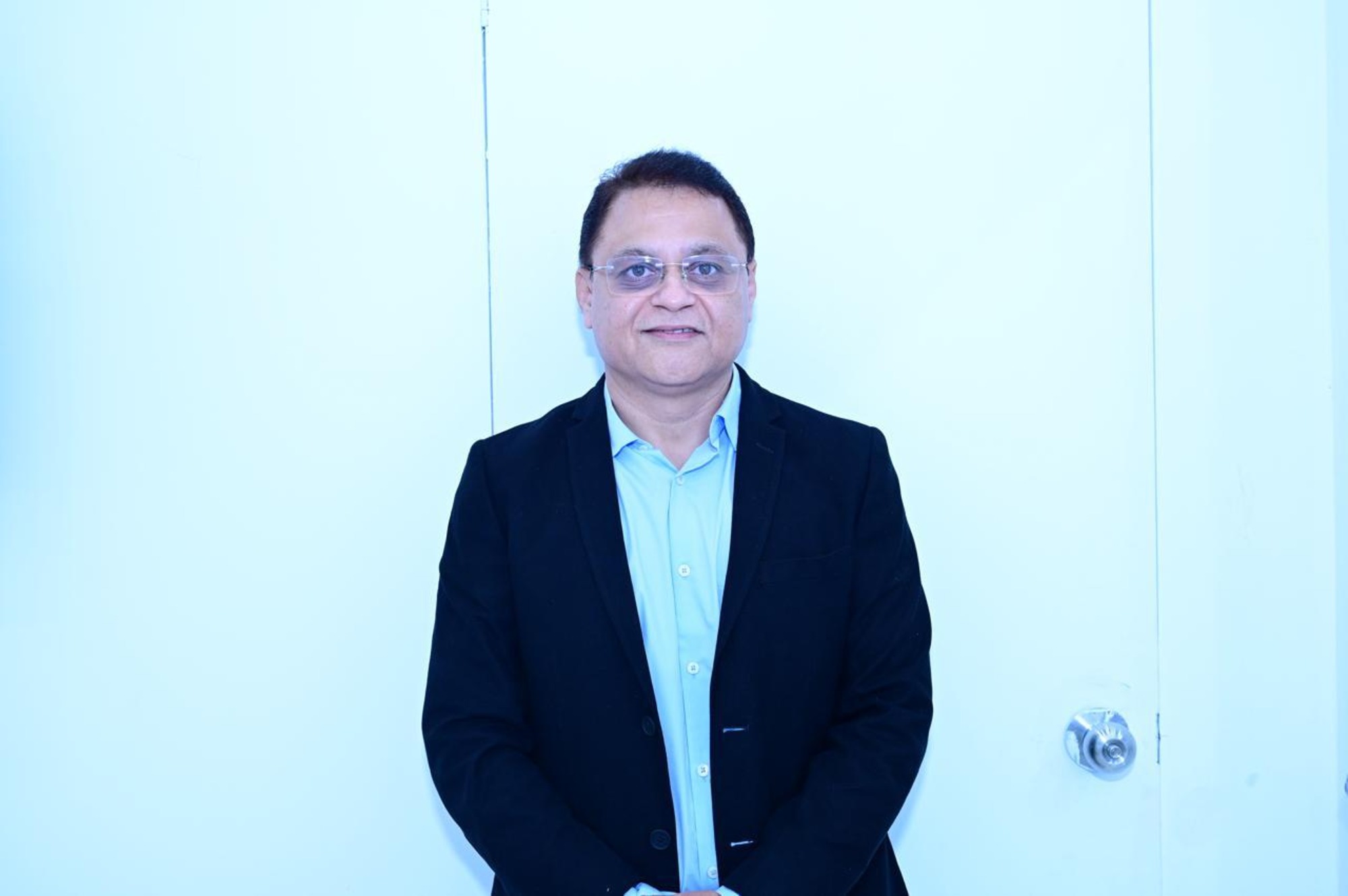
Interview: Amit Thatte, Managing Director, Kataline Limited

Over the past quarter-century, Kataline has been instrumental in transitioning India’s road safety paradigm from compliance-driven execution to performance-engineered solutions. Could you elaborate on the underlying engineering philosophy that governs your approach to mobility safety, particularly in translating human behavioural uncertainties into measurable design interventions?
At Kataline, we’ve always believed that road safety is not just an engineering problem. It is a human problem solved through engineering. Our philosophy revolves around forgiving infrastructure. We design systems that anticipate errors such as delayed reaction time, poor visibility, or risky manoeuvres, and guide behaviour through visual, tactile, and auditory cues. A high-friction surface, for example, is not just about grip. It is about reducing stopping distance in that one critical second where human error could otherwise turn fatal. We translate behavioural uncertainties into measurable parameters like reaction time, luminance contrast, and skid resistance, and engineer solutions that compensate for those gaps.
Kataline operates what is described as one of the world’s largest fully automated thermoplastic manufacturing facilities. Could you provide granular insights into the plant’s production architecture capacity, automation protocols, process controls, and quality assurance mechanisms that enable consistency across high-volume output?
Our thermoplastic facility is built around one principle: consistency at scale. We operate fully automated batching and blending systems where raw material dosing is controlled through PLC-based processes. This removes human variability in formulation. Temperature, mixing cycles, and viscosity are monitored in real time, ensuring every batch meets defined specifications. From raw material intake to final packaging, the process is automated and supported by inline quality checks. Each batch is traceable, and samples are retained for validation. This enables us to maintain uniformity even at high volumes.
Your portfolio spans thermoplastics, 2K cold-applied plastics, high-friction surfacing systems, and wet-reflective technologies. How does your R&D framework integrate global standards such as MoRTH, IRC, BS EN 1436, and ICAO into material formulation, and what proprietary innovations differentiate Kataline’s products in terms of durability, retro-reflectivity, and lifecycle cost optimisation?
Our R&D approach is both compliance-driven and performance-driven. We treat standards like MoRTH, IRC, BS EN 1436, and ICAO as the baseline, not the benchmark. Our internal protocols aim for higher durability, better retention of retro-reflectivity, and improved lifecycle cost efficiency. Our differentiation lies in formulation science. This includes enhanced binder systems for better adhesion, optimised glass bead gradation for sustained reflectivity, and polymer modifications to handle temperature variations. The focus is on reducing repainting cycles, improving night visibility, and delivering long-term value.
Kataline’s collaborations with international leaders reflect a distinctly global technology assimilation model. How do you localise these advanced systems for Indian climatic and traffic conditions while maintaining international performance benchmarks?
India presents one of the most demanding environments, with extreme heat, heavy rainfall, mixed traffic, and varied road conditions. When we collaborate globally, localisation becomes critical. We conduct field trials across climatic zones and adapt formulations for temperature resistance, wet condition reflectivity, and abrasive traffic conditions etc while maintaining the specifications as prescribed by the governing bodies. The objective is to retain global performance standards while making them relevant for Indian realities.
Road marking quality is intrinsically linked to application precision. Could you elaborate on your deployment ecosystem specifically the role of advanced line-marking machinery, automation in field execution, calibration protocols, and operator training systems that ensure uniformity across large-scale national projects?
Even the best material depends on correct application. We use advanced line-marking machinery to ensure controlled thickness, uniform width, and consistent bead application. Each machine is calibrated periodically to maintain accuracy. Operator training is equally important. Our teams are trained not just in execution but also in understanding the intent behind specifications. This ensures consistency across highways, urban roads, and complex junctions.
Your work across Mumbai’s Coastal Road, Metro corridors, and high-density junctions presents a compelling case of engineering under extreme constraints. What key technical learnings have emerged from these projects, and how have they influenced your material selection and system design philosophy?
Projects like Mumbai Coastal Road and metro corridors require working under tight constraints such as limited time windows and high traffic density. One key learning is the importance of system integration. Markings must work in harmony with signage, lighting, and road geometry.
We have also adapted materials for faster curing and higher early strength, especially where quick reopening of traffic is critical.
India’s monsoon conditions significantly impair night-time visibility. Could you explain the science behind your wet-reflective systems and crystal-based road studs in terms of optical performance and durability?
Conventional markings lose visibility in rain due to water film formation. Our wet-reflective dot marking systems use specialised surface profiles and larger glass beads that protrude through the water layer. This allows light to reflect back effectively even in wet conditions. Swarovski Crystal-based road studs complement this by offering multi-angle reflectivity and maintaining durability under heavy loads and waterlogging.
With over 1200+ projects executed across diverse geographies, how is your pan-India execution network structured to maintain consistency in quality and logistics?
Our execution model is decentralised in presence but standardised in process. We work with trained applicators and partners across India while maintaining centralised control over materials, processes, and quality standards. Regional distribution ensures timely delivery without compromising consistency.
Kataline has been actively involved in blackspot remediation. Could you detail your methodology and how multi-sensory systems are integrated to deliver measurable accident reduction outcomes?
Blackspot correction is a focused and data-driven process. We analyse accident data, conduct site inspections, and assess driver behavioural risks before designing interventions. These include high-friction surfaces, rumble strips, enhanced markings, and horizontal signages. The goal is to create multi-sensory systems that influence driver behaviour and reduce accident frequency and severity.
How do lifecycle extension and reduced maintenance cycles contribute to sustainability across your projects?
For us, sustainability is closely linked to durability. Longer-lasting markings reduce the need for frequent maintenance, which lowers material usage, labour, and traffic disruption. This directly contributes to a reduced environmental footprint over time.
How does your NABL-accredited laboratory ensure compliance with domestic and international standards?
Our NABL-accredited laboratory ensures compliance with both Indian and international standards.
We conduct tests for retro-reflectivity, skid resistance, wear resistance, and chemical composition. The lab also supports product development by simulating real-world conditions before field application. This ensures that performance commitments are consistently met.
As India transitions towards smart mobility ecosystems, how do you envision the evolution of road marking technologies?
Road infrastructure is evolving towards smarter systems. We see the future in markings that are compatible with ADAS and autonomous vehicles, integrated with sensors, and capable of adapting to changing conditions. Road markings will become active components of mobility systems rather than passive elements. At Kataline, we see ourselves contributing to this evolution through continuous innovation and engineering-led thinking.
Tags