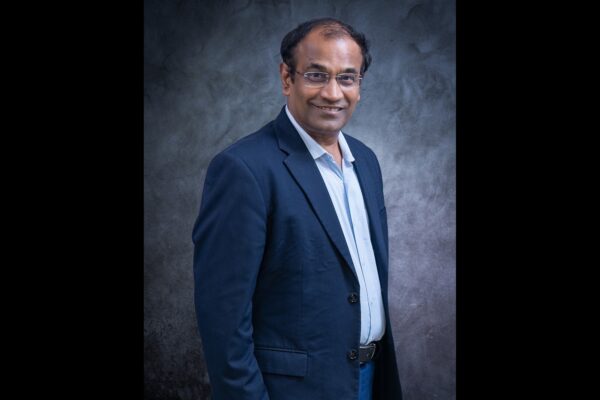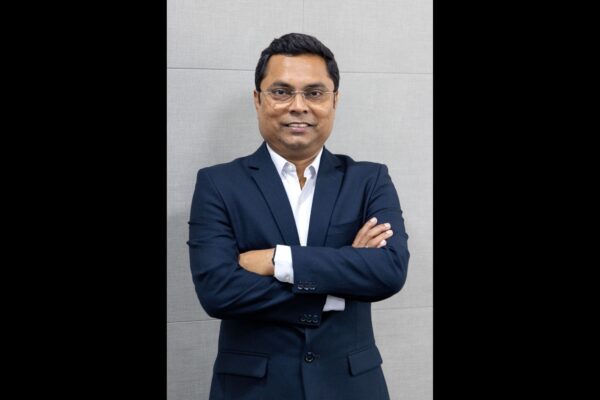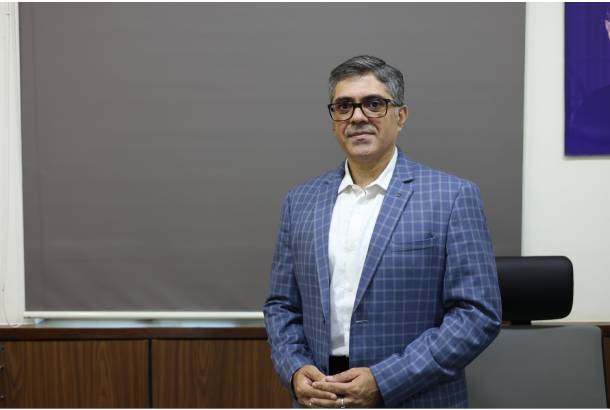
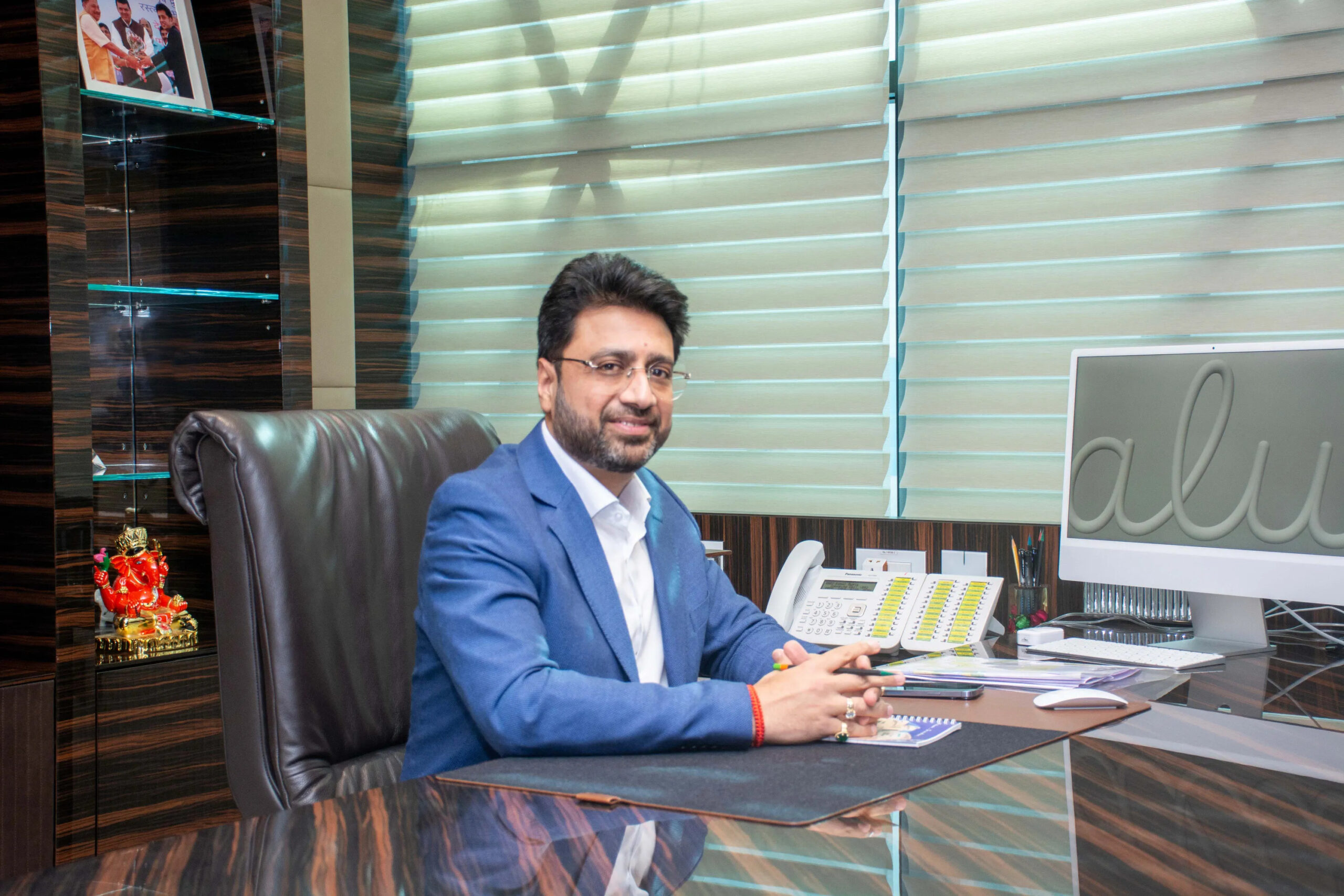
Exclusive Interview: Kamal Gupta, Managing Director, J. Kumar Infraprojects

The Discipline to Deliver
From a Mumbai-based PWD contractor to a ₹22,246-crore order book, J. Kumar Infraprojects’ journey reflects four decades of engineering evolution. Its Managing Director, KAMAL GUPTA, discusses the discipline of execution, the complexities of urban infrastructure, financial resilience and why sustainable growth begins with knowing which projects to pursue—and which to walk away from
In infrastructure, the real measure of a company is not simply the scale of the contracts it wins, but the quality, consistency and discipline with which it delivers them. Few environments test that proposition more rigorously than India’s congested, fast-growing cities, where construction must progress around operating roads, live utilities, densely populated neighbourhoods and sensitive natural environments.
Founded in Mumbai in 1980 by Jagdishkumar M. Gupta, J. Kumar Infraprojects has evolved from a small proprietorship undertaking Public Works Department maintenance contracts into a major EPC player. Its portfolio now spans metro rail, underground tunnelling, elevated corridors, bridges, roads and large public infrastructure projects. The company reported revenue of ₹5,723 crore in FY26, while its order book rose to ₹22,246 crore in the June 2026 quarter.
For Kamal Gupta, Managing Director and a promoter associated with the business for three decades, this growth represents more than commercial momentum. It reflects the cumulative value of engineering capability, execution experience and financial discipline—qualities that become particularly important as projects grow larger and more complex.
In this conversation with EPC World, Kamal Gupta reflects on the company’s formative years, the lessons of Mumbai Metro Line 3, the strategic significance of its expanding national footprint, and why an order book is ultimately a responsibility to India’s cities.
J. Kumar Infraprojects began in 1980 with relatively modest maintenance contracts. What founding principles continue to shape the company today?
My father, Jagdishkumar M. Gupta, built the business around a simple principle: whatever we undertake, we must finish well. Our early Public Works Department contracts in Maharashtra helped establish our credibility and eventually enabled us to become a Class I-A contractor with the state government.
That emphasis on commitment, quality and delivery remains central to how we operate. The scale of our business has changed considerably, and we now manage multiple complex projects simultaneously across different geographies. But the underlying philosophy has not changed. Every contract carries an obligation to the client, and our reputation depends on fulfilling it.
Urban infrastructure is among the most demanding segments of the EPC business. Why has J. Kumar chosen to concentrate on this space?
Urban infrastructure aligns closely with our engineering strengths and the capabilities we have developed over several decades. We are a pure-play EPC company, with a substantial part of our portfolio comprising metros, flyovers, bridges, tunnels and urban roads.
These projects require much more than construction expertise. We work beneath densely populated neighbourhoods, build elevated structures over roads that must remain operational, and coordinate with multiple agencies while minimising disruption to everyday life. Every stakeholder—from utility providers to local residents—has legitimate concerns that must be addressed.
This complexity creates a high entry barrier. It requires experienced teams, sophisticated planning, specialised equipment and disciplined project management. Our experience in urban environments has helped us develop these capabilities. We are also extending our building infrastructure portfolio through large public projects, including the cricket stadium project awarded to us in Karnataka.
Which project has had the greatest influence on J. Kumar’s technical capabilities and organisational evolution?
Mumbai Metro Line 3 has been particularly significant. Through our joint venture, we secured contracts worth approximately ₹5,012 crore covering underground stations and tunnelling across demanding stretches of Mumbai, including Dharavi, BKC, Vidyanagri and Santacruz, as well as the airport section.
Working beneath densely populated areas, below the Mithi River and under an operational airport runway demands exceptional engineering precision. Such environments leave very little room for error. They require rigorous geological assessment, advanced tunnelling methods, continuous monitoring, meticulous planning and uncompromising safety standards.
The experience strengthened our ability to manage technically complex underground infrastructure in highly constrained environments. More importantly, it reinforced the systems and discipline required to deliver projects where the consequences of an execution failure can be significant. That capability continues to inform the way we approach new opportunities.
With intense competition for major infrastructure tenders, what ultimately distinguishes a successful EPC contractor from the rest?
Winning an order is only the beginning. The real test is whether you can deliver it on schedule, within the agreed cost parameters and to the required specifications, particularly in a dense urban environment. That demands sound engineering, realistic planning, effective coordination, financial control and the ability to respond to unforeseen challenges without compromising quality or safety. A contractor’s credibility is built over the entire project lifecycle, not at the time of award.
Clients remember consistent performers. Over time, that reputation becomes a competitive advantage because it influences confidence in your ability to execute the next, more demanding assignment.
FY26 saw operating cash flow rise to ₹1,128 crore, working capital reduce to 99 days and the company close the year in a net cash position. How important is this financial strengthening to your next growth phase?
We viewed FY26 as an important year to strengthen the fundamentals of our business. Certain site-level delays and external timing factors affected the pace of execution, but we used the period to improve operational efficiency and reinforce our financial position.
Rather than pursuing revenue growth at the expense of financial resilience, we focused on cash generation, working-capital efficiency and balance-sheet discipline. Operating cash flow increased to ₹1,128 crore, working capital reduced to 99 days, and we closed the year in a net cash position.
Infrastructure projects can absorb substantial capital, and rapid expansion without adequate financial discipline can create pressure even for a company with a strong order book. Our priority is to ensure that growth is supported by healthy cash flows and a robust balance sheet.
This gives us greater flexibility to execute larger projects, manage working-capital requirements and pursue opportunities selectively. For us, financial strength is not separate from execution capability; it is one of its essential foundations.
J. Kumar’s order book increased from ₹18,554 crore at the start of FY27 to ₹22,246 crore at the end of the June quarter. What is driving this momentum, and how is the company diversifying geographically?
We secured approximately ₹5,500 crore in new orders during the June 2026 quarter, from clients including NHAI, Delhi Metro and Uttar Pradesh authorities. This took our order book to ₹22,246 crore. Among the significant projects is the approximately ₹2,360-crore expressway connecting the upcoming Vadhavan port with NH-48. We have also secured a cricket stadium project in Karnataka worth approximately ₹990 crore.
Our geographical footprint now extends beyond Maharashtra to Uttar Pradesh, Gujarat, Karnataka, Tamil Nadu and the National Capital Region. This is strategically important because it broadens our access to opportunities and reduces dependence on the project pipeline of any single state.
However, geographical expansion must be supported by execution readiness. We enter markets where we can deploy our engineering strengths, establish effective project management and maintain the financial discipline required to deliver successfully.
Which projects best represent the engineering challenges and growth opportunities that will define J. Kumar’s next phase?
Three projects illustrate the range of our capabilities:
The Chennai Elevated Corridor involves complex foundations, substructure construction and segment casting in a demanding urban setting. It requires careful sequencing and coordination to minimise disruption while maintaining construction progress.
On Mumbai’s Goregaon–Mulund Link Road, we have cast more than 3.5 km of tunnel lining. Our first tunnel boring machine has also commenced excavation of the twin tunnels beneath Sanjay Gandhi National Park. The underground alignment is intended to provide road connectivity while minimising disturbance to the forest above.
The Vadhavan expressway is another important project, with major earthwork and tunnelling activities planned as construction progresses. Together, these assignments demonstrate our ability to undertake technically challenging infrastructure across different geographies and project environments.
Their successful delivery will depend on the same fundamentals that have guided us throughout our history: detailed planning, engineering rigour, disciplined execution and close coordination among all stakeholders.
What is your outlook for FY27, and where do you see the strongest opportunities for growth?
We are targeting revenue of approximately ₹6,500 crore for FY27, representing growth of around 15%, with EBITDA margins in the range of 14–15%. We are also targeting new orders worth ₹8,000–10,000 crore during the year.
Maharashtra continues to offer substantial opportunities across metro rail, elevated roads and coastal infrastructure, with a potential pipeline of close to ₹1 lakh crore over the coming years. At the same time, opportunities in other states are becoming increasingly relevant to our growth strategy.
Our focus is on converting this opportunity into sustainable business. We will continue to pursue projects where our technical capabilities, execution experience and financial capacity give us a clear advantage. The objective is not growth at any cost, but growth that creates enduring value.
With infrastructure investment accelerating, how do you distinguish between an attractive order and one that may expose the company to unnecessary risk?
We evaluate opportunities through three broad considerations. The first is selectivity. We bid for projects where our engineering capabilities provide an advantage and where the client, contractual framework and funding arrangements are sound. Contract terms, including applicable price-variation and escalation provisions, are also important in managing exposure to commodity-price fluctuations.
The second is capability. Tunnelling, complex elevated corridors and long-span structures require specialised equipment, experienced personnel and well-established systems. These capabilities take years to develop, and we continue to invest in them.
The third is financial discipline. We assess the working-capital implications, project risks and likely cash-flow requirements before committing resources. Maintaining a strong balance sheet gives us the confidence to decline opportunities that do not meet our criteria.
In a competitive market, the ability to say no can be as important as the ability to win. The right order strengthens the company; the wrong one can consume resources without creating commensurate value.
Your father established the business in 1980. How does he view the scale of the company today, and what does that legacy mean to you?
The scale of the business inspires him, but it has not diminished his ambition—or ours. We continue to look ahead, build new capabilities and take on more demanding assignments.
When I travel through Mumbai and other cities, I see flyovers, metro stations and other infrastructure built by our teams. Millions of people use these facilities every day without necessarily knowing who constructed them. That, in many ways, is the greatest compliment infrastructure can receive: the work performs its function so seamlessly that people can simply get on with their lives.
Our order book of more than ₹22,000 crore represents a substantial responsibility. Every project is a commitment to a client, to the people who will use the infrastructure and to the cities whose development depends on it. Our task is to honour those commitments through sound engineering, responsible execution and consistent delivery.
Tags