Energy: The New Global Faultline

As tensions between the United States and Iran escalate, the global economy faces renewed uncertainty, with India emerging as one of the most exposed major economies due to its dependence on Gulf energy supplies and infrastructure-led growth strategy. In this special report, Tejasvi Sharma, Editor-in-Chief, EPC World, examines how geopolitical instability could reshape India’s energy security, currency stability, infrastructure investment, and long-term economic resilience
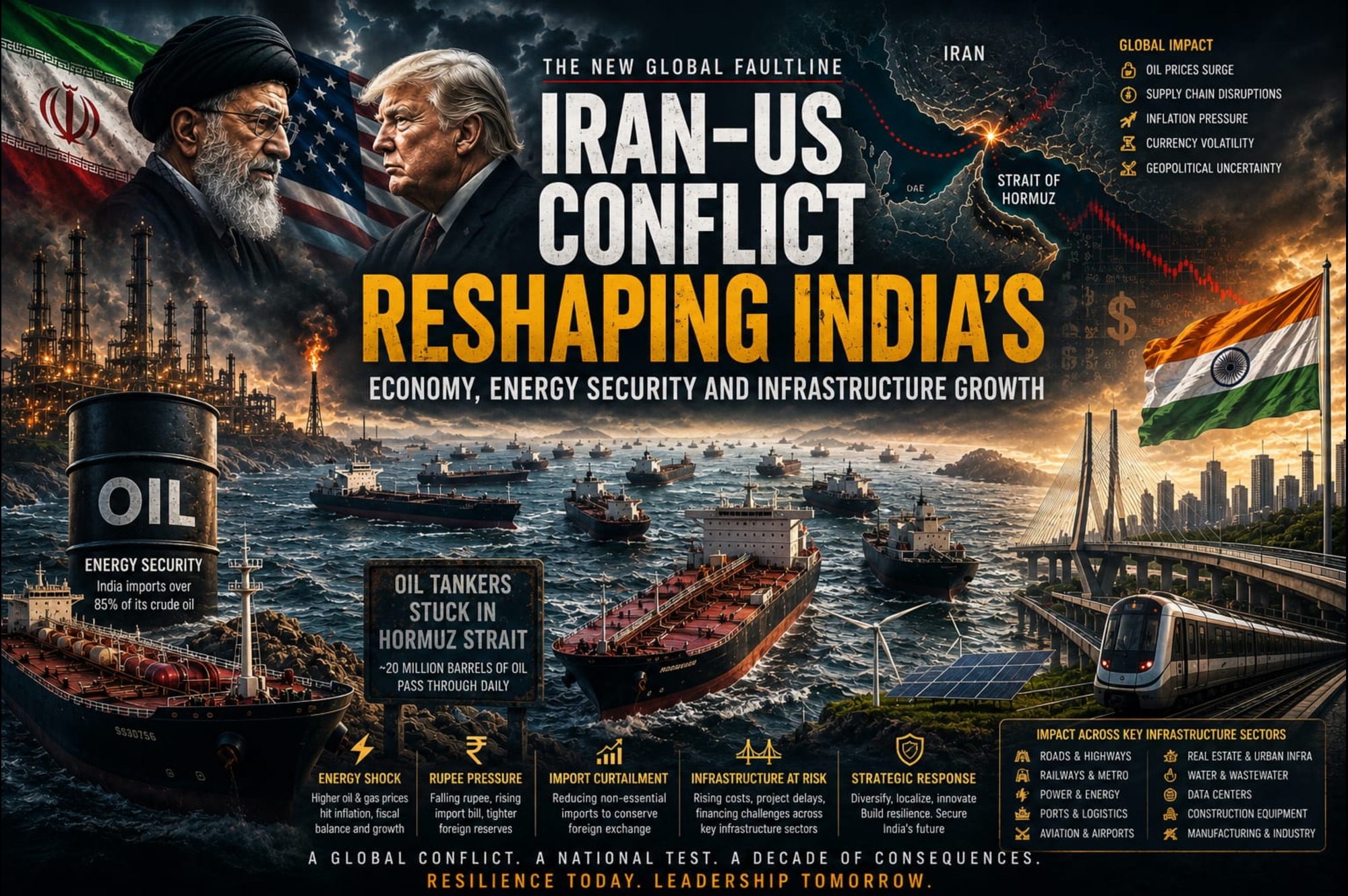
The escalating confrontation between the United States and Iran is no longer just a West Asian crisis; it has become a major economic stress test for the global order, with significant implications for India. As a nation heavily dependent on Gulf-origin energy, India faces rising risks to its infrastructure ambitions, inflation outlook, currency stability, and fiscal position. Any disruption in the Strait of Hormuz — through which nearly a fifth of global seaborne oil trade passes — could sharply impact crude prices, the rupee, logistics, fertilizer supplies, and the financing of India’s $1.4 trillion infrastructure pipeline.
India sits at the centre of nearly every vulnerability exposed by the Iran–US conflict. The country imports almost 87% of its crude oil requirements, with the Gulf accounting for a major share. It is also heavily dependent on Gulf-origin LPG and fertilizer feedstocks critical to its agricultural economy. At the same time, India’s massive infrastructure expansion programme relies on stable energy prices and manageable inflation. Any prolonged disruption in West Asia would therefore impact logistics, power systems, fertilizer supplies, EPC costs, and public finances simultaneously.
The Geopolitical Reset
The current Iran–US confrontation is rooted in decades of geopolitical hostility, spanning from the 1979 Iranian Revolution and the collapse of the nuclear deal to rising military tensions in recent years. The latest escalation has been driven by Iran’s advancing uranium enrichment programme and proxy conflicts involving Iranian-backed Houthi forces, whose attacks on Red Sea shipping have exposed the growing risks of maritime economic warfare. At the centre of the crisis is the Strait of Hormuz, the world’s most critical energy chokepoint, through which major crude exports from Saudi Arabia, the UAE, Kuwait, Iraq, and Qatar’s LNG supplies pass. Alternative pipeline routes remain inadequate, meaning any prolonged disruption could trigger severe global energy shortages and price shocks. The geopolitical landscape is further complicated by the involvement of China and Russia, both of which maintain close ties with Tehran. The expanding BRICS alignment has also weakened the effectiveness of traditional Western sanctions by creating alternative trade and financial channels. For India — a BRICS member with strong strategic ties to the United States and Gulf nations — the crisis represents a delicate diplomatic balancing act with significant economic consequences.
The Eighty-Seven Percent Problem
India’s energy security remains heavily dependent on imports, with nearly 87% of its crude oil sourced from overseas markets. The Gulf region — including Saudi Arabia, Iraq, the UAE, Kuwait, and Oman — accounts for almost half of India’s crude supplies, making the country highly vulnerable to disruptions in West Asia. The strategic risk is clear: a major part of India’s economic and infrastructure ecosystem runs on energy routed through the Strait of Hormuz. Beyond crude oil, India’s growing dependence on LNG presents another major vulnerability. Qatar remains one of India’s largest LNG suppliers, supporting city gas networks, fertilizer production, and industrial consumption. Any disruption in Hormuz could therefore trigger gas shortages, fertilizer supply constraints, and rising energy costs across sectors.
India is one of the world’s largest fertilizer consumers and depends heavily on imported urea inputs, phosphates, and potash routed through Gulf supply chains. A prolonged energy and shipping disruption would not only raise agricultural input costs but also increase rural inflation and pressure food prices across the economy. Since the Ukraine conflict, India has significantly increased imports of discounted Russian crude, which now accounts for nearly 35–40% of total oil imports. This has helped reduce dependence on Gulf suppliers and cushion the impact of volatile global prices. However, Russian crude cannot fully replace Middle Eastern supplies, as many Indian refineries are optimised for Gulf-origin grades. In addition, Russian exports face sanctions-related constraints, logistical risks, and production limitations. While Russian oil has provided strategic relief, it remains an imperfect and geopolitically sensitive alternative.
The Architecture of Strategic Austerity
Prime Minister Narendra Modi’s recent emphasis on reducing non-essential imports, conserving foreign exchange, and strengthening domestic manufacturing reflects more than a continuation of the Atmanirbhar Bharat narrative. It signals growing concern within policymakers about India’s exposure to global geopolitical shocks, particularly amid escalating Iran–US tensions. While India’s foreign exchange reserves remain strong, prolonged crude prices above $90–100 per barrel could widen the current account deficit, pressure the rupee, and strain fiscal resources. This has accelerated discussions around economic resilience, energy security, and reducing dependence on external supply chains. The government’s strategy now extends beyond import substitution. It includes curbing high-value imports such as gold and electronics, accelerating renewable energy deployment, expanding refining capacity, promoting ethanol blending, and investing in green hydrogen and critical minerals. Together, these measures point toward a broader shift from import-driven growth to a more self-reliant and strategically resilient economic model.
The Rupee’s Tightrope
A disruption in Gulf energy supplies would have significant macroeconomic consequences for India, particularly through inflation, fiscal pressure, and currency volatility. Rising crude prices directly impact fuel costs, but their broader effect extends across transportation, manufacturing, logistics, and food prices. Analysts estimate that every sustained $10 increase in Brent crude could add 40–60 basis points to India’s inflation over several months. The rupee also remains vulnerable to an oil shock. Higher crude prices widen India’s current account deficit, increase dollar demand for imports, and often trigger foreign capital outflows from emerging markets. With the rupee already trading under structural pressure, a prolonged oil spike could lead to further depreciation and raise the cost of imported infrastructure inputs and industrial goods. While long-term global trends such as BRICS-led de-dollarisation may gradually reduce dependence on the US dollar, short-term crisis dynamics still favour dollar strength during periods of geopolitical instability. In the immediate term, oil shocks and capital flight remain the dominant risks for India’s economy and financial markets.
The Infrastructure Stress Matrix
India’s infrastructure expansion programme — central to its ambition of becoming a $10 trillion economy — faces mounting pressure from the economic fallout of the Iran–US conflict, with rising energy prices, supply chain disruptions, inflation, and currency volatility expected to impact multiple sectors simultaneously. Roads and highways remain among the most exposed sectors due to rising bitumen and diesel costs, while railways could comparatively benefit as higher fuel prices shift freight movement from roads to rail. Aviation and ports face severe stress from escalating fuel costs, shipping disruptions, and higher freight and insurance rates, while power infrastructure remains vulnerable through LNG dependence and rising import costs for grid equipment.
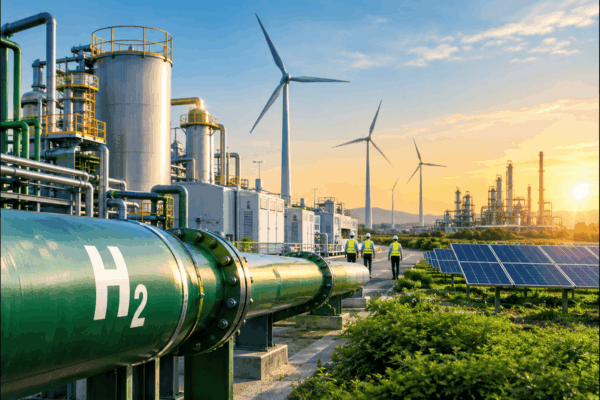
At the same time, the crisis could accelerate India’s renewable energy transition by strengthening the case for solar, wind, battery storage, and green hydrogen investments. Construction equipment, real estate, and urban infrastructure sectors are likely to face input cost inflation and financing pressure, though water and wastewater projects may remain relatively insulated due to their strategic importance and domestic sourcing base. Meanwhile, digital infrastructure and domestic manufacturing could emerge as long-term beneficiaries as India pushes harder toward supply chain localisation and the broader Make in India agenda.
India’s Strategic Acceleration Moment
While the Iran–US conflict presents major economic risks for India, it also creates significant strategic opportunities. Geopolitical crises often accelerate policy decisions, industrial transitions, and supply chain shifts that would otherwise take years to unfold. For India, the current disruption could strengthen its position as a global manufacturing and energy transition hub. As companies seek to diversify supply chains beyond China amid rising geopolitical uncertainty, India stands out due to its large workforce, improving infrastructure, competitive costs, and policy support through PLI schemes, semiconductor initiatives, and manufacturing corridors. Sectors such as electronics, defence, EVs, and specialty manufacturing could benefit from this global realignment.
At the same time, rising energy insecurity strengthens the case for renewable energy, green hydrogen, and domestic clean-tech manufacturing. Every disruption in Hormuz reinforces the strategic importance of reducing dependence on imported fossil fuels. India’s diplomatic balancing strategy — maintaining ties with the US, Russia, Iran, and Gulf nations simultaneously — also provides a degree of flexibility that few major economies possess. This multi-alignment approach allows India to diversify energy sources, attract global investment, and manage geopolitical risk more effectively in an increasingly fragmented world order.
Blueprint for Strategic Resilience
To reduce its vulnerability to geopolitical shocks, India will need a broader strategy focused on energy security, financial resilience, renewable acceleration, and infrastructure financing reform. Expanding Strategic Petroleum Reserves beyond the current limited import cover, while diversifying LNG imports away from Hormuz-dependent routes, will be critical to strengthening energy security. At the same time, the RBI may need to expand currency swap arrangements and improve hedging mechanisms to protect the rupee and infrastructure companies from external volatility. The crisis also strengthens the case for faster renewable energy deployment through accelerated approvals, financial incentives, and large-scale investments in solar manufacturing, battery storage, and green hydrogen. As fiscal pressures potentially constrain government capex, India will increasingly need to rely on private infrastructure financing through mechanisms such as InvITs, NaBFID, viability gap funding, and sovereign-backed resilience funds to sustain long-term infrastructure growth.
India’s Infrastructure Trajectory
India’s economic and infrastructure outlook over the next decade will depend heavily on how the Iran–US conflict evolves. In a short-term conflict scenario, oil prices may temporarily spike above $100 per barrel before stabilising, leading to moderate inflation, temporary pressure on government capex, and delays in infrastructure execution. However, such a phase could also accelerate renewable energy adoption and strengthen the long-term energy transition. A prolonged period of regional instability would create sustained pressure on India’s fiscal position, currency, and infrastructure spending, even as renewable energy, private infrastructure financing, and supply chain diversification gather momentum. Under an extreme scenario involving a major disruption in the Strait of Hormuz, India could face a severe economic shock marked by oil prices above $150 per barrel, sharp rupee depreciation, inflation spikes, and a freeze in infrastructure investment activity. At the same time, the crisis could accelerate broader structural shifts in the global economy, including de-dollarisation, alternative trade settlements, and stronger BRICS-led financial arrangements. In the most optimistic scenario, India could convert geopolitical disruption into strategic advantage by accelerating renewable energy expansion, manufacturing localisation, infrastructure investment, and supply chain resilience — positioning itself as a globally competitive industrial and infrastructure power by 2030.
The Test Is India’s
The Iran–US conflict may originate in West Asia, but its long-term consequences will shape India’s economy, infrastructure, energy security, and industrial growth for years to come. The central question is no longer whether geopolitical shocks will occur, but whether India is prepared to adapt to them. If managed strategically, the current crisis could strengthen India’s long-term resilience by accelerating clean energy adoption, domestic manufacturing, supply chain localisation, and energy security initiatives. However, this transformation will require coordinated action from policymakers, infrastructure developers, EPC contractors, investors, and industry leaders.
India’s ability to sustain infrastructure growth amid global uncertainty will ultimately depend on how effectively it converts geopolitical risk into strategic opportunity. The faultline may run through West Asia — but the real test is India’s preparedness, resilience, and execution.
Tags