Green Hydrogen Is Moving from Policy to Execution: Can India’s EPC Ecosystem Deliver at Scale?

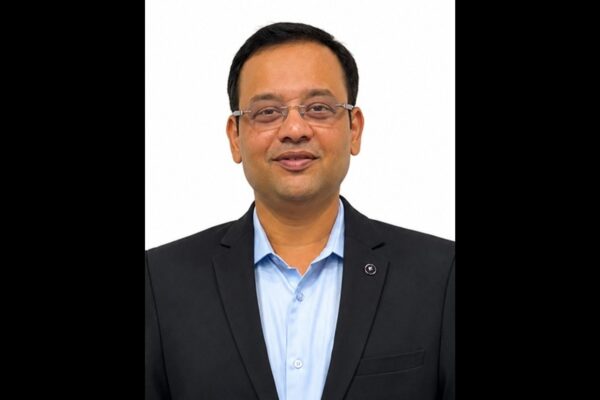
byAK Tyagi, Founder, Chairman and Managing Director, Nuberg Green Energy
India lies on the threshold of a shift towards clean energy that will alter the character of its industry for decades to come. The National Green Hydrogen Mission has now progressed from the stage of policy planning to that of assigning projects. The government has already allocated significant production capacity and electrolyser manufacturing capacity to industry, with projects now moving towards execution across refineries, fertiliser plants and other heavy industries. This includes 862,000 tonnes per year of green hydrogen production capacity and 3,000 MW per year of electrolyser manufacturing capacity awarded to industry. The issue is no longer whether India can establish a green hydrogen economy. It is rather how quickly and efficiently the EPC ecosystem can grow so as to convert these allocations into operating assets that enable exports, help decarbonise domestic industry and generate high-value jobs throughout the value chain.
The scale of the opportunity is unprecedented. India aims to produce 5 million tonnes of green hydrogen each year by 2030, supported by incentives for production and domestic electrolyser manufacturing. That is an ambitious target, and the race to scale up has already begun. With projects now moving from allocation towards implementation, the focus is shifting from policy ambition to execution. For EPC companies, this means delivering projects that are not only cost-competitive and reliable but also capable of meeting emerging certification and international market requirements from the outset.
India’s EPC sector is in a special position to deal with this challenge. The nation has already gained many years of experience in carrying out large-scale projects in the fields of hydrocarbons, chemicals, fertilisers and power. The aspect that sets green hydrogen apart is the requirement to combine intermittent renewable power with delicate electrochemical processes, to manage complicated plant systems and to comply with strict international safety and quality standards. These are not impossible obstacles, they are engineering problems which Indian companies have already solved in other situations. The only difference today is the urgency and the scale. Projects must now be delivered faster, more efficiently, and at lower cost for green hydrogen to become globally competitive.
From my perspective as Chairman & Managing Director of Nuberg Green Energy, embracing this transition has been a core strategic priority. The project involving India’s first hydrogen refuelling station for IOCL at Vadodara showed that Indian EPC companies are able to provide world-class hydrogen infrastructure which satisfies the international fuel cell quality standards and at the same time integrates smoothly with existing industrial operations. This project demanded accurate coordination between the production, purification, compression and dispensing systems, all within an active refinery environment. It has proven that Indian teams can carry out complex hydrogen projects to global standards if they have the appropriate engineering discipline and a strong safety culture.
Apart from mobility, our investments in green hydrogen plants, green ammonia and green methanol facilities have strengthened a key understanding. The electrolyser is only one part of the system. It is the balance-of-plant power conversion, thermal management, gas handling, drying, compression, and control systems that determines overall plant efficiency, reliability, and scalability. At Nuberg Green Energy, we have deliberately developed in-house engineering and manufacturing capabilities for these subsystems to reduce dependency on imported technologies and improve cost competitiveness and execution speed. This vertical integration enables us to deliver single-point EPC solutions spanning feasibility, basic engineering, procurement, construction, commissioning, and lifecycle support.
The number and variety of projects now being put into action are considerable. Strategic contracts have been given to the major refineries in order to incorporate green hydrogen into their operations, with extra capacity being assigned in 2026 for four refineries namely IOCL Panipat, BPCL Bina, HPCL Vizag and Numaligarh Refinery. SECI has also concluded agreements for large-scale green ammonia offtake, supported by electrolyser deployments scheduled over the coming years. These are not pilot initiatives; they are commercial-scale industrial commitments that will anchor domestic demand, validate technology pathways, and strengthen India’s export readiness.
The pathway from the current operational base to the 2030 target is ambitious yet attainable. It will necessitate careful implementation, a commitment to continuous innovation and close cooperation among policymakers, project developers and EPC companies. India possesses the policy framework, the financial incentives and the industrial demand. All that is left is to strengthen the execution engine with the same urgency as the government has displayed in allocating capacity. If the EPC ecosystem meets this challenge, India will not only be able to achieve its green hydrogen targets but also become a global hub for clean industrial feedstocks and derivatives.
The opportunity for India is clear. The country has the potential to become the global lowest-cost producer of green hydrogen and its by-products, taking advantage of its plentiful renewable resources, its well-developed industrial infrastructure, and its skilled EPC workforce. This shift will generate hundreds of thousands of high-value jobs in the fields of engineering, manufacturing, construction and operations. It will help to reduce the carbon emissions from difficult-to-decarbonise sectors such as steel, chemicals and refining, thus improving India’s industrial competitiveness in a world where carbon constraints are in place. Moreover, it will establish India as a reliable supplier of clean energy carriers to markets in Europe, Asia and elsewhere.
One critical dimension that will define the success of India’s green hydrogen transition is the development of a robust domestic supply chain ecosystem. While electrolyser manufacturing has received policy focus, equal attention must be given to localisation of key balance-of-plant components, specialised materials, and advanced control systems. Building this ecosystem will not only reduce project costs and timelines but also insulate India from global supply chain disruptions. In my view, the next phase of growth will be driven by EPC players who actively collaborate with technology providers, manufacturers, and policymakers to create an integrated and self-reliant industrial value chain for green hydrogen.
The window is open, projects are funded, and technology pathways are proven. What matters now is execution at scale. The EPC ecosystem has the capability and experience required but success will depend on how decisively and quickly we act together in the next phase of growth.
In green hydrogen, the decisive advantage will not come from electrolyser technology alone, but from excellence in integration, balance-of-plant engineering, and execution discipline. That is where the real value creation will lie and that is where we at Nuberg are fully committed to leading from the front.
Tags