
Airports: The Great Indian Sky-Rush

India’s skies are expanding fast, and the country’s airport infrastructure is racing to keep pace with this unprecedented growth. As air travel demand surges across India, airport infrastructure is emerging as a critical pillar shaping the nation’s connectivity and economic future
India’s airport sector is undergoing a significant transformation, driven by a surge in passenger demand and a strategic push toward modern infrastructure. Over the past decade, the government has expanded its focus from metro hubs to regional connectivity, bringing smaller cities into the aviation network. Programs aimed at enhancing last-mile connectivity have encouraged the development of new airports and the revival of underutilized airstrips. As a result, aviation is no longer confined to major urban centers; it is steadily becoming an accessible mode of transport for a broader segment of the population.
A key feature of this growth is the modernization and expansion of existing airports. Major hubs are being upgraded with larger terminals, advanced baggage handling systems, and improved passenger amenities to handle increasing traffic efficiently. Alongside capacity expansion, there is a growing emphasis on sustainability, with airports incorporating green building practices, solar energy, and waste management systems into their design. Public-private partnerships have also played a crucial role, enabling faster project execution and bringing in global expertise to elevate service standards.
Looking ahead, the airport infrastructure landscape in India is expected to evolve further with the integration of digital technologies and smarter operations. Biometric boarding systems, contactless check-ins, and real-time data management are gradually becoming standard features, enhancing both efficiency and passenger experience. Additionally, the development of multi-modal transport hubs around airports is helping create seamless connectivity between air travel and other forms of transport. Together, these advancements position the sector as a critical driver of economic growth, supporting tourism, trade, and regional development across the country.
Mapping the Sector Index
India’s airport sector is expanding at a robust pace, supported by consistent growth in passenger traffic and infrastructure capacity. In recent years, the sector has recorded annual growth in the range of 6–8 percent, reflecting strong recovery and rising demand for air travel. India now accounts for roughly 3–4 percent of global air passenger traffic, a share that is steadily increasing as connectivity improves and more people shift to air transport. The country’s position as the third-largest domestic aviation market highlights not just volume growth, but also the scale at which airport infrastructure is being developed to keep pace with demand.
From a market perspective, the airport infrastructure segment forms a significant part of India’s broader transport infrastructure industry. It is estimated to contribute around 10–12 percent of the total aviation sector value chain, which includes airlines, cargo, and maintenance services. The airport infrastructure market itself is valued in the tens of billions of dollars and is projected to grow steadily, driven by capacity expansion projects and Greenfield airport developments. With passenger traffic expected to nearly double over the next decade, infrastructure demand is likely to outpace overall aviation growth, making airports one of the fastest-growing sub-segments within the transport ecosystem.
Investment trends further reinforce this growth trajectory, with the sector witnessing substantial capital inflows in recent years. Annual investments in airport infrastructure have been rising at an estimated 8–10 percent, supported by both government funding and private sector participation. Large airport operators are committing significant resources toward terminal expansion, runway upgrades, and the integration of advanced technologies such as biometric systems and automated baggage handling. At the same time, increased foreign direct investment and long-term concession models are helping bring in global expertise, improving efficiency and service quality across major airports.
Additionally, the Regional Connectivity Scheme (UDAN) has been the primary engine, bringing air travel to Tier-2 and Tier-3 cities that previously had no aerial footprint. The Capex Engine – a massive government investment roadmap—exceeding ₹92,000 crore—is being fuelled into building new “Greenfield” airports and modernizing existing “Brownfield” terminals.
Despite these gains, the sector’s future potential remains considerable due to existing capacity gaps and evolving travel patterns. India still has a relatively low airport-to-population ratio compared to developed markets, suggesting strong room for expansion. Rising middle-class income levels, increasing tourism, and growing air cargo demand are expected to sustain growth in the range of 7 percent or higher over the long term. As infrastructure continues to scale up and regional connectivity deepens, India’s airport sector is likely to capture a larger share of global aviation activity while playing a central role in the country’s economic development.
Setting Benchmarks
India’s airport infrastructure landscape is being reshaped by a series of large-scale, high-impact projects that signal a shift from capacity constraints to expansion-led growth. Among the most significant is the Navi Mumbai International Airport, which became operational in late 2025 after years of delays. Designed as a second major hub for the Mumbai region, the project has an initial capacity of around 20 million passengers annually, with long-term expansion plans targeting up to 90 million passengers per year. Its development is expected to gradually ease congestion at the existing Mumbai airport while also creating a new urban and economic cluster supported by metro links, highways, and commercial zones.
Another landmark project is the Noida International Airport (Jewar), which is set to begin operations in 2026 and is being developed in multiple phases as one of the largest airports in Asia. The project is not just an aviation facility but part of a broader Aerotropolis model, integrating logistics, maintenance hubs, and industrial development. Government backing has been strong, with the Uttar Pradesh budget allocating ₹750 crore in 2026–27 alone for land acquisition and expansion works, alongside a broader ₹2,000+ crore civil aviation outlay for regional infrastructure. Once fully developed, the airport is expected to handle up to 70 million passengers annually, positioning it as a major driver of growth in northern India.
Beyond metro-centric mega hubs, a wide pipeline of Greenfield airports is under development, reflecting a more distributed growth strategy. Projects such as Dholera International Airport in Gujarat, expected to be completed around 2026, are aligned with industrial corridors and special investment regions, linking aviation infrastructure directly with manufacturing and logistics ecosystems. Similarly, new proposals like the Sonepur Greenfield Airport in Bihar, with a sanctioned budget of over ₹1,300 crore, highlight the push toward expanding connectivity in underserved regions. These projects are at various stages—from approval and land acquisition to construction—indicating a long-term pipeline that will continue to add capacity over the next decade.
Regional connectivity schemes continue to play a crucial role in shaping infrastructure development at the grassroots level. Under initiatives like UDAN, dozens of smaller airports and airstrips are being revived or newly constructed, often at relatively lower costs but with high economic impact. The government aims to increase the number of operational airports to over 200 by 2030, supported by 50+ ongoing and upcoming airport projects across the country. This expansion is complemented by upgrades at existing airports, including new terminals, additional aerobridges, and improved passenger handling systems, ensuring that infrastructure keeps pace with rising demand even outside major hubs.
Budgetary support and policy decisions have further accelerated the sector’s transformation. The National Infrastructure Pipeline (NIP) and successive Union Budgets have prioritised aviation as a key growth engine, encouraging both public investment and private participation. Public-private partnership (PPP) models have become central to project execution, with private players investing billions of dollars in airport development and operations. At the same time, state governments are increasingly allocating funds for airport-linked infrastructure such as connectivity corridors, metro lines, and aerocity developments, indicating a more integrated approach to planning.
Taken together, these projects and policy measures are set to significantly alter India’s airport infrastructure outlook. The shift is not just about adding capacity, but about creating multi-functional aviation ecosystems that integrate transport, logistics, and urban development. As new airports become operational and existing ones expand, India is moving toward a network that can support long-term traffic growth, improve regional accessibility, and enhance its position in global aviation. The scale and spread of current investments suggest that the sector is entering a phase where infrastructure will not just respond to demand, but actively shape economic and spatial development across the country.
Eying Qualitative Sustainability
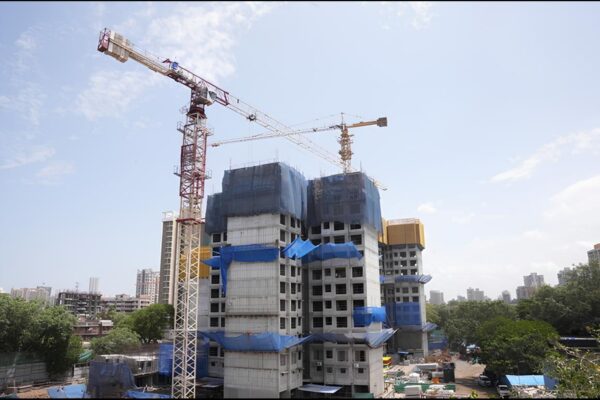
The sector’s construction landscape is moving toward speed and efficiency, with developers increasingly adopting modern building techniques to meet tight timelines. Prefabrication and modular construction are gaining traction, allowing key structural components to be manufactured off-site and assembled quickly at the airport location. This reduces not only construction time but also labour intensity and on-site disruption, which is crucial for projects being executed alongside operational airports. Phased development is another emerging approach, where infrastructure is built in expandable modules so that capacity can be increased without major overhauls.
Digital technologies are also becoming central to how airport infrastructure is planned and executed. Tools like 3D modelling and integrated project management platforms are helping stakeholders visualise projects in advance, identify design conflicts early, and improve coordination across multiple teams. This digital-first approach is particularly important in large, complex airport projects where even small inefficiencies can lead to significant delays or cost escalations. Increasingly, data is being used not just during construction but also to support long-term asset management and maintenance planning.
On the operations side, airports are being designed with technology embedded from the ground up. Contactless travel solutions—such as biometric-based entry, self-service kiosks, and automated baggage systems—are becoming standard features in new terminals. These technologies are aimed at improving passenger flow, reducing waiting times, and enhancing security. At the same time, the use of artificial intelligence and real-time monitoring systems is growing, enabling better management of airside and landside operations, from aircraft movement to crowd control inside terminals.
Sustainability has emerged as a major driver of innovation in airport construction. Developers are focusing on energy-efficient designs, natural lighting, and environmentally friendly building materials to reduce the carbon footprint of new infrastructure. Many airports are incorporating solar power generation, rainwater harvesting, and waste management systems as part of their core design rather than as add-ons. There is also a gradual shift toward designing airports that can meet green certification standards, reflecting a broader commitment to environmentally responsible development.
Another noticeable trend is the shift in design philosophy toward passenger experience and commercial viability. Airports are no longer seen as purely transit spaces; they are being developed as integrated hubs that combine travel with retail, dining, and leisure. This has led to more intuitive layouts, better use of space, and incorporation of local cultural elements to create a distinct sense of place. Such design strategies not only improve user satisfaction but also increase non-aeronautical revenue streams, which are becoming an important part of airport economics.
Finally, project execution models themselves are evolving to support these changes. There is greater collaboration between government bodies, private developers, and technology providers, often through public-private partnership frameworks. This collaborative approach allows for better risk sharing, faster decision-making, and access to global expertise. Combined with improved regulatory support and funding mechanisms, these trends are enabling India’s airport infrastructure sector to modernise rapidly while preparing for future growth in demand.
Headwinds & Opportunities
Despite its rapid expansion, the sector continues to face a range of structural and operational challenges. One of the most persistent issues is land acquisition, which often delays Greenfield airport projects due to legal disputes, rehabilitation concerns, and high costs. In densely populated regions, acquiring large contiguous land parcels for runways and associated infrastructure becomes particularly complex. Additionally, regulatory approvals involving multiple agencies can slow down project timelines, making execution more cumbersome than anticipated.
Another key challenge lies in capacity constraints at major airports, especially in metro cities where passenger traffic has grown faster than infrastructure expansion. Many existing airports are operating close to or beyond their designed capacity during peak hours, leading to congestion both in terminals and on runways. While expansion projects are underway, managing this transition without disrupting operations remains a difficult balancing act. At the same time, smaller regional airports often struggle with underutilisation, highlighting an imbalance in traffic distribution across the network.
Financial sustainability is also an area of concern for the sector. Airport projects require high upfront capital investment and have long gestation periods before generating stable returns. While public-private partnerships have helped mobilise funding, not all projects attract sufficient private interest, particularly in less commercially viable regions. Additionally, revenue models are still evolving, with a heavy reliance on aeronautical charges in some airports, while non-aeronautical revenue streams such as retail and real estate are yet to reach their full potential in many cases.
Operational challenges are further compounded by the need to continuously upgrade technology and maintain global standards. As passenger expectations rise, airports must invest in advanced systems, cyber security, and efficient service delivery, all of which add to operational costs. There is also a growing need for skilled manpower to manage increasingly complex airport ecosystems, from digital systems to air traffic operations, which can be a constraint if not addressed through focused training and capacity building.
However, the future growth scope of India’s airport sector remains highly promising. Demand for air travel is expected to continue rising steadily, driven by economic growth, increasing disposable incomes, and greater regional connectivity. The government’s vision of expanding the number of operational airports and improving access to air travel across the country provides a strong foundation for long-term growth. With continued policy support and investment, the sector is well positioned to bridge existing gaps in capacity and connectivity.
Looking ahead, the sector’s evolution will likely be shaped by a combination of infrastructure expansion, technological innovation, and improved business models. Opportunities exist not only in building new airports but also in areas such as air cargo, maintenance services, airport cities, and multimodal connectivity. If current challenges are managed effectively, India has the potential to transform its airport network into a globally competitive system that supports both domestic mobility and international aviation growth.
Tags