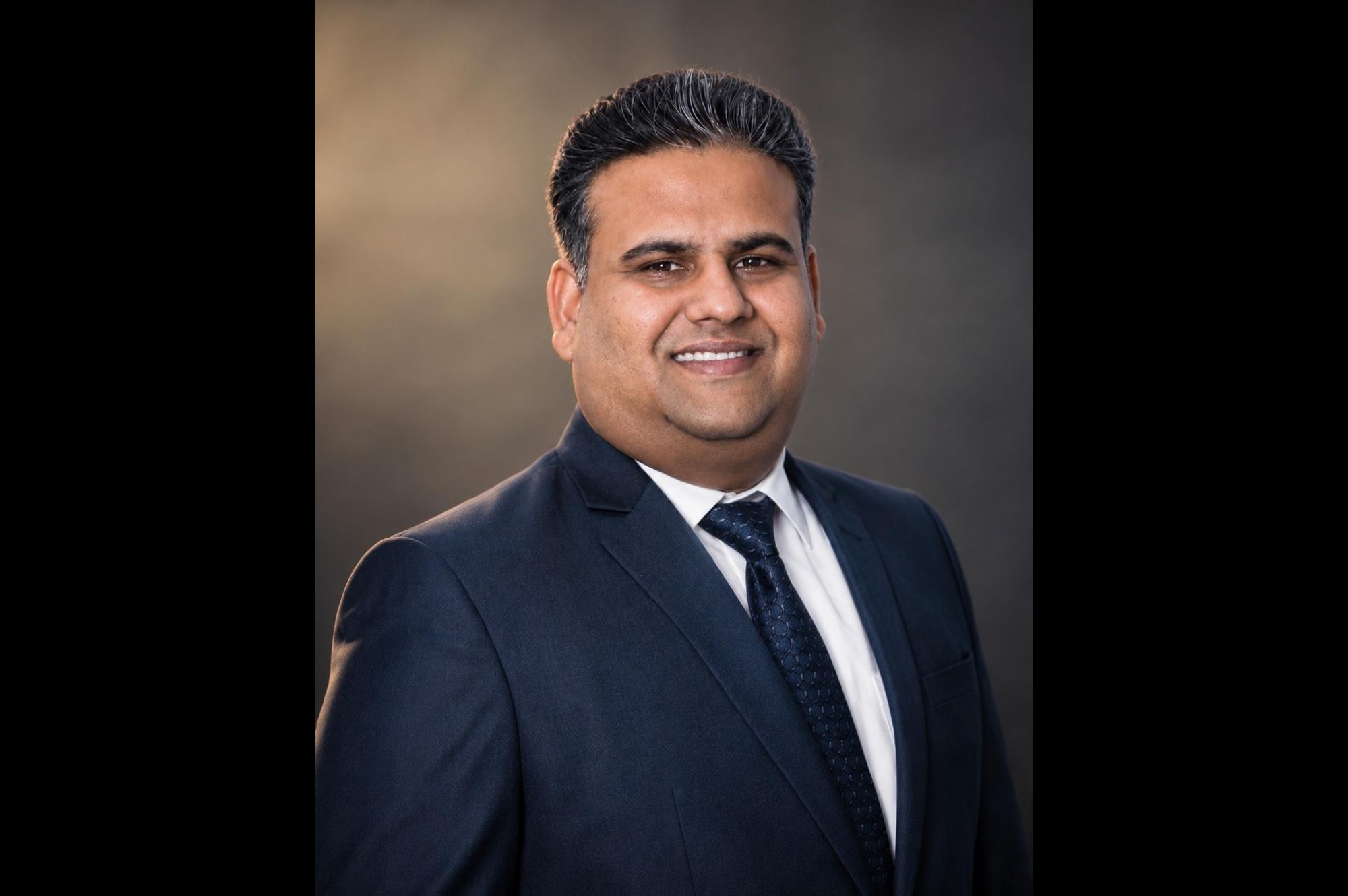
Interview: Piyush Goyal, CEO and Co-Founder, Volks Energie

India’s renewable energy sector is entering a new era of growth. How do you view the industry’s current trajectory, and what will be the key drivers of growth over the next five years?
India’s clean energy build-out has moved faster than most of us predicted. As per the Ministry of New and Renewable Energy (PIB, 9 August 2026), India crossed 300 GW of non-fossil installed capacity as on 31 July 2026, over 60% of the 500 GW targeted for 2030, and that share now exceeds 54% of total generation capacity. A record 55.29 GW was added in 2025-26 alone. The next five years will be decided by what happens after the panels go up. Storage, transmission and substation expansion will determine how much of this capacity reaches consumers when they need it. Industrial demand, from manufacturing to data centres to hydrogen hubs, will keep pulling capacity forward. And reliability will become the real scorecard. A plant is only as dependable as the backup systems protecting its switchgear, controls and communication the moment the grid trips.
Which recent government policies and regulatory reforms have had the greatest impact on the renewable energy sector, and what additional measures would further accelerate India’s energy transition?
Two interventions stand out. The ALMM framework gave domestic manufacturing a guaranteed market, and PIB reports enlisted module capacity under ALMM has crossed 200 GW, up from 2.3 GW in 2014. On storage, the Ministry of Power’s VGF scheme committed ₹5,400 crore from the Power System Development Fund to support 30 GWh of BESS, at ₹18 lakh per MWh. That changed the bankability conversation. What would help next? Consultation before implementation. When timelines shift without industry input, EPC players absorb the cost of redesigning and re-sourcing mid-project. I’d also like to see clear technical standards for station and backup batteries in substations and plants, since these are often specified on price alone. Faster discom payments and procurement that rewards lifecycle performance over lowest upfront bid would do more for quality than any single subsidy.
As domestic manufacturing gains momentum under the Make in India initiative, how is your organization strengthening local manufacturing, technology leadership, and global competitiveness?
As an EPC company, our contribution to Make in India sits on the demand side. Every project we execute is a purchasing decision, and we choose Indian-made components wherever they match the performance a mission-critical site demands. Our technology edge lies in engineering and integration. Since 2011 we have delivered over 500 projects, many in harsh terrain and extreme temperatures where standard specifications fail. That experience shapes how we design battery backup and cooling systems, how we test them and how we commission them. We work closely with domestic Ni-Cd and cell suppliers, feeding field performance data back so their products improve. Global competitiveness for Indian EPC firms will come from proven uptime in difficult conditions. That track record travels well, especially into markets across Africa, the Middle East and South Asia with similar climate and grid challenges.
Technologies such as Energy Storage Systems (BESS), Green Hydrogen, Artificial Intelligence, and digital asset management are transforming the sector. Which innovations do you believe will have the greatest impact on the industry’s future?
Energy storage, without question. CEA’s National Electricity Plan (Transmission) factors in 47 GW of battery storage and 31 GW of pumped storage alongside renewable capacity. That scale will reshape how the grid is planned. The more useful conversation, though, is about matching chemistry to application. LFP suits large-scale energy shifting. Ni-Cd still has a strong case for station batteries in substations, switchyards and critical plant loads, where extreme heat, deep discharge and a long, low-maintenance service life matter more than energy density. The industry will be better served treating these as complementary. AI and digital asset management will quietly add the most value. Predictive monitoring of battery health and cooling performance can flag failures weeks early. Green hydrogen is the longer play, and its first wins will come in industrial decarbonisation.
With renewable capacity expanding rapidly, what are the biggest challenges related to grid integration, financing, project execution, and supply chain resilience, and how can the industry collectively address them?
Grid integration is the pressing one. CEA plans over 1,91,000 ckm of transmission lines and 1,270 GVA of transformation capacity between 2022-23 and 2031-32. Each new substation needs dependable DC backup, and that part of the chain gets far less attention than generation. Financing has improved. MNRE informed the Rajya Sabha that domestic financial institutions deployed ₹12.32 lakh crore to the RE sector between FY2014 and FY2026. Payment delays at the distribution end still stretch working capital for smaller EPCs. On execution, right-of-way, land and skilled site manpower remain bottlenecks. Supply chains are exposed to imported cells and raw materials, so diversifying chemistries and suppliers is prudent. Collectively, the industry can push for common specifications, shared testing infrastructure and procurement that evaluates lifecycle cost. Those three changes would lift quality across the board.
Sustainability and ESG have become central to business strategy. How is your organization integrating sustainability, decarbonization, and circular economy practices into its long-term growth plans?
For an EPC company, sustainability starts at the design table. The longer a system lasts and the less it needs replacing, the smaller its footprint. That is one reason we advocate long-life chemistries such as Ni-Cd for critical backup, where a battery bank can serve a site for many years with minimal intervention. Cooling is our second lever. Precision and industrial cooling often run as a hidden auxiliary load, and efficient design reduces the energy a plant consumes just to keep itself running. On circularity, end-of-life batteries must go back into a formal recovery chain. Under the Battery Waste Management Rules, producers carry extended responsibility, and we work with clients and suppliers so replaced batteries are channelled to authorised recyclers. We see ESG as an engineering discipline measured in uptime, efficiency and recovery.
What emerging market opportunities do you foresee in India’s renewable energy landscape, and which segments do you believe will witness the strongest investment and innovation over the next few years?
Storage will attract the strongest investment. Between the VGF-backed tenders flowing through states and PSUs and the long-term storage need CEA has mapped, BESS will create steady EPC demand for years. The less discussed opportunity sits inside the grid. With the transformation capacity additions CEA has planned, substation infrastructure and its backup systems will need sustained investment, and reliability specifications will tighten as renewable penetration rises. Commercial and industrial users are another fast-growing segment. Factories, data centres, hospitals, railways and defence installations want captive clean power with guaranteed continuity, and they will pay for systems that work under stress. Hydrogen and ammonia hubs along the coast will open specialised opportunities in power quality, cooling and backup for process-critical loads. The common thread: clients will buy assurance that the system stays up when conditions turn against it.
As the industry prepares for REI Expo 2026, what key innovations, collaborations, and market trends do you expect to define this year’s event, and what message would you like to share with the renewable energy fraternity?
At the REI Expo 2026, I expect storage to take centre stage. After last year’s first dedicated Energy Storage Conference, the discussion will move from whether to deploy storage to which chemistry suits which duty cycle. I also expect more partnerships between domestic manufacturers and EPC firms, and wider use of digital monitoring as a standard offering rather than an add-on. My message to the fraternity is simple. We have proved India can add capacity at record speed. The next test is keeping that capacity available every hour of every day, in 48-degree heat and in monsoon floods. Reliability is where trust in the energy transition will be won or lost. Let’s build for the bad day as carefully as we build for the good one.