NH-9 to Hindon: How Infrastructure Is Creating Ghaziabad’s Next Residential Hotspots

by Ashish Agarwal, Director, AU Real Estate
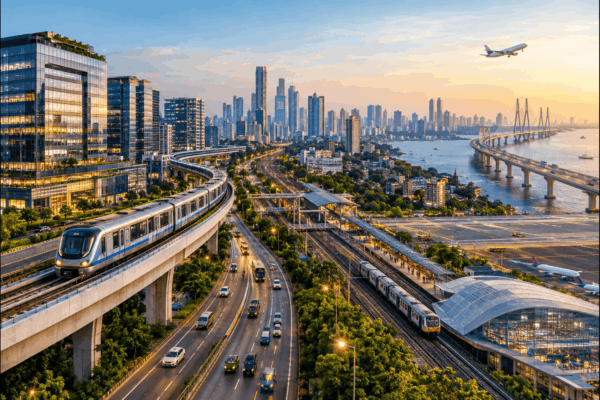
Ghaziabad’s real estate outlook has evolved at an unprecedented pace. The city, once viewed as a cost-efficient spillover of the National Capital Region, has established itself as a genuine destination for urban luxury. That shift is no accident. Once close to the capital on the map but often distant in terms of travel time, the city is now being reshaped by a network of highways, regional rail, airport infrastructure and expanding social amenities. The most visible change is on the axis from NH-9 across the Hindon, into the eastern and north-eastern neighbourhoods of the city where better connectivity is opening up new residential frontiers.
The market has already priced in this shift. According to ANAROCK, Ghaziabad accounted for nearly 16 per cent of NCR’s residential sales in Q1 2026, with absorption up 40 per cent year-on-year, and new supply rising 132 per cent quarter-on-quarter to make up roughly 10 per cent of all NCR launches that quarter, or about 16,000 units. With demand and supply increasing together, Ghaziabad is moving from an affordability-driven market to a more comprehensive residential ecosystem.
Infrastructure and Connectivity as Growth Enablers
This transformation is centred around NH-9 (formerly NH-24). With integration with the Delhi-Meerut Expressway, movement across the eastern NCR corridor has become more predictable while strengthening the links between Ghaziabad, Delhi, Hapur and Meerut. The Delhi-Hapur section of the NHAI has a toll stretch of 50.934 km, thus strengthening the role of the highway as a regional mobility spine.
The impact on housing is more than just shorter commutes. More reliable connectivity expands the geography of a practical commute, allowing previously peripheral locations to compete with established neighbourhoods. At the same time, changing buyer preferences are giving this improved accessibility greater significance. For today’s homebuyer, luxury increasingly encompasses convenience, open space, integrated amenities and connectivity, rather than location or facilities alone.
The NH-9 belt aligns with these preferences. Its access to Delhi’s business centres, combined with planned residential development and improving infrastructure, is attracting a broader mix of buyers, including NCR upgraders, professionals working in Noida and East Delhi, investors and first-time premium-home buyers. Siddharth Vihar and Indirapuram are among the micro-markets where this shift is becoming particularly visible.
The connectivity story has further strengthened with the completion of the Delhi-Ghaziabad-Meerut Namo Bharat corridor. The entire 82.15-km corridor became operational connecting Delhi and Meerut through 16 stations. For Ghaziabad, the inclusion of Sahibabad, Ghaziabad and Guldhar adds a high-speed regional transit layer to the existing road network.
Hindon: From Physical Barrier to Development Axis
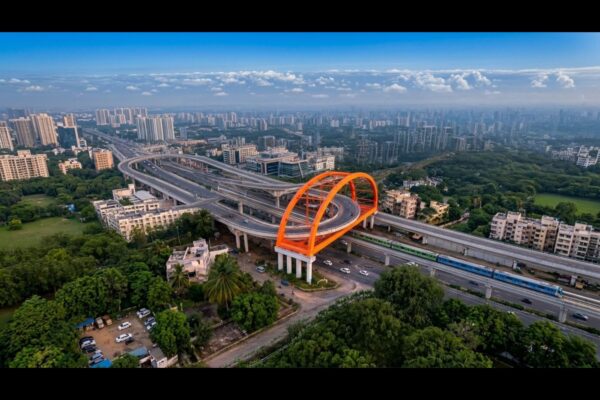
The Hindon has historically influenced Ghaziabad’s urban form, separating established western neighbourhoods from emerging residential areas. Infrastructure is gradually reducing that divide. The 10.3-km Hindon Elevated Road connecting Raj Nagar Extension toward the Delhi border has given a signal-free link across a key part of the city.
But access is ultimately the key to any major corridor’s success. Ghaziabad Development Authority has mooted more ramps to improve connectivity with Indirapuram and Vasundhara. If implemented, these interventions could make the elevated road more useful to surrounding residential catchments, strengthening connections between established neighbourhoods and newer development areas.
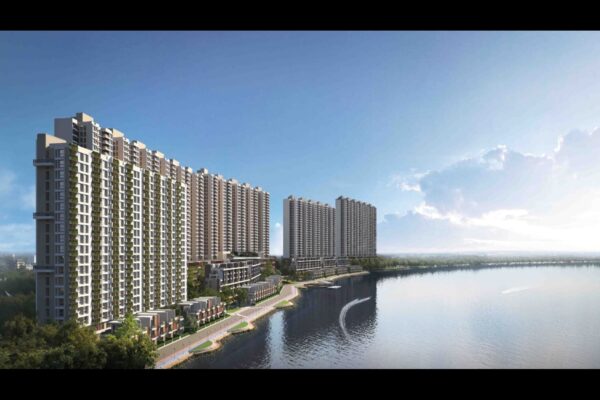
This has direct implications for the residential market. Raj Nagar Extension, positioned closer to the newer development frontier, benefits from the convergence of the Delhi-Meerut Road, Hindon Elevated Road and Guldhar Namo Bharat station. The resulting connectivity has supported the development of larger gated communities and newer residential formats.
Emerging Residential Micro-Markets
The emerging market is therefore not a single hotspot but a network of interconnected neighbourhoods with varying degrees of maturity. Indirapuram still remains a proven residential anchor with its existing social infrastructure, proximity to Delhi and connectivity to Noida. The advantage is that new mobility infrastructure is being layered over an existing developed urban ecosystem.
Vasundhara enjoys a strategic location between the developed housing and the Hindon corridor. Better access to the elevated road could give it an even better position, especially if the proposed ramps get off the ground. Siddharth Vihar is on the newer side of the spectrum. Located close to NH-9, the Delhi-Meerut Expressway and the Hindon, it has moved from being a fringe proposition to a more developed residential destination. Current market markers for average apartment asking prices are around Rs 9,800 per sq. ft, reflecting the premium attached to better connectivity.
Hindon Airport adds a new dimension to the wider mobility network. Works for terminal expansion and allied facilities including multi-level car park has been undertaken by Airports Authority of India. Airport infrastructure is not the sole determinant of housing demand, but it adds an extra layer of access and makes the belt around the airport strategically more significant.
The Road Ahead
The next phase of Ghaziabad’s residential growth will depend on how effectively these infrastructure systems work together. Highways require last-mile connectivity; transit stations need feeder networks; and residential developments need schools, healthcare, retail and other civic amenities.
Infrastructure rarely creates housing demand in isolation. Its greater role is to remove the barriers that once made certain locations difficult to choose. Along the corridor from NH-9 to the Hindon and beyond, that process is already reshaping Ghaziabad. The next residential hotspots are likely to be the neighbourhoods where improved mobility is matched by complete, liveable and well-connected urban environments.