Connectivity Is the New Commercial Address: How Metro, Highways and Transit Are Redrawing Mumbai’s Office Map

by Gagan Mehta, Director at AGM Vijaylaxmi Group
The office geography of Mumbai follows a relatively simple equation. For decades, proximity to an established business district has translated into commercial value. Nariman Point, Fort, Lower Parel, Andheri and, later, Bandra-Kurla Complex became preferred locations as a result. They managed to build a successful concentration of employers, institutions, infrastructure and talent. But office address’ today is being increasingly judged not by its distance from a business district, but by how efficiently it connects people to one.
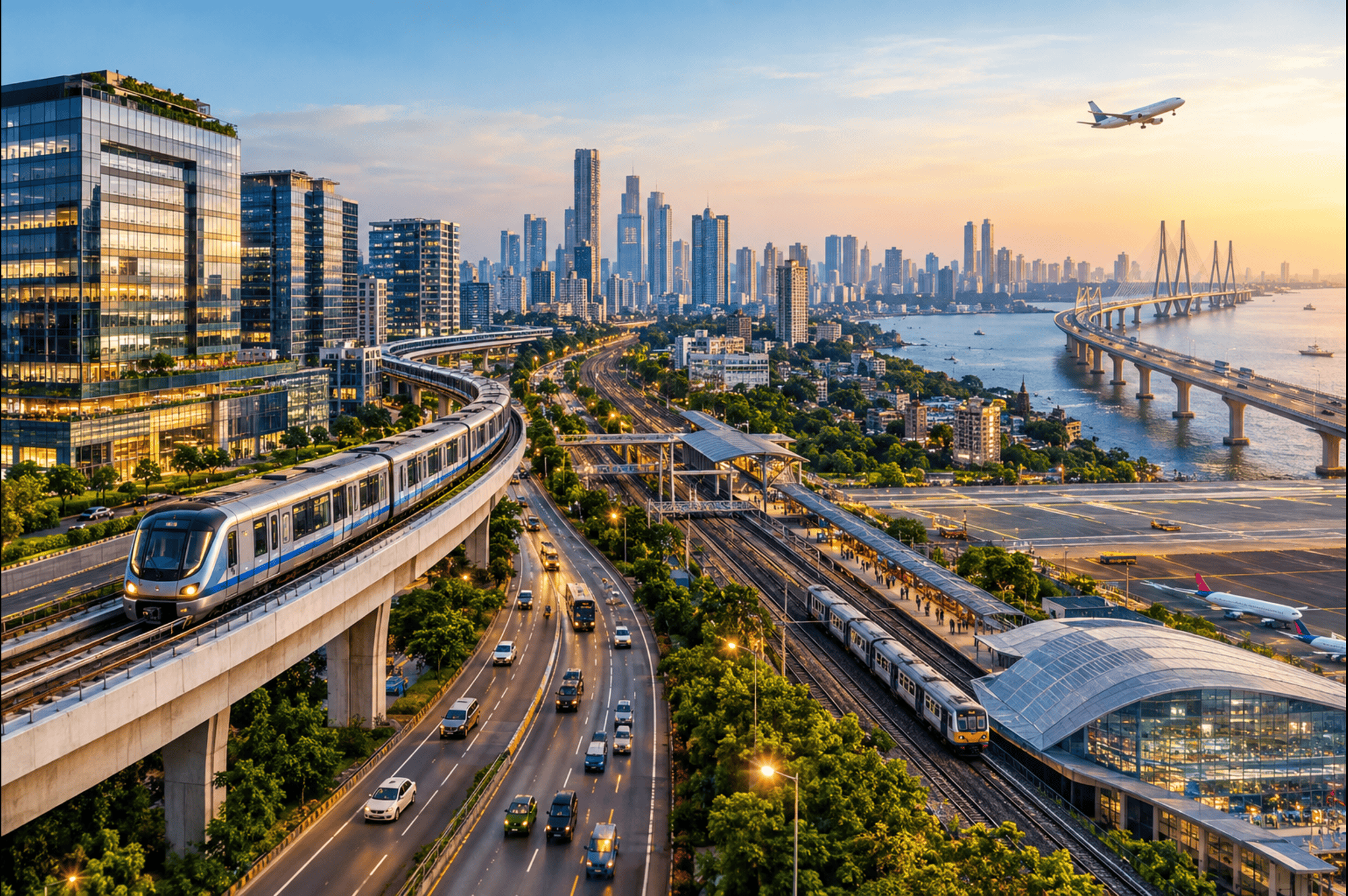
Metro corridors, suburban rail links, highways, tunnels, sea links and multimodal transport systems have led to widening the geography of viable office development. This is not to be mistaken as the decline of established business districts. What it has managed to do is ensure a more distributed office market. A market spread across Mumbai and the wider Mumbai Metropolitan Region, competing through accessibility, building quality, operating efficiency and access to talent.
The office market provides a strong backdrop for this transition. JLL recorded that in 2026, Mumbai recorded 4.2 million sq ft of gross office leasing in the first quarter marking a 55.4% increase over the corresponding period in 2025. The city accounted for 19.5% of India’s quarterly leasing activity, while global capability centres contributed 46.3% of its gross leasing volume. Such occupiers add to the demand for reliable power, efficient floor plates, digital infrastructure, access to skilled employees and environmentally compliant buildings that can support long-term workplace strategies.
Consequently, connectivity has become more than a transport consideration. It is now an occupier, workforce and real estate issue.
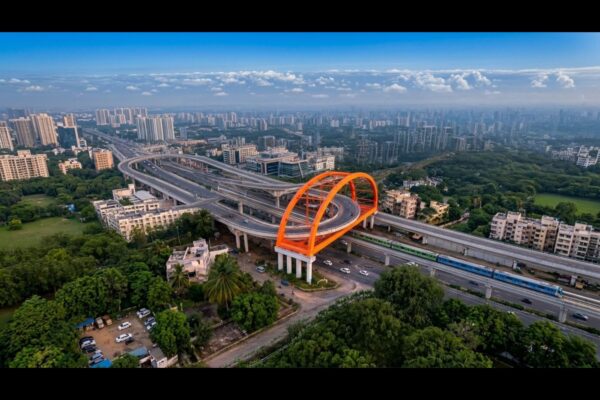
Mumbai’s expanding metro network is redefining a central location. Metro Line 3, connects Cuffe Parade and South Mumbai through a 33.5-kilometre route, seamlessly linking commercial districts such as Fort and Nariman Point with Worli, the airport region and the Andheri-SEEPZ belt. Metro Lines 2A and 7 have improved movement increasing the accessibility of specific locations within Goregaon, Malad, Kandivali, Borivali and Dahisar. Goregaon East offers a strong example of how converging transport networks can reshape the commercial prospects of an established location. Its access to Metro Line 7, the Western Express Highway and the suburban railway system, alongside ease of access to Andheri East and the airport corridor, strengthens both north-south connectivity and access to a broad workforce catchment.
Metro Line 2B is intended to connect D.N. Nagar with Mandale while linking the Western and Eastern Express Highways, Western and Central railways, and areas such as Bandra, Kurla, Chembur and Mankhurd. As these networks eventually intersect, specific locations will end up being more closely integrated with employment and residential centres across the region.
These connections help expand the practical talent pool available to businesses. An office served by multiple transport modes tends to attract employees from different areas and remain more resilient to disruption along any single route. This can influence recruitment, attendance, retention and the viability of a workplace strategy. Among the micro-markets in north Mumbai, Goregaon East illustrates this advantage through its road, rail and metro access, alongside its proximity to a large residential catchment.
Road infrastructure is widening the commercial map in parallel. The Eastern and Western Express Highways remain important commercial spines, while the Mumbai Trans Harbour Link has strengthened connections between Mumbai, Navi Mumbai and the eastern region. Navi Mumbai International Airport is expected to reinforce this corridor by supporting aviation, logistics, business travel and associated commercial activity. The coastal road is similarly improving movement along Mumbai’s western edge. Its proposed extensions towards Bandra, Versova and the northern suburbs will strengthen access between major residential and employment districts.
Improved connectivity does not single-handedly guarantee that every location along a transport corridor will become a successful office district. The value lies in making travel more predictable and allowing occupiers to reconsider locations previously viewed as distant from clients, airports or employees. Therefore, areas that combine infrastructure with an existing base of offices, homes and social amenities are likely to benefit the most.
Mumbai’s office market is therefore quickly shifting from a model primarily based on centrality to one shaped by accessibility. It is creating new opportunities for locations like Goregaon East or its surrounding areas, which have become better connected in recent years. These micro-markets can develop into distinct commercial ecosystems catering specifically to technology firms, financial and professional services, flexible workspace operators, back-office functions or emerging enterprises. With multimodal connectivity offering access, specific micro-markets stand to be a significant beneficiary as transit redraws Mumbai’s commercial map.
Top of FormBut,Bottom of Form Top of FormBottom of Forminfrastructure alone cannot give us a complete commercial strategy. Poor footpaths, unsafe crossings, flooding, traffic conflicts and inadequate feeder services can diminish the advantage of a nearby metro station. Successful office locations also require utilities, digital connectivity, retail, food, healthcare, childcare, public spaces and efficient building management. And therefore, employees will also experience the wider neighbourhood as an extension of the workplace.
Finally, the effectiveness of Mumbai’s commercial real estate roadmap will depend on how transport, workplaces and urban infrastructure are envisioned as one system. As connectivity improves and the office market goes beyond traditional centres, the most competitive locations will be ones that can deliver multimodal access backed by a strong talent base, efficient buildings and a well-functioning urban environment.