High-Performance Workplaces Start Outside the Building

by Rohana Sarah, Founder & CEO, Green World Design
When we talk about high-performance workplaces, the conversation usually begins inside the building. Workplace strategy, interiors, technology, air quality and employee amenities receive significant attention. But on a large Fortune 500 corporate campus, commercial development, technology park or Global Capability Centre (GCC), the experience of the workplace begins much earlier.
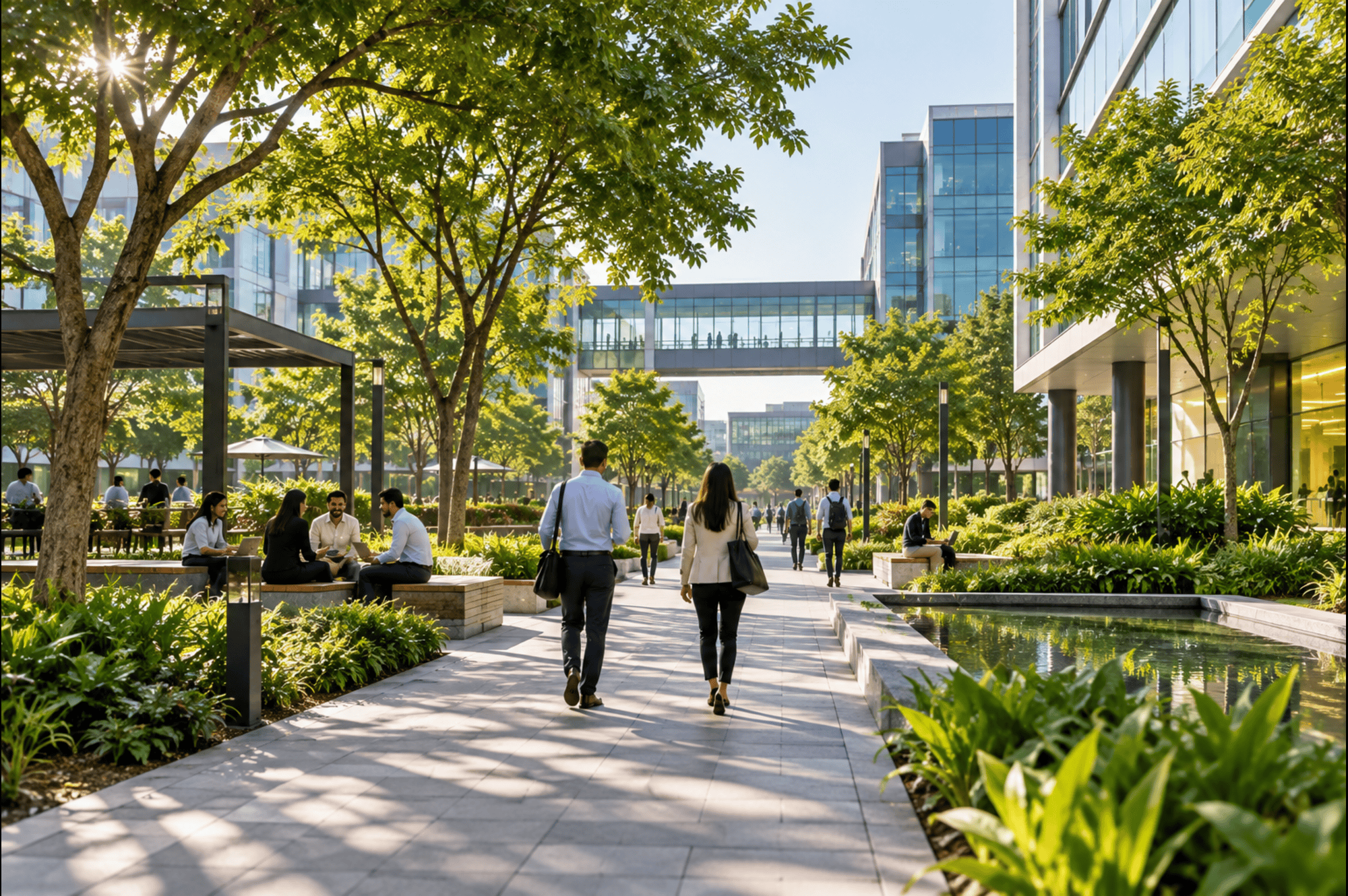
It starts with the arrival, the walk from one building to another, the quality of the outdoor environment and the way people move through the site. It is shaped by whether outdoor spaces are comfortable enough to use and whether the spaces between buildings contribute to the experience of working there.
Across Green World Design’s work spanning millions of square feet of corporate offices and campuses, alongside hundreds of acres of large-scale residential, commercial and mixed-use developments, one thing becomes clear: at this scale, workplace performance cannot be considered independently of the wider site.
The Workplace Is Larger Than the Office Floorplate
On a large corporate campus, technology park, GCC or multi-building commercial development, the spaces outside the building connect almost every part of the workplace. They influence arrival, pedestrian movement, access to common facilities, informal interaction and the relationship between different buildings. Employees may cross the site several times a day, while visitors form their first impression before entering the reception. Facilities and operations teams also inherit the outdoor environment as part of the larger asset they manage.
This is why landscape planning should be considered alongside architecture and site planning from the beginning. The question is not simply where greenery can be added once the building footprint is finalised. It is how the outdoor environment can support the way the workplace functions. On large developments, decisions about roads, utilities, drainage, building access and pedestrian routes shape what is possible later. Once these systems are fixed, there is less flexibility to coordinate landscape with the wider site.
Outdoor Comfort Affects How a Workplace Is Used
India’s climate makes outdoor comfort a practical design consideration. A pathway exposed to intense heat or difficult to use during heavy rainfall is unlikely to encourage people to spend time outdoors, regardless of how attractive it looks. Shade, tree canopy, planting, covered connections and the orientation of pathways influence how people experience a corporate campus. These decisions become particularly important where employees move between buildings, parking areas, amenities and shared facilities. Courtyards, gardens, terraces and shaded areas can support informal conversations and short breaks. Their value depends on whether they remain genuinely usable throughout the year. For corporate occupiers, this makes landscape relevant to workplace performance and employee experience. For developers and asset owners, it also affects the quality and usability of the wider commercial environment.
Movement Should Be Planned Across the Site
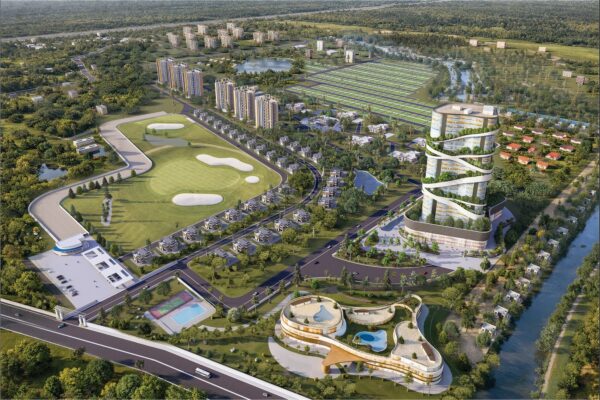
The way people move through a workplace is often shaped at the site-planning stage. Landscape can connect buildings through pedestrian routes, shaded pathways, courtyards and open spaces. This becomes particularly important across corporate campuses, technology parks, GCCs and institutional campuses, where landscape connects buildings, movement, infrastructure and shared spaces. This requires coordination between landscape, architecture, planning and engineering teams. Pedestrian movement cannot be considered separately from roads, levels, access requirements, utilities and drainage. The spaces between buildings are part of the operational structure of a campus. They need to accommodate movement, respond to climate and remain practical to build and maintain.
Landscape Is Part of The Infrastructure
One of the most important shifts needed in large-scale development is to treat landscape as part of the site’s infrastructure.
Landscape interacts directly with water management, drainage, soil conditions, heat, pedestrian movement and open-space planning. Planting areas, grading and permeable surfaces influence how water moves through a site, while tree canopy and shade affect outdoor comfort. For project management and engineering teams, landscape decisions cannot be separated from constructability and execution. Utilities, levels, drainage, maintenance access and construction sequencing can all affect the final landscape.
This is particularly relevant across large commercial developments, technology parks and institutional campuses where multiple consultants and contractors are responsible for different parts of the same environment. Bringing landscape into the project early creates more opportunity to coordinate these interfaces before they become difficult to change.
Design Quality Has to Survive Execution
A strong landscape concept is only the beginning. At large scale, execution requires coordination between design intent and site conditions. Planting needs to respond to climate and growing conditions, infrastructure needs to be coordinated, and construction sequencing must account for activities across the wider development.
For developers, architects and PMCs, continuity between landscape strategy, design and execution can help preserve the original intent while responding to construction realities. The same applies where interior and exterior environments meet. Arrival areas, terraces, courtyards and outdoor breakout spaces sit at the intersection of architecture, interiors and landscape. Coordinating these transitions creates a more connected workplace experience.
Asset Performance Continues After Handover
The performance of a workplace landscape is measured over time. A landscape can look complete at handover and still face challenges if planting, irrigation, soil systems or maintenance requirements are poorly suited to the site. As trees mature, operational requirements become increasingly important.
For asset managers and owners, this brings landscape into the broader conversation around asset quality, operating requirements and long-term performance. Maintenance requirements should influence decisions made earlier. Plant selection, irrigation systems, access, soil conditions and water availability all affect lifecycle performance.
This is particularly relevant for institutional owners, REITs and large corporate portfolios operating assets over long periods. The objective should be an outdoor environment that remains healthy, usable and manageable as the development matures.
The Future Workplace Is an Integrated Environment
As companies and asset owners continue to invest in workplace quality, the conversation will increasingly extend beyond the office interior.
Architecture, interiors, landscape, infrastructure and long-term operations all shape how people experience and use a workplace. Across corporate campuses, technology parks, GCCs and other large workplace environments, the spaces outside the building are part of how both the workplace and the wider asset perform. For large corporate campuses and commercial developments, landscape needs to be considered early enough to influence the site, coordinated closely enough to be executed properly and maintained with an understanding of long-term asset performance.
The workplace may be experienced inside the building, but its performance begins outside it. The quality of the spaces connecting buildings, people and infrastructure can shape the experience and long-term performance of the entire asset.
Tags