How Dwarka Is Evolving into Delhi’s Most Future-Ready Residential Hub

by Manish Jaiswal, CEO, Eldeco Group
Delhi NCR’s real estate market is undergoing a fundamental transformation driven by strengthening infrastructure and strong demand momentum. In this broader landscape, one of the regions which has evolved significantly, from being a mere residential address to being Delhi’s most forward-looking urban district, is the Dwarka region. Underpinned by a convergence of large-scale infrastructure investment, institutional development, growing commercial interest, and a policy push from the Delhi Development Authority that is being matched, credibly, by execution on the ground, Dwarka has consolidated its positioning as one of the most promising destinations of Delhi-NCR in terms of real estate.
Spanning approximately 5,648 hectares, Dwarka ranks among India’s largest and most comprehensively planned residential sub-cities, accommodating a population of over one million residents. As homebuyers increasingly prioritise liveability, connectivity, sustainability, and long-term value appreciation, the sub-city is gaining recognition as a benchmark for integrated urban living within the capital.
What has consistently distinguished Dwarka from other large residential clusters in Delhi is the planned nature of its growth. Wide roads, organised sector layouts, green belts, mixed land-use norms, and social infrastructure were embedded in the original development blueprint, rather than introduced incrementally in response to demand. What the sub-city lacked for many years was the catalytic infrastructure required to translate that planning into tangible outcomes for residents and investors. That gap is now closing.
Connectivity as the Catalyst for Transformation
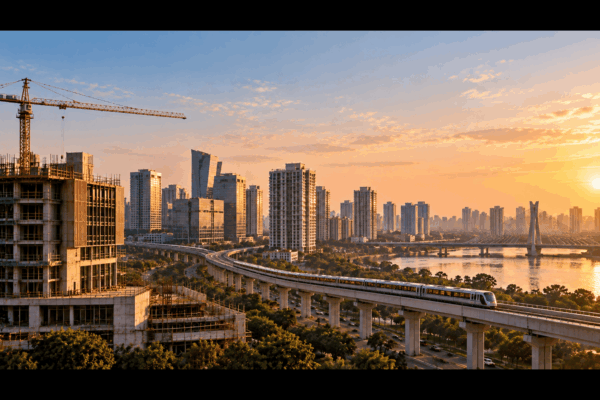
Infrastructure has always been a defining factor in the growth of cities and Dwarka’s evolution is a testament to that fact. Over the years, the locality has matured into one of the best-connected areas of Delhi. The presence of the Delhi Metro’s Blue Line and Airport Express Line have already ensured seamless access to the major commercial hubs and the Indira Gandhi International Airport. But what is truly transforming Dwarka’s tomorrow is the scale of connectivity projects being developed around it.
The operationalisation of Dwarka Expressway and Urban Extension Road-II (UER-II) has given a major boost to mobility across Delhi-NCR by improving connectivity between Delhi, Gurugram and Noida and emerging growth corridors. These developments are not only reducing travel times but also integrating Dwarka more closely with the economic and social fabric of the region. Residents benefit from increased convenience, businesses gain access to a larger talent pool and customer base, and the real estate market sees enhanced long-term attractiveness of the destination.
From Residential Suburb to Urban Growth Centre
The most successful urban destinations are those that grow beyond simply being residential neighbourhoods. It is becoming a self-sustaining ecosystem where people can live, work, learn and interact with their communities. Dwarka is increasingly going in that direction. The development of Yashobhoomi, India’s landmark convention and exhibition centre, has added a new dimension to the area’s growth story. Large-scale projects of this nature tend to act as catalysts for broader economic activity, drawing in investments in hospitality, retail, commercial and service sectors. As business activity picks up, so does the demand for quality housing and stronger urban infrastructure, and it’s this shift that is beginning to reshape Sector 17 in particular.
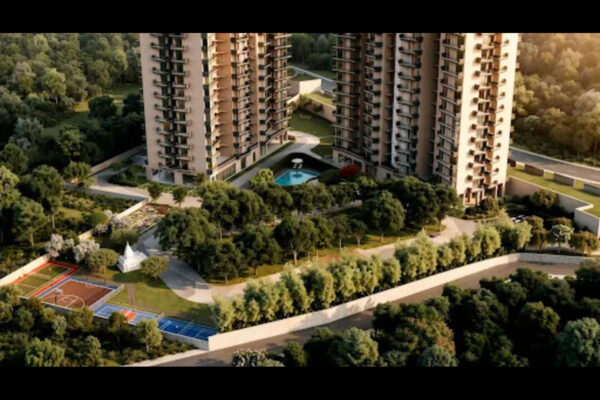
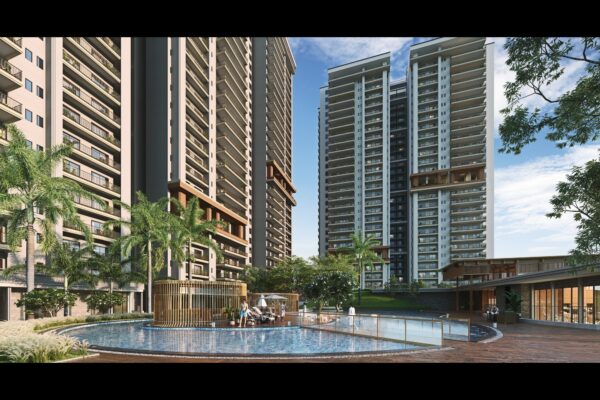
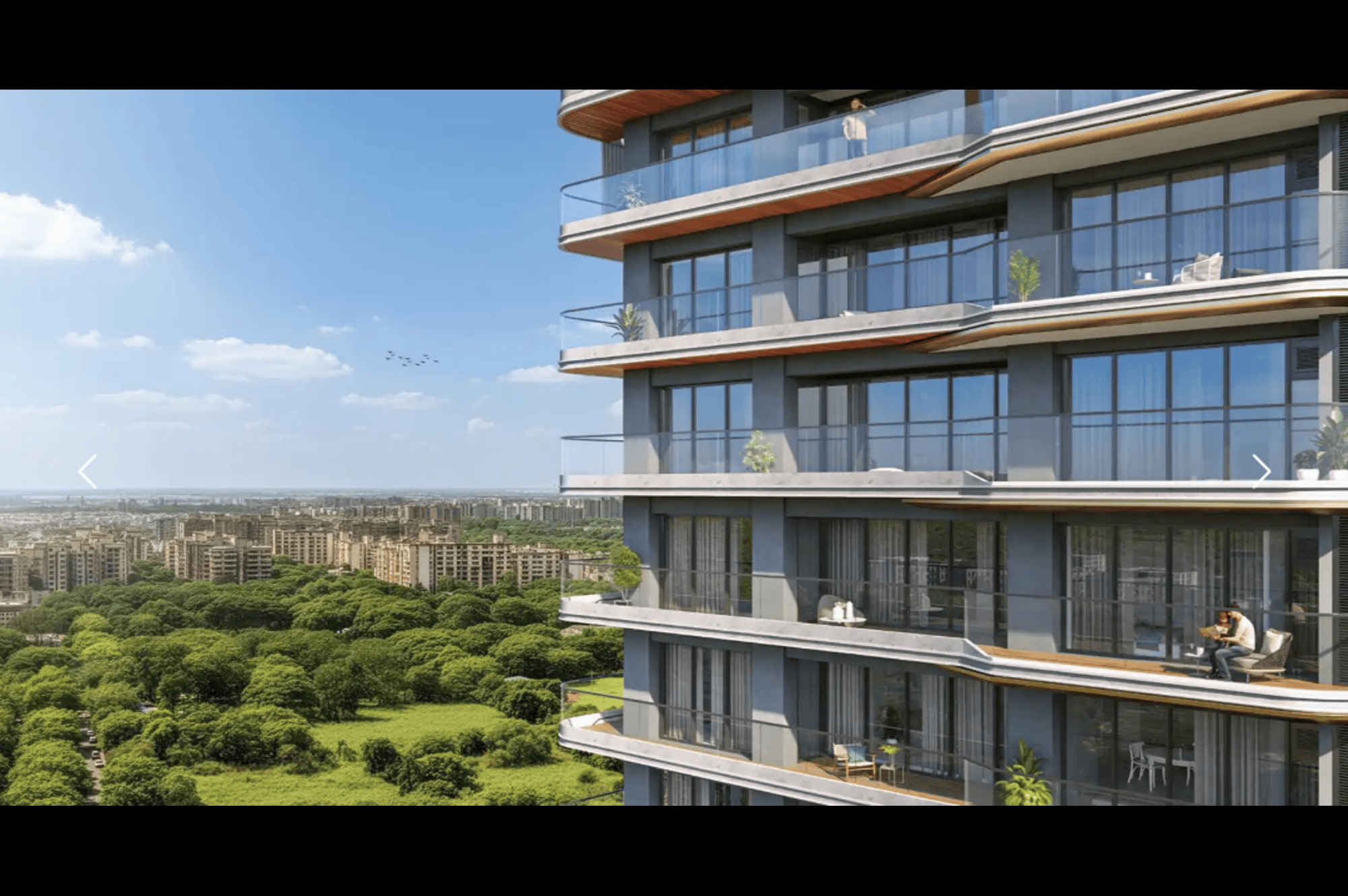
It’s within this evolving landscape that Eldeco Camelot has emerged as one of the landmark luxury residences in Dwarka Sector 17, its large layouts, wrap-around balconies, elegant interiors and green, open views speaking directly to a market that now expects more than just square footage. Its strategic location, with seamless connectivity to IGI Airport, Diplomatic Enclave, major business hubs and metro networks, further strengthens its appeal among homebuyers looking for luxury, convenience and long-term value. More than just a residence, Eldeco Camelot represents a lifestyle bringing together luxury, community, convenience, and long-term value in the heart of West Delhi’s growing luxury real estate landscape.
At the same time, Dwarka continues to benefit from a well-established network of schools, healthcare institutions, retail centres, sports facilities and community spaces. This combination of social and economic infrastructure is helping create a more balanced and self-sufficient urban environment—an attribute that has become increasingly important in today’s fast-paced world.
Institutional and Sustainability Anchors
No residential market sustains long-term momentum without employment and institutional gravity nearby. Dwarka is building both. The India International Convention and Exhibition Centre, Yashobhoomi, inaugurated in its Phase 1 form has made Dwarka a serious destination for MICE activity and business tourism. Paired with a metro station, well-planned hotel rooms, and direct road linkages, it is already redefining the economic footprint of Delhi’s western edge.
The second Diplomatic Enclave, approved for 34 hectares, will house embassies of 39 countries currently operating from rented premises in south Delhi, adding a layer of institutional prestige and sustained residential demand to the surrounding catchment once functional. DDA has also been directed to prepare a comprehensive plan positioning Dwarka as a decentralised economic hub, targeting IT/ITeS companies, Global Capability Centres, healthcare institutions, and data and digital infrastructure firms. The emphasis on non-polluting, high-value employment is deliberate, and it matters enormously for long-term residential absorption.
What tends to be underappreciated in investment conversations is Dwarka’s green and recreational infrastructure. The DDA Sports Complex, the upcoming Bharat Vandana Park spanning 220 acres in Sector 20, wide tree-lined roads, and proximity to the Najafgarh wetlands together deliver an environmental quality that is genuinely rare within Delhi’s boundaries.
Unlike areas that expanded organically and now contend with infrastructure deficits, Dwarka was conceived with a long-term framework: organised sectors, defined land-use patterns, broad roads, and integrated green space. As homebuyers increasingly weight open spaces, walkability, and community-centric living not as lifestyle premiums but as baseline expectations, that foundation positions Dwarka to absorb future growth without compromising on the qualities that made it desirable in the first place.
The Future Outlook
For homebuyers and investors, the calculus around Dwarka has shifted materially. This is not a micro-market riding a single infrastructure trigger or a speculative play on future promises. It is a sub-city with decades of planned development behind it, a deepening institutional and commercial footprint, and a policy pipeline that is, for once, being executed rather than merely announced. The demand base is real – end-users, NRIs, professionals tied to the airport and diplomatic corridors, and families seeking planned, green, low-density living within Delhi’s boundaries.
Markets that combine genuine liveability, multi-modal connectivity, institutional gravity, and a credible policy roadmap do not stay undervalued for long. Dwarka has all four. The story of this sub-city is no longer one of potential. It is one of delivery – and the residential market is just beginning to price that in.
Tags