
Interview: Sourabh Bansal, Managing Director, Magicrete Building Solutions

How is India’s real estate and building construction market evolving towards faster and more industrialised construction, and what factors are driving the growing adoption of precast, modular and lightweight building solutions?
India’s real estate sector is valued at roughly $650 billion today and is projected to touch $1 trillion by 2030. To build at that scale, the industry cannot keep relying on the same manual, site-heavy methods it has used for decades. That approach simply doesn’t scale. Labour is the clearest signal of this. Construction already employs over 70 million people in India, yet nearly 80% of that workforce is unskilled, and industry estimates point to a shortage of close to two million skilled workers today. We have all seen how labour shortages in recent months have derailed project timelines & costs. Precast changes that equation directly. It delivers up to 50% faster construction and needs up to 60% less labour on site compared to conventional building, which is exactly what is pushing developers towards modular construction. With Modular Precast, we have achieved 60 to 80% industrialisation.
What is driving demand for Modular Building and AAC wall panels in India’s real estate and building construction sectors, and which applications are witnessing the strongest adoption?
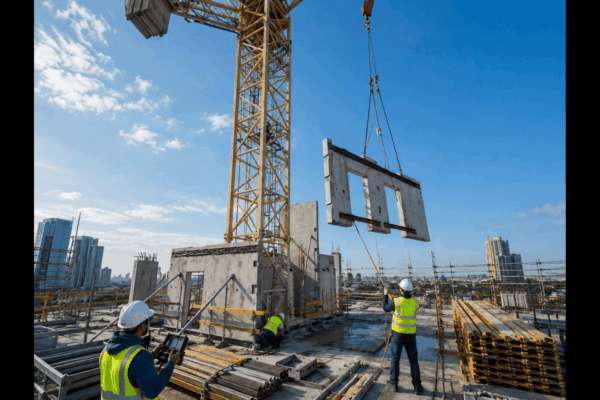
Demand for Modular Buildings comes down to speed, quality control, and predictability on site. The system covers pods, hollow core slabs, staircases, walls, facade elements, beams, and columns, all manufactured in a factory environment, then transported and assembled on the site. This shifts a large share of the build out of the construction site and into a factory-controlled setting, cutting down on-site labour dependency, weather-related delays, and finishing variability. The strongest adoption is in projects where repetition and turnaround time matter most: mass housing, worker housing, hostels, and hotel rooms, where identical units can be produced at scale and assembled quickly. We’ve applied this approach on residential projects like the Lighthouse Project by the Ministry of Housing and Urban Affairs in Ranchi, and Suraksha Smart City in Mumbai. The same system is also used in mid- and high-rise apartments, where precast walls and facade elements speed up envelope construction floor by floor, and in warehouses and industrial sheds that need large open spans erected fast. Some of our industrial work, including projects for Borosil, Deepak Chem, and Aarti Industries, has used this approach. Within this system, Hollow Core Slabs stand out on two structural counts. First, weight – continuous voids remove unnecessary concrete from low-stress zones, making the slab 40–50% lighter than a conventional RC slab. Second, span – prestressed with high-tensile steel wires, the slab is engineered to carry heavy loads at spans up to 13m without intermediate supports. For a developer, that means fewer columns, more open floor space, and a lighter, more efficient structure overall. AAC Wall Panels are widely used in high-rise towers, data centers, and warehouses because they’re light, put less load on the structure, and tend to faster construction. It’s also worth noting that India still produces close to 250 billion clay bricks a year, so there’s a very large base of conventional construction still waiting to shift to lighter, factory-made alternatives like AAC wall panels. The larger point is that developers and EPC contractors no longer treat these as alternative methods. On large projects today, they are becoming the default specification.
How are developers and contractors using precast and prefabricated solutions to address stringent project timelines, labour availability, construction quality and cost pressures in real estate and building construction?
I’d put it simply: the industry is no longer asking whether precast works, it’s asking how fast it can scale. Every pressure point developers and EPC contractors are grappling with today (compressed timelines, an unpredictable labour pool, cost overruns, quality inconsistency) is exactly what precast was engineered to solve. Start with speed. Precast construction runs up to 50% faster than conventional methods, simply because the bulk of the work is already complete by the time material reaches site. For developers working against RERA timelines and lender milestones, that’s not a marginal gain; it’s a different project economics altogether. Labour availability is the second issue, and in my view, the more structural one facing Indian construction today. With precast, up to 60% less labour is needed on site: nearly 90% of the work happens in a factory, and only around 10% is left for site assembly. That has a direct safety dividend too, since fewer workers doing physical labour at height means fewer safety risks that come with it. On cost, the comparison only holds up once you look at the full picture: material wastage, rework, and delay costs included. On that basis, precast typically comes in around 15% cheaper overall than conventional construction. Contractors who evaluate it purely on a per-slab or per-panel basis are missing where the real savings show up. Offsite manufacturing enables efficient design and use of technologies like autoclaving, steam curing or pre-tensioning which helps reduce material costs. And then there’s quality, which I’d argue is the least talked about but most important shift. A factory-made panel or slab performs identically whether it’s the first one off the production line or the thousandth. Use of M40 & M50 concrete in such structure enhance the durability of the building. Taken together, these aren’t incremental improvements. They’re the reason precast is moving from being an “alternative” method to becoming the default specification on large-scale projects across the country.
How are Magicrete’s 3D modular precast, 2D precast and AAC wall panel solutions helping accelerate project execution and reduce dependence on conventional, labour-intensive construction methods?
What makes the real difference on a live project isn’t any single product, it’s how our precast and AAC systems work together across a build. While modules, walls, staircases and slabs are being manufactured and finished in the factory, the site can move forward at the same time with foundation and civil work. That parallel execution is where the real time compression comes from, well beyond what any single component contributes on its own. It also changes who, and how many people, you need on site. Conventional construction depends on a long chain of sequential trades: masonry, plastering, curing, finishing, each one waiting on the last. With our precast and AAC systems, most of those trades are consolidated into factory production, so what arrives on site is largely ready to place and join. For developers running large, phased projects, that combination, faster overall timelines paired with a leaner, more predictable site operation, is what’s driving them to specify our full precast and AAC portfolio together, rather than treating each product as a standalone solution.
What are the key challenges limiting the wider adoption of precast and prefabricated construction in India’s real estate and building construction sectors, and what needs to change to accelerate its mainstream adoption?
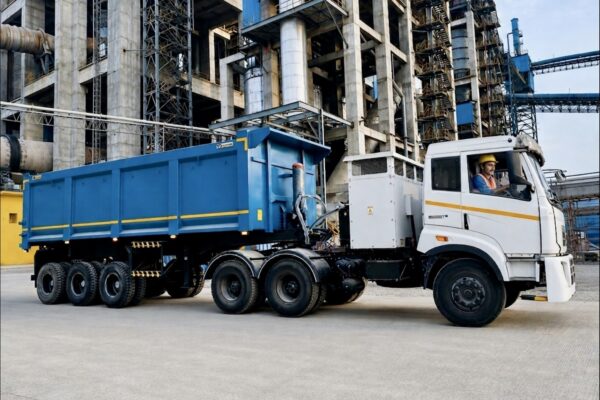
The biggest challenge is mindset, not technology. Most widespread availability and awareness on conventional construction, and shifting to industrialised, factory-built systems require hands-on demonstration, not just literature. Transportation is a genuine constraint too. Precast panels, slabs and modules are heavy, and moving them requires good roads and the right permissions, particularly into dense urban sites. That’s why manufacturing capacity needs to be spread across regions rather than concentrated in one or two large plants. Capital intensity is another factor. Setting up a modern precast facility requires significant investment, and manufacturers have to build that capacity ahead of demand: a long-term commitment rather than a project-by-project decision. Finally, we need clearer building codes for precast systems.
How do you see the market for precast, modular construction and AAC-based building solutions evolving over the next five years, and how is Magicrete preparing to drive this transformation?
Over the next five years, I expect industrialised construction to become the standard, not the alternative, for large commercial and infrastructure projects in India. The shift is no longer theoretical: it shows up in the numbers wherever you look. India’s precast concrete market alone is estimated at nearly $6.7 billion today and is projected to cross $17 billion within a decade, outpacing the overall construction materials market. With real estate heading toward $1 trillion by 2030, that growth curve is already underway, not a projection built on hope. Sustainability will be an equally important part of this story. Precast and AAC use less raw material and generate far less waste than conventional construction, and developers are responding accordingly. Green-certified buildings in India have already crossed 15.74 billion square feet across more than 19,000 registered projects, a footprint that barely existed a generation ago. As ESG commitments and green building norms tighten further, I expect industrialised, factory-made construction to be one of the primary level developers reach for to meet them.
Tags