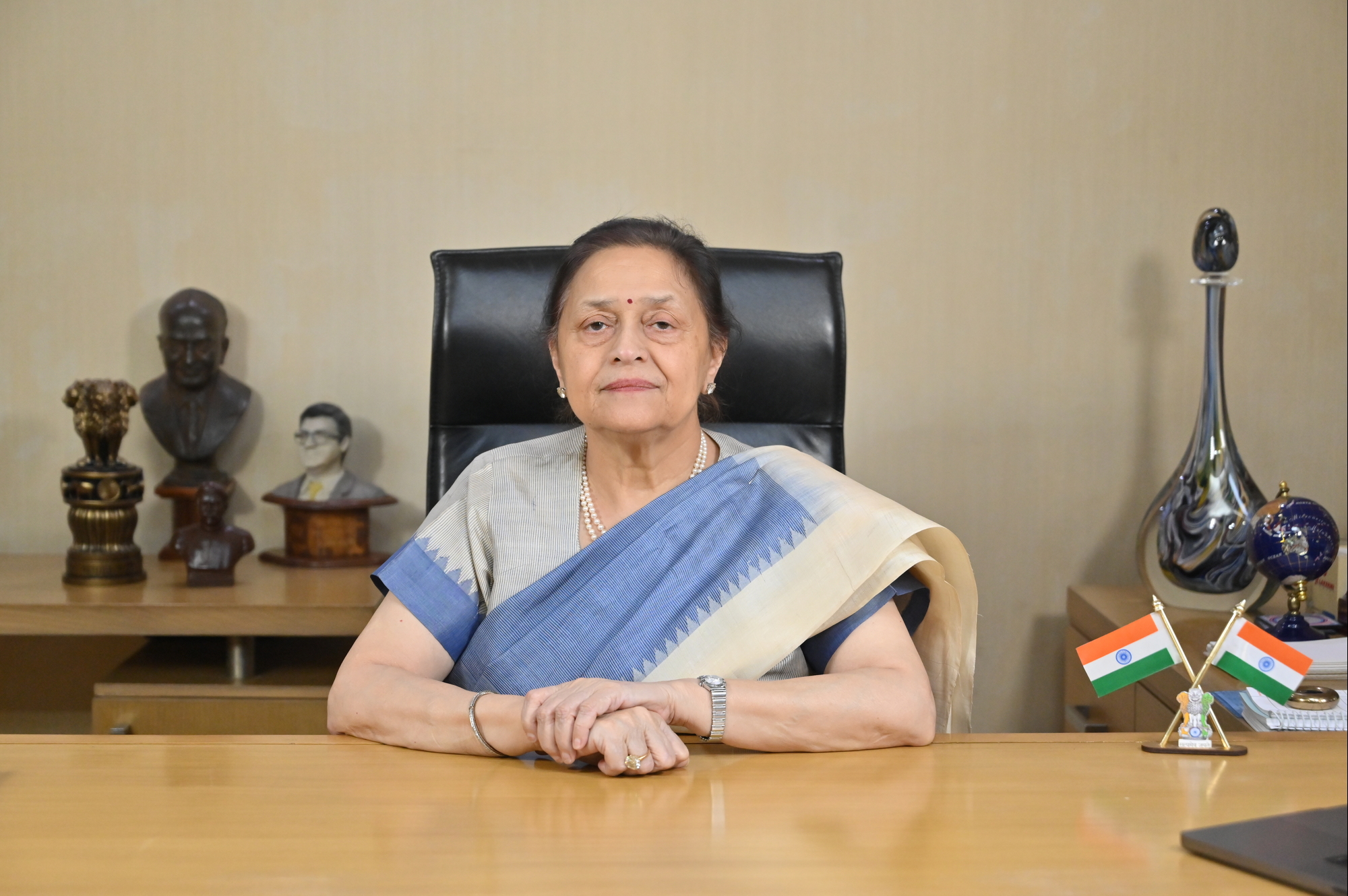
Interview: Vinita Singhania, Chairperson & Managing Director, JK Lakshmi Cement

The prolonged conflict in the Middle East is creating fresh concerns around fuel prices, petcoke availability and logistics costs. How do you see this impacting the cement industry’s cost structure and margins, and what measures is JK Lakshmi Cement taking to mitigate the impact?
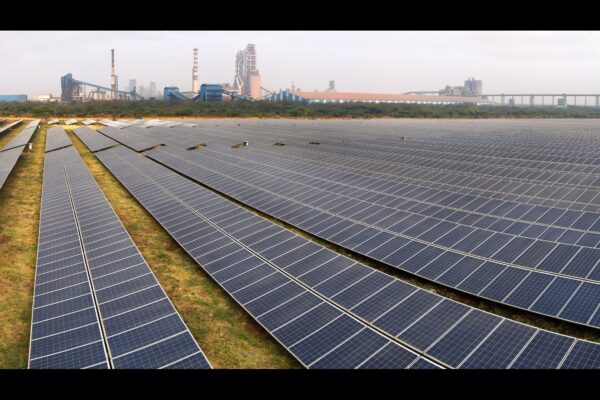
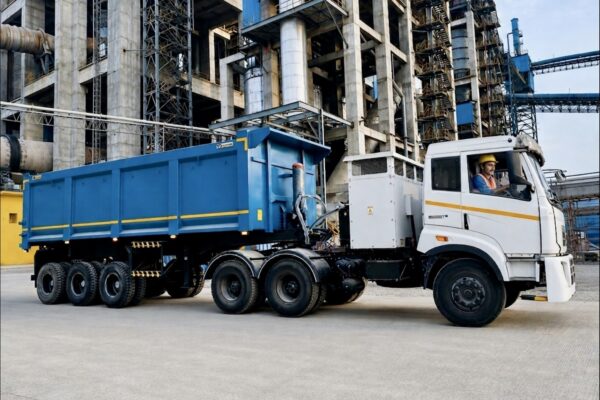
The disruption is real and already visible in the industry’s cost structure. ICRA projects that operating profitability per tonne for Indian cement companies could decline 10 to 15 percent in FY2026-27, largely due to crude oil, expected to average close to USD 95 a barrel versus roughly USD 72 in FY26. Since power and fuel account for approximately 35% of total cement production costs and higher international petcoke and imported coal prices could increase this cost bucket by around 10%-15% in FY27. Q1 FY27 already witnessed pressure due to higher imported fuel prices and elevated freight and logistics costs arising from geopolitical developments although peak impact may be felt in subsequent quarters. This conflict also affects cement economies through international freight and domestic logistics, eg, higher vessel rates, insurance premiums, route disruptions and long voyages have raised the landed cost of imported fuels which will significantly increase sailing time, freight and bunkering cost, etc. Due to higher crude and resulting diesel prices increase has direct effect on cost of raw materials, coal/petcoke, clinker as well as cement. To minimize the impact on us, we have tried to reduce dependence on expensive petcoke/coal with cost effective domestic coal, which is economically superior on heat-value basis. Optimized the blend of petcoke and domestic coal to curtail increase in variable cost. Increased alternative fuel and raw material substitution (current TSR 10%). Also gradually shift to EV trucks and dump trucks both On and Off road. We are also accelerating our solar power share, increasing output from Waste Heat Recovery systems and focusing on increasing TSR. Our current renewable energy share is around 50%, and we are working to increase it further.
While volume growth has remained healthy, rising fuel and raw-material costs have put pressure on margins. What steps is JK Lakshmi Cement taking to offset these cost pressures without compromising growth?
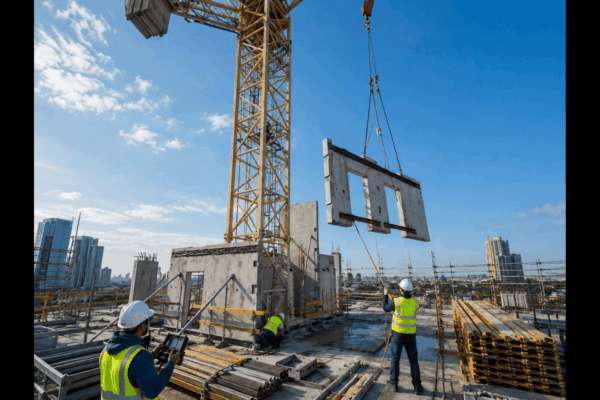
FY26 shows how we’ve tried to hold both together. Our annual sales volumes grew from 121.29 to 133.46 lakh tonnes, and net sales rose to Rs 6,762.63 crore, even as fuel and input costs firmed through the year. That came from higher volumes, a better product mix, and tighter fuel-cost management. Our offset strategy rests on three levers. First, premiumisation shifting toward higher-realisation institutional volumes and value-added products like our Green Pro LC3. Second, diversification through Smart Building Solutions ready-mix concrete, gypsum plaster, wall putty and AAC blocks, a growing, higher-margin stream that reduces our dependence on grey cement pricing cycles alone; we commissioned five new RMC plants this year, in Bhopal, Faridabad, Bhavnagar, Indore and Durg. Third, digital discipline, real-time, SAP-enabled tracking lets us respond to cost movements within the quarter rather than after it. None of this substitutes for volume growth; it’s designed to make sure growth actually converts into profit.
The cement industry is witnessing increasing consolidation, with two major players emerging as dominant forces. How do you see this impacting competition, pricing and market share, and how is JK Lakshmi Cement positioning itself to navigate this changing competitive landscape?
Consolidation is the defining story of Indian cement today. Two national platforms have pulled well ahead of the rest of the industry on scale, each now well past 100 MTPA and continuing to acquire capacity, and together they account for a large and growing share of the country’s total cement output. Across the industry, the top ten players have acquired around 140 million tonnes of capacity over the last five years, worth close to Rs 89,000 crore. For a company of our scale, the sensible response is not to out-muscle that scale but to compete where regional strength, product mix and cost discipline matter as much as size. We are ringfencing our core position across Northern, Central and Eastern India while selectively entering Bihar, Jharkhand and the North-East. We are also targeting leadership in EBITDA per tonne rather than absolute capacity, through premiumisation, a growing share of blended and value-added cement, and continued cost efficiency. Our own amalgamation of Udaipur Cement Works and other subsidiaries into JK Lakshmi Cement, completed this year, builds scale on our own terms. In a market moving toward a few dominant national platforms, the companies that do well will have a clear regional right to win and a disciplined cost structure.
JK Lakshmi Cement is targeting 30 MTPA of capacity by 2030. What is the roadmap for achieving this target, and which markets and expansion projects will be the key drivers of this growth?
Our roadmap combines brownfield efficiency with genuinely new capacity. We closed FY26 at 18 MTPA, up from a 16.5 MTPA base, following the Surat grinding unit’s completion. The next phase is a Rs 3,000 crore programme, targeted for completion by March 2028: a 2.3 MTPA clinker line and four grinding units at our Durg plant in Chhattisgarh, plus split-location grinding units in Uttar Pradesh, Bihar and Jharkhand. We’re also investing Rs 325 crore in a railway siding at Durg, whose first phase is already operational. The remaining distance to 30 MTPA rests on further projects under our board-approved roadmap: an additional clinker line at Udaipur, expansion at Nagaur, and greenfield projects in Assam and Rajasthan. Geographically, this is deliberate- we’re deepening our core Northern, Central and Eastern markets while using our Eastern push to open Bihar, Jharkhand and the North-East, where infrastructure demand is outpacing local capacity. We’ve sequenced this in two phases: FY25-26 was largely about consolidating recent expansions and completing post-merger integration; FY26-30 is about new greenfield capacity, protecting our balance sheet rather than adding capacity for its own sake.
Cement manufacturing is among the most carbon-intensive industrial activities. With carbon capture and other decarbonisation technologies gaining importance, what steps is JK Lakshmi Cement taking to reduce its carbon footprint?
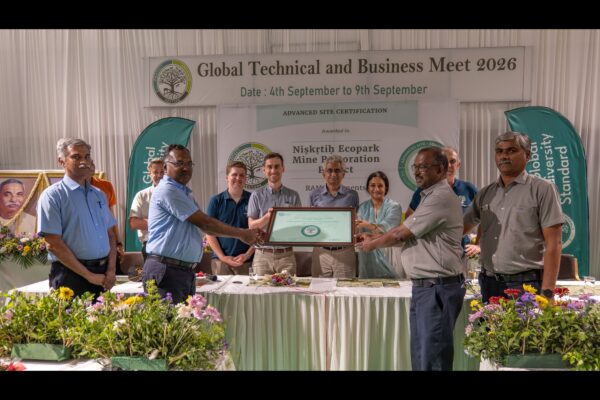
Our approach is to work every lever available today while staying closely engaged with technologies still maturing, carbon capture chief among them. We reached 48.57 percent renewable energy in our energy mix in FY2024-25, against a FY2030 target of 60 percent; our Durg unit draws around 80 percent of its electricity from renewable sources. Our Thermal Substitution Rate has moved from a 4.1 percent baseline to 10.39 percent, with a 20 percent FY2030 target, and at Sirohi we are scaling TSR from 4 to 16 percent. We have submitted our near-term 2035 GHG target to the Science Based Targets initiative as part of our Net Zero by 2047 commitment. Our most significant recent step is the commercial launch of Green Pro LC3, limestone calcined clay cement, from Sirohi, one of the first two commercial LC3 launches in India. It cuts CO2 emissions by up to 40 percent versus ordinary Portland cement by reducing clinker intensity, the result of work since 2014 with EPFL, IIT Delhi and IIT Madras. On carbon capture, the technology is moving from pilot to commercial scale in India; the Union Budget 2026-27 allocated Rs 20,000 crore over five years to CCUS in hard-to-abate sectors including cement, with an initial pilot target of around 2,000 tonnes CO2 capture per day for the sector. We are tracking these pilots closely, but our near-term focus stays on levers that are commercially proven today: renewables, alternative fuels, waste heat recovery and low-clinker products like LC3.
Coal remains a key source of energy for cement manufacturing and is also a major contributor to carbon emissions. As the industry moves towards cleaner energy sources, what alternatives is JK Lakshmi Cement exploring to reduce its dependence on coal and conventional fuels?
Our primary lever is the Thermal Substitution Rate, the share of kiln fuel from alternative sources rather than fossil fuel which we’ve raised from a 4.1% baseline to 10.39% company-wide, with a dedicated programme taking Sirohi from 4% to 16%. On the power side, renewables now account for close to half our mix, 48.57% in FY24-25 against a 60% target by 2030, with Durg running on roughly 80% renewable electricity, a genuine industry benchmark. Our Waste Heat Recovery capacity has grown steadily, reaching 45.4 MW in 2024 from 39.4 MW the year before, converting kiln heat that would otherwise be wasted into power. Taken together, this is a portfolio approach alternative fuels in the kiln, renewables in the power mix, and waste heat recovery bridging the two steadily reducing our reliance on coal and petcoke, rather than any single silver-bullet fix.
Looking ahead to 2030, what are the key priorities for JK Lakshmi Cement, and where do you see the company positioned in India’s evolving cement and building-materials industry?
By 2030, we want JK Lakshmi Cement recognised for three things together: scale, sustainability leadership, and a broader building-solutions portfolio. On scale, our 30 MTPA target is well underway, up from 18 MTPA today. On sustainability, our Net Zero-2047 roadmap and products like Green Pro LC3 are meant to place us among the industry’s genuine leaders on carbon intensity. The third priority is where I think the more interesting shift is happening. Cement has historically been sold as a commodity; our ambition is to move beyond that into a company offering a complete construction-solutions portfolio ready-mix concrete, gypsum plaster, wall putty, AAC blocks and premium products like LC3 carried by the trust our core cement brand has built over four decades as part of the 140-year JK Group legacy. Digital transformation, from real-time SAP-enabled operations to AI-assisted manufacturing, underpins all three. India’s cement industry is consolidating around a small number of large national platforms. Our position by 2030 won’t be defined by matching that scale tonne-for-tonne, but by being the most trusted, most sustainable and most complete building-solutions brand in the markets where we choose to compete.
Tags