Why Infrastructure Growth Must Be Matched with Equipment Innovation

by Sunil Talreja, Vice President, Road Construction Equipment Division, Action Construction Equipment (ACE)
India’s construction equipment industry has undergone a remarkable transformation, evolving from a domestically focused backbone to a globally competitive powerhouse. Once reliant on imported technologies, the sector is now driven by homegrown innovation, producing world-class machinery for both domestic use and international markets. Equipment manufactured in India is not only shaping highways and skylines within the country but is also powering infrastructure development across Africa and Southeast Asia, positioning India as a credible challenger to established global players.
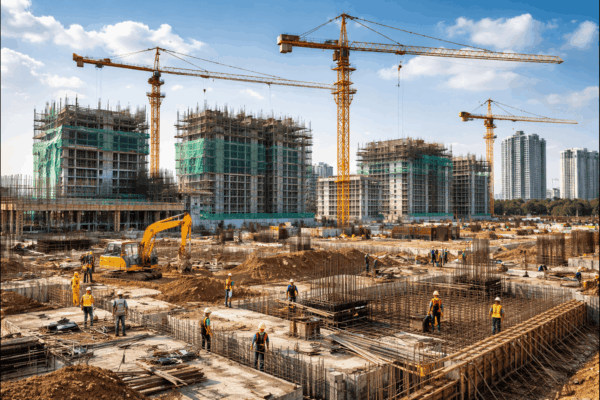
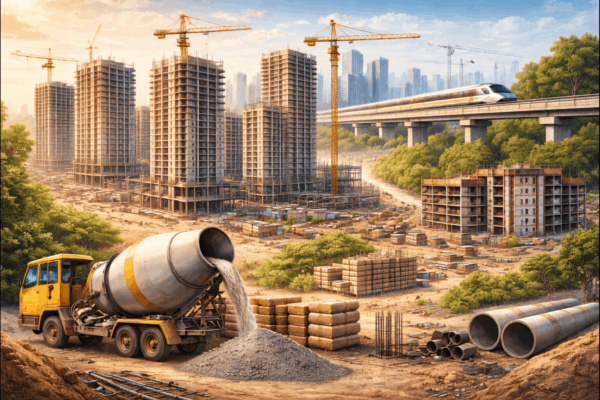
In fact, India is building at a pace and scale that few nations have attempted in modern history. From the ambitious Bharatmala Pariyojana spanning thousands of kilometres of national highways to metro rail corridors threading through its densest cities, the country’s infrastructure ambition is unmistakable. From sprawling highway networks and high-speed rail corridors to mega-cities rising from reclaimed land, the scale of modern infrastructure development is unprecedented. Governments and private entities are committing trillions of dollars to build the skeletal framework of the future.
This shift was boosted by a combination of proactive policy support, industry-led innovation, and sustained capital investment. As per ICEMA, India has emerged as the world’s third-largest construction equipment market by volume and is on track to become the second largest globally by 2030. The industry recorded a robust 26% growth in FY24, fuelled by initiatives such as Atmanirbhar Bharat, the National Infrastructure Pipeline (NIP), and Gati Shakti. This growth is not limited to large urban projects but is increasingly being driven by the deepening of infrastructure development in rural and semi-urban regions.
Yet ambition and execution are two separate conversations. The gap between them is often bridged, or broken, by one critical variable: the equipment on the ground. As India’s infrastructure pipeline grows in complexity and scale, the tools being used to build it must evolve in equal measure. Faster machines, smarter systems, and greener technologies are no longer desirable upgrades but operational necessities. Infrastructure growth and equipment innovation must advance in lockstep. One without the other creates bottlenecks that no policy or budget can easily resolve.
Precision and Speed: The Case for Advanced Equipment
Large infrastructure projects are inherently time sensitive. Delays result in cost overruns, disrupted supply chains, and eroded public confidence. Advanced construction equipment directly addresses this challenge by enabling faster execution without compromising quality.
India’s major infrastructure programmes, from the Delhi-Mumbai Industrial Corridor to the Bharatmala Pariyojana, are defined by the precision and power of modern construction equipment, including GPS-enabled excavators, asphalt pavers, graders, and high-capacity road rollers. These are not marginal improvements over conventional methods; they represent a fundamental shift in how infrastructure is built. On the Mumbai-Ahmedabad High Speed Rail project, aerial LiDAR surveying reduced survey timelines from twelve months to three months, marking a fourfold improvement in speed. Similarly, GPS-enabled graders and pavers on the Dwarka Expressway improved precision while significantly reducing material waste.
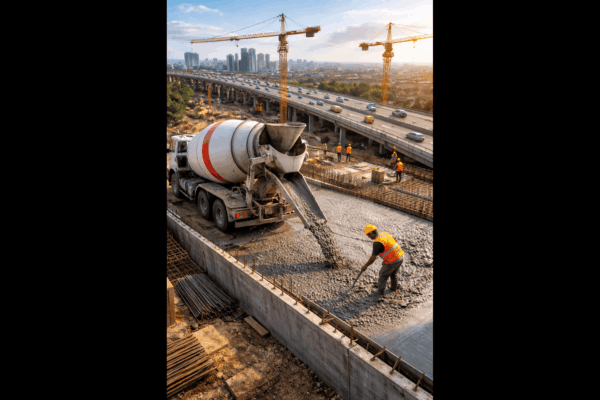
Modern batching plants with computerised control systems ensure every concrete batch meets exact mix specifications. This is critical for bridges, flyovers, and metro viaducts where structural integrity is non-negotiable. The message is clear: precision equipment does not just build faster — it builds better. As India continues to award contracts for tunnels, expressways, and elevated corridors worth lakhs of crores, the ability to match project ambition with equipment capability becomes a decisive competitive advantage.
Technology as an Efficiency Multiplier
Speed and precision are achieved, not just through the machinery itself, but also through the intelligence that the machinery possesses. The construction equipment industry in India has witnessed a revolution, driven by digital innovations such as IoT-based telematics, which allows real-time monitoring of the performance of the machinery, thereby facilitating better decision-making.
The construction industry has witnessed the implementation of AI-based tools, which have reduced the project planning process by as much as 20%. Moreover, the industry has witnessed the implementation of tools based on predictive analysis, which has ensured the efficient deployment of the machinery, inventory, and labour.
The implementation of the telematics system has allowed project managers to remotely monitor the fuel consumption, as well as the health of the machinery, across multiple projects. The implementation of the Building Information Modelling system has ensured the efficient integration of the construction machinery with the system, thereby facilitating real-time collaboration between the machinery and the stakeholders. In parallel, the industry has witnessed the implementation of the use of drones, which have ensured the efficient surveying of the projects, thereby reducing the labor required.
Digital tools are beginning to close the gap on long-standing challenges in the sector. Technologies like 3D printing signal a growing shift towards faster and more efficient delivery models — structures that once took weeks to build can now be completed in days, with reduced material waste and improved design precision. As India prepares to spend USD 1.4 trillion on infrastructure by 2030, the digitisation of construction equipment is not a futuristic ambition; it is a present-day operational imperative.
Sustainability: Building Green is Building Smart
Infrastructure at scale carries an environmental cost. Construction is a significant contributor to carbon emissions, and as global sustainability mandates tighten, the equipment powering India’s infrastructure boom must itself become cleaner.
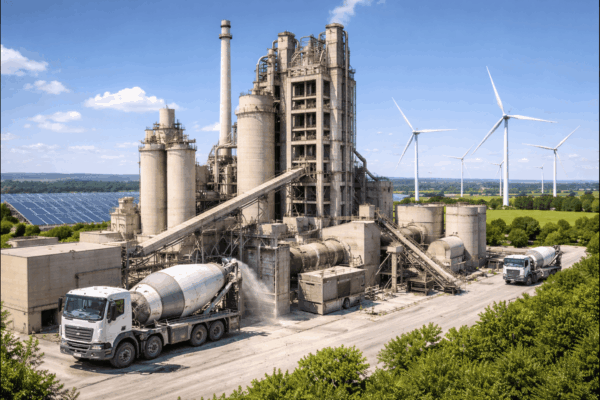
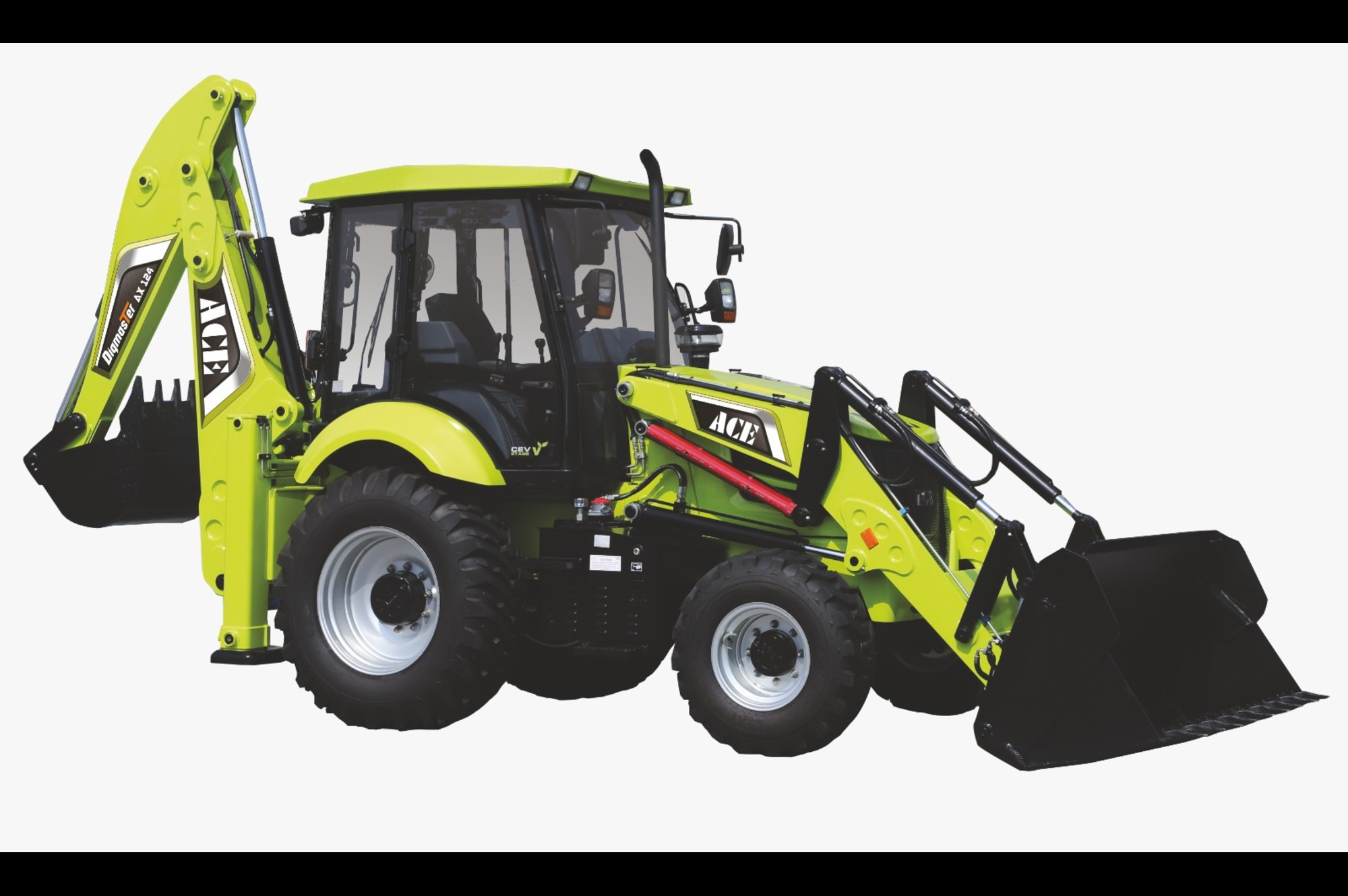
Union Minister Nitin Gadkari has made the case plainly: green fuel, electric, and hydrogen-based machinery are not just environmental imperatives — they are economic opportunities for every stakeholder in the value chain. The industry is responding. Warm mix asphalt technology, hydrogen burners for asphalt plants, and CEV Stage-V compliance are cutting the carbon footprint of road construction. Bharat Stage V compliance is also opening equipment manufacturers to higher-value export markets across the US, Japan, the EU, and Southeast Asia.
Results are already visible at scale. India’s first national highway stretch (NH-44, Nagpur) built with lignin-based bio-bitumen achieved a 70% reduction in greenhouse gas emissions compared to conventional bitumen — proof that sustainable innovation can be deployed on real projects today. The Union Budget 2026-27 reinforced this direction with a ₹200 crore Construction Equipment Scheme to promote domestically manufactured advanced machinery and reduce import dependence.
The Road Ahead: Innovation as a National Infrastructure Strategy
India’s construction equipment market, valued at USD 15.37 billion in FY25, is projected to nearly double to USD 29.50 billion by 2034 at a CAGR of 7.52% over the forecast period. But that trajectory must be matched by parallel investment in innovation, localisation, and workforce readiness.
India is building tunnels worth ₹3 lakh crore, yet machinery availability remains a bottleneck. This is a microcosm of a larger challenge: as project complexity grows, the equipment ecosystem must keep pace. R&D, operator skilling, digital infrastructure, and green manufacturing are not individual choices but interconnected pillars of a national equipment strategy.
The machines building India’s future must be as future-ready as the infrastructure they create. Faster, smarter, greener equipment is not a cost, it is an investment in the credibility and durability of everything being built. The equipment revolution cannot lag the construction revolution. They must move forward together.
Tags