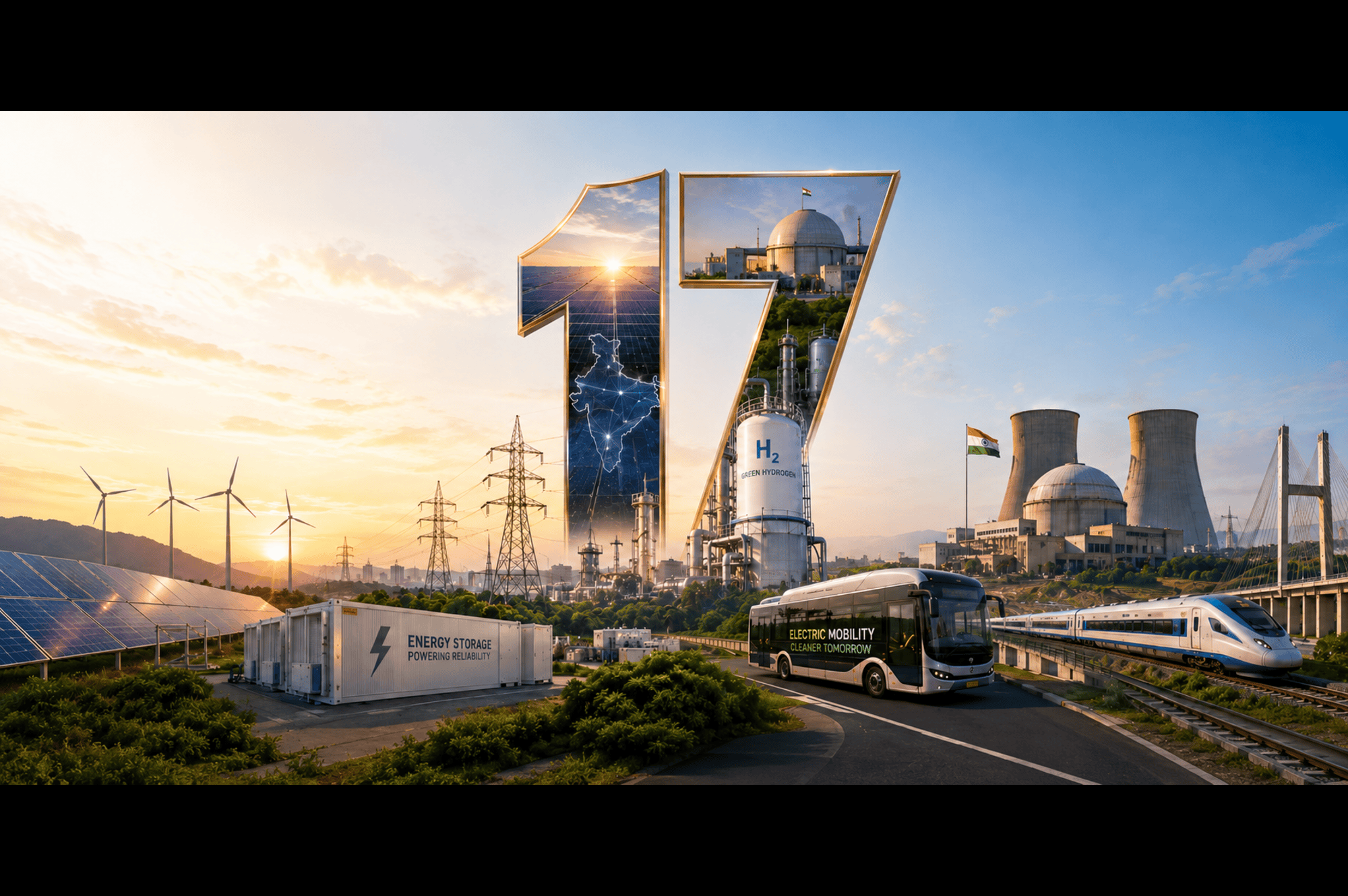
The Infrastructure Decade That Will Define India’s Energy Future

Over the past seventeen years, India has steadily built one of the world’s most ambitious clean energy ecosystems, transforming energy from a constraint on growth into a strategic advantage. With renewable energy capacity exceeding 274 GW, non-fossil sources accounting for over half of installed power capacity, and new investments flowing into storage, green hydrogen, nuclear energy and domestic manufacturing, the country is entering a decisive phase of its energy transition. The challenge ahead is no longer about expanding capacity alone. It is about building an integrated, resilient and future-ready energy system capable of powering a developed India by 2047. EPC World explores
The energy crisis of 2025–26 may ultimately be remembered not for the volatility it created, but for the clarity it delivered. As shipping disruptions in the Gulf unsettled oil markets, LNG prices remained elevated, and governments across the world scrambled to secure supply chains, a fundamental reality came into focus: energy security can no longer be purchased. It must be built.
For India, the crisis arrived at a moment of transition. The country still imports nearly 85 per cent of its crude oil requirements, yet it is simultaneously building one of the world’s largest clean energy ecosystems. Renewable energy capacity has crossed 274 GW, non-fossil sources now account for more than 283 GW of installed capacity, and India has already achieved the milestone of 50 per cent installed electricity capacity from non-fossil sources years ahead of its international commitments. What was once viewed primarily as climate policy is increasingly revealing itself as economic strategy, industrial policy and national security rolled into one.
Seventeen years ago, when EPC World began chronicling India’s infrastructure journey, the central challenge was energy access. The defining challenge for the next seventeen years will be energy sovereignty.
The World is Entering an Age of Energy Realignment
The global energy system is undergoing its most significant restructuring since the oil shocks of the 1970s. The immediate triggers have been geopolitical, from disruptions around the Strait of Hormuz to continuing uncertainty across global gas markets. Yet the underlying shift runs deeper. Nations are increasingly recognising that dependence on imported fuels exposes economies to risks that no amount of financial engineering can eliminate.
Across Europe and Asia, governments have accelerated investments in domestic energy infrastructure, storage systems, grid modernisation and industrial decarbonisation. The International Energy Agency’s policy trackers show that energy security has become the principal driver of clean energy investments worldwide, overtaking climate commitments as the primary policy rationale. The question confronting governments is no longer whether the energy transition will happen, but who will control the supply chains, technologies and infrastructure that underpin it.
India enters this new era from a position considerably stronger than it occupied even five years ago. The country has reduced structural vulnerabilities in the power sector while simultaneously expanding generation capacity at record speed. In FY 2025–26 alone, India added 55.3 GW of non-fossil capacity, the highest annual addition in its history. Renewable energy capacity now stands at 274.68 GW, placing India third globally in installed renewable energy capacity.
The significance of these numbers lies beyond capacity additions. Every new gigawatt built on Indian soil reduces exposure to international fuel volatility and strengthens the foundations of long-term economic growth.
The Next Energy Race will be Won Through Infrastructure
The first phase of India’s energy transition focused on building generation capacity. The second phase will focus on building an integrated energy system.
The distinction matters. Adding solar and wind capacity is no longer India’s principal challenge. The real challenge lies in integrating hundreds of gigawatts of renewable energy into a reliable, resilient and affordable power system capable of supporting a $30 trillion economy by 2047.
This is where the role of EPC companies becomes central.
The next decade will witness the simultaneous construction of renewable generation assets, interstate transmission corridors, battery storage facilities, pumped hydro projects, hydrogen infrastructure, electric mobility ecosystems and advanced manufacturing clusters. Each component depends on the others. Capacity without transmission creates congestion. Storage without generation remains underutilised. Manufacturing without reliable power undermines competitiveness.
The Ministry of New and Renewable Energy has already established a bidding trajectory of 50 GW of renewable energy projects annually. Meanwhile, transmission planning is increasingly aligned with Renewable Energy Zones, anticipating future capacity additions before projects are commissioned. This represents a shift from reactive infrastructure development to strategic infrastructure planning.
For the EPC ecosystem, this means moving beyond project execution toward systems integration. The next wave of opportunity will belong to companies capable of delivering complex, multi-technology infrastructure at unprecedented scale.
Storage will Become the Backbone of the New Grid
If solar panels symbolised the previous decade, energy storage is likely to define the next one.
India’s electricity demand is expected to continue rising sharply as manufacturing expands, electric mobility scales, and urbanisation accelerates. Meeting that demand with renewable energy requires the ability to store electricity and dispatch it when required.
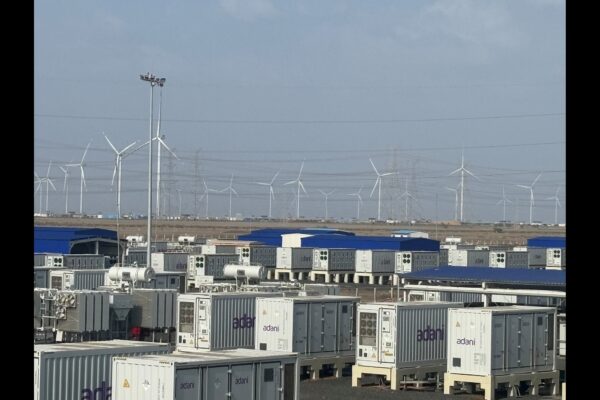
The Government of India has already approved support mechanisms for approximately 43 GWh of Battery Energy Storage Systems while simultaneously accelerating pumped storage development. The Central Electricity Authority estimates storage requirements exceeding 60 GW by the end of the decade. These numbers signal a fundamental transformation in the architecture of India’s power system.
Storage is no longer an ancillary technology. It is emerging as critical national infrastructure.
The implications extend beyond the electricity sector. Affordable storage strengthens energy security, reduces curtailment losses, improves grid flexibility and supports industrial competitiveness. For EPC companies, it opens an entirely new category of infrastructure opportunity.
Manufacturing is Becoming Energy Policy
The experience of recent years has exposed a weakness in the global energy transition. Many countries succeeded in deploying renewable energy without building domestic manufacturing ecosystems. The result was a new dependence on imported technology and equipment.
India has consciously pursued a different path.
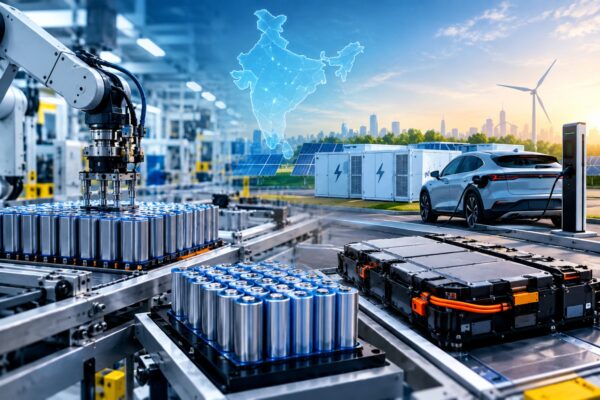
Solar manufacturing capacity has expanded dramatically through Production Linked Incentive schemes, domestic content requirements and targeted policy interventions. The country has moved from being largely dependent on imported modules to developing one of the world’s largest solar manufacturing ecosystems. Simultaneously, battery manufacturing, electrolyser production and clean technology supply chains are beginning to take shape.
The strategic logic is straightforward. Energy security in the twenty-first century will depend as much on manufacturing capacity as generation capacity.
The next decade is likely to see increasing convergence between industrial policy and energy policy. Manufacturing clusters, renewable energy parks, logistics infrastructure and transmission networks will increasingly be planned together rather than separately.
Green Hydrogen Could Reshape India’s Industrial Economy
Every major energy transition creates a new industrial opportunity. For India, green hydrogen may prove to be that opportunity.
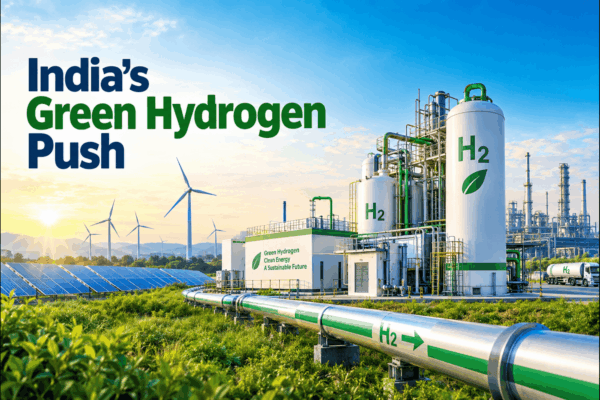
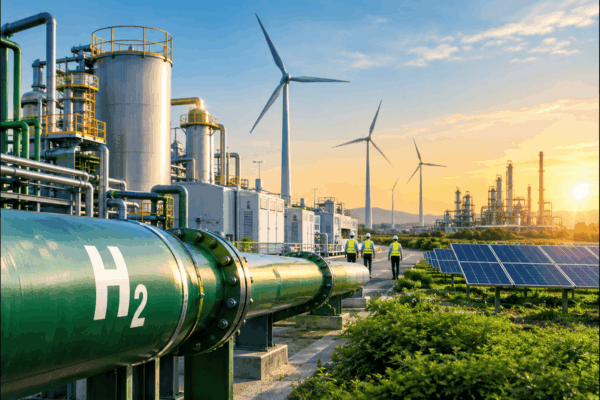
The National Green Hydrogen Mission represents one of the most ambitious industrial initiatives undertaken in recent years. With an outlay of ₹19,744 crore and a target of producing 5 million metric tonnes annually by 2030, the programme seeks to reduce import dependence while creating an entirely new export industry. The implications extend across fertilisers, refining, steel, shipping and heavy manufacturing.
Unlike conventional energy transitions, hydrogen development requires simultaneous investment across multiple sectors. Renewable generation, desalination, electrolysers, storage facilities, pipelines, ports and industrial demand centres must evolve together.
That complexity is precisely why EPC execution capability will determine success.
The countries that build hydrogen infrastructure first are likely to shape future industrial supply chains. India has an opportunity not merely to participate in that market but to help define it.
Nuclear Energy Is Returning to the Strategic Mainstream
One of the most consequential developments of the past year has been the renewed focus on nuclear power.
For several years, discussions around India’s energy future were dominated by renewable energy. Increasingly, policymakers are recognising that a modern industrial economy requires a combination of variable renewable generation and dependable baseload power.
The Union Budget 2025–26 elevated nuclear energy to the centre of India’s long-term energy strategy, announcing a target of 100 GW of nuclear capacity by 2047. The achievement of first criticality at the Prototype Fast Breeder Reactor in Kalpakkam further underscored India’s ambition to build a uniquely indigenous nuclear ecosystem.
For EPC firms, this signals the emergence of a new frontier requiring specialised engineering, advanced construction capabilities and long-term execution partnerships.
The Road to 2047: What the EPC Sector Must Now Build
Looking forward, three realities are clear. The crisis has made the investment case for clean energy self-evident, the government has committed the capital to pursue it, and the physical infrastructure must now be delivered at a pace India has never previously sustained. The 500 GW renewable target for 2030 requires adding 50 GW or more per year for four consecutive years. The 100 GW nuclear target for 2047 requires commissioning the equivalent of India’s entire existing nuclear fleet roughly eight times over. The 5 MMTPA green hydrogen target requires a new industrial sector to be built from near zero.
The project formats that the EPC sector is being asked to execute have fundamentally changed. Hybrid and Firm and Dispatchable Renewable Energy projects — combining solar, wind, and battery storage with round-the-clock supply obligations — require integrated systems engineering that the previous decade of single-technology solar tenders did not demand. Green hydrogen plants require electrolyser procurement, high-pressure storage engineering, ammonia synthesis, and port logistics — multi-disciplinary work at the intersection of energy EPC, petrochemical engineering, and maritime infrastructure. Nuclear construction at the SMR scale, once BSMR-200 and SMR-55 move into the construction phase, will require nuclear-grade civil construction, precision fabrication, and quality management regimes that must be built into the sector’s capability base now. EV registrations jumped 50 per cent year-on-year in March 2026 as fuel prices climbed; the vehicle-to-grid infrastructure that the Draft NEP 2026 envisions adds yet another discipline.
The distributed energy layer is equally important. PM Surya Ghar recorded 18.71 lakh rooftop installations in FY 2025–26 alone, nearly double the previous year, with over 42 lakh households now benefited. Distributed solar contributed 36 per cent of all solar installed in FY26 — the highest-ever share. This segment — smaller ticket sizes, geographically dispersed, consumer-facing — requires EPC firms to develop delivery models that do not resemble utility-scale project execution. The firms that crack distributed deployment at scale will be writing the rules for a growing share of the market.
The bottleneck that cuts across all of this is grid connectivity. Sixty gigawatts of built renewable capacity unable to evacuate power is not a marginal inefficiency; in a crisis year, it is a strategic failure. Resolving it requires not just transmission infrastructure but land acquisition acceleration, right-of-way resolution, and the regulatory clarity that the Draft NEP 2026 is designed to provide. The DISCOM reform agenda — with accumulated losses of Rs 6.9 lakh crore and AT&C losses still around 15 per cent — remains the unresolved constraint at the distribution end of every project the generation and transmission sector builds. Single-digit AT&C losses by the timeframe the NEP proposes would be transformational. Getting there requires institutional will that no EPC contract can substitute.
What gives the outlook its credibility, despite those constraints, is the convergence of global pressure and domestic capability. The Hormuz crisis has reset the political economy of energy investment: clean energy is no longer primarily a climate argument in India, it is a security argument, a cost argument, and an employment argument simultaneously. The World Bank projects energy prices to be at their highest since 2022 through this year. Asian LNG prices have structurally shifted. Every year that passes without resolving India’s fossil fuel import dependency is a year of additional exposure to shocks of this kind. The Union Budget 2026–27, with its 30 per cent increase in MNRE allocation in the teeth of a fiscal squeeze, reflects the government’s reading of that reality.
The Road to 2047: What the EPC Sector Must Now Build
Looking forward, three realities are clear. The crisis has made the investment case for clean energy self-evident, the government has committed the capital to pursue it, and the physical infrastructure must now be delivered at a pace India has never previously sustained. The 500 GW renewable target for 2030 requires adding 50 GW or more per year for four consecutive years. The 100 GW nuclear target for 2047 requires commissioning the equivalent of India’s entire existing nuclear fleet roughly eight times over. The 5 MMTPA green hydrogen target requires a new industrial sector to be built from near zero.
The project formats that the EPC sector is being asked to execute have fundamentally changed. Hybrid and Firm and Dispatchable Renewable Energy projects — combining solar, wind, and battery storage with round-the-clock supply obligations — require integrated systems engineering that the previous decade of single-technology solar tenders did not demand. Green hydrogen plants require electrolyser procurement, high-pressure storage engineering, ammonia synthesis, and port logistics — multi-disciplinary work at the intersection of energy EPC, petrochemical engineering, and maritime infrastructure. Nuclear construction at the SMR scale, once BSMR-200 and SMR-55 move into the construction phase, will require nuclear-grade civil construction, precision fabrication, and quality management regimes that must be built into the sector’s capability base now. EV registrations jumped 50 per cent year-on-year in March 2026 as fuel prices climbed; the vehicle-to-grid infrastructure that the Draft NEP 2026 envisions adds yet another discipline.
The distributed energy layer is equally important. PM Surya Ghar recorded 18.71 lakh rooftop installations in FY 2025–26 alone, nearly double the previous year, with over 42 lakh households now benefited. Distributed solar contributed 36 per cent of all solar installed in FY26 — the highest-ever share. This segment — smaller ticket sizes, geographically dispersed, consumer-facing — requires EPC firms to develop delivery models that do not resemble utility-scale project execution. The firms that crack distributed deployment at scale will be writing the rules for a growing share of the market.
The bottleneck that cuts across all of this is grid connectivity. Sixty gigawatts of built renewable capacity unable to evacuate power is not a marginal inefficiency; in a crisis year, it is a strategic failure. Resolving it requires not just transmission infrastructure but land acquisition acceleration, right-of-way resolution, and the regulatory clarity that the Draft NEP 2026 is designed to provide. The DISCOM reform agenda — with accumulated losses of Rs 6.9 lakh crore and AT&C losses still around 15 per cent — remains the unresolved constraint at the distribution end of every project the generation and transmission sector builds. Single-digit AT&C losses by the timeframe the NEP proposes would be transformational. Getting there requires institutional will that no EPC contract can substitute.
What gives the outlook its credibility, despite those constraints, is the convergence of global pressure and domestic capability. The Hormuz crisis has reset the political economy of energy investment: clean energy is no longer primarily a climate argument in India, it is a security argument, a cost argument, and an employment argument simultaneously. The World Bank projects energy prices to be at their highest since 2022 through this year. Asian LNG prices have structurally shifted. Every year that passes without resolving India’s fossil fuel import dependency is a year of additional exposure to shocks of this kind. The Union Budget 2026–27, with its 30 per cent increase in MNRE allocation in the teeth of a fiscal squeeze, reflects the government’s reading of that reality.
Tags