Smart Mobility: Beyond the Commute

A new mobility ecosystem is taking shape, as mass transit, digital technology and clean mobility converge to reshape urban journeys. From expanding metro corridors to electric fleets and smarter infrastructure, the way cities move is entering a defining new phase.
India’s urban mobility landscape is entering a decisive phase. As cities expand outward and economic activity intensifies, the daily movement of millions is no longer just a question of transport—it is becoming a defining factor in productivity, liveability and urban competitiveness. From crowded arterial roads and rising travel demand to the growing need for faster, cleaner and more connected journeys, Indian cities are being pushed to rethink how people and goods move.
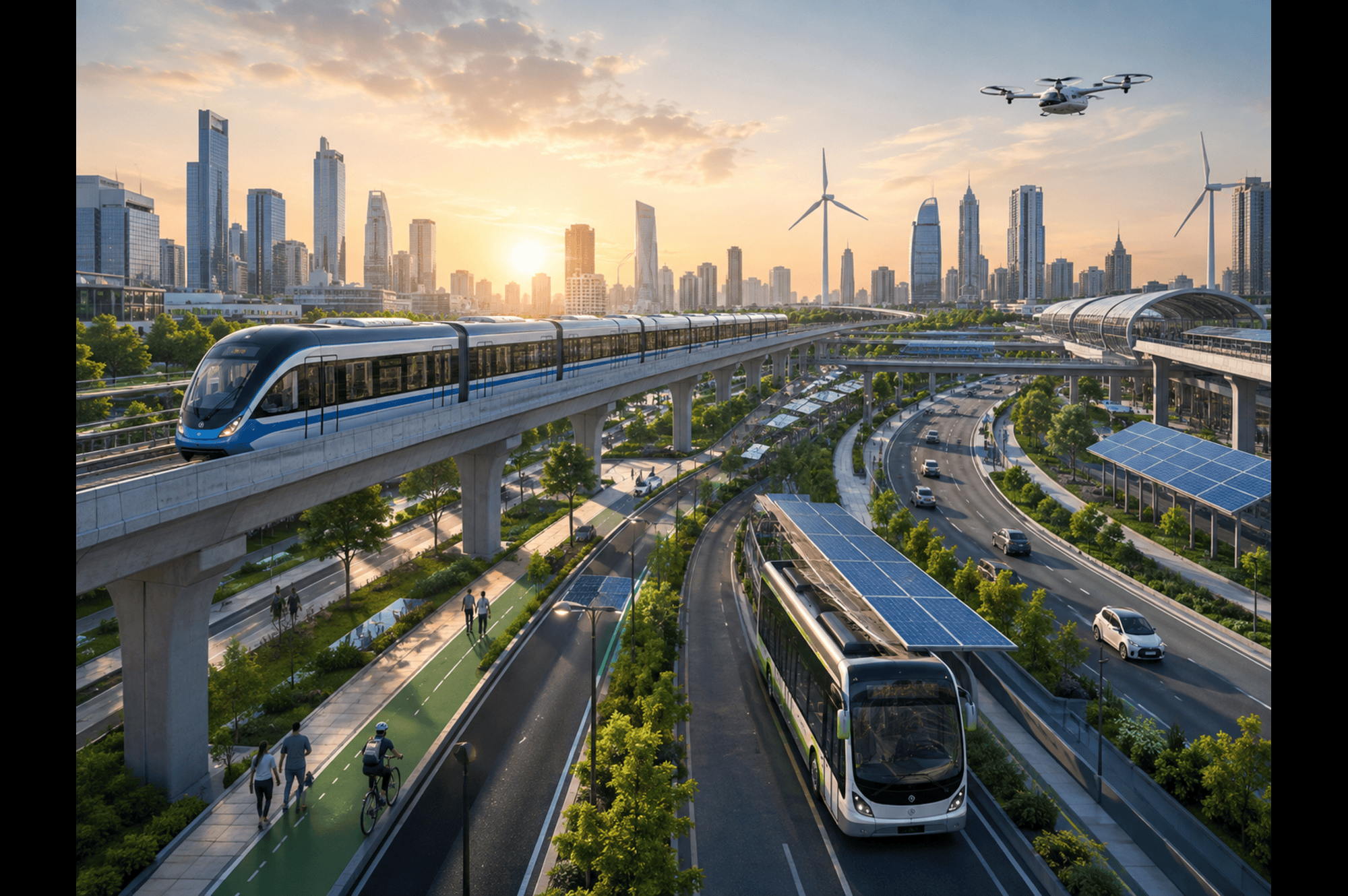
The transformation is already visible across the urban transport ecosystem. Metro rail networks are expanding beyond traditional metropolitan centres, regional rapid transit is opening new possibilities for city-region connectivity, electric buses are gaining ground, and shared and digitally enabled mobility are reshaping the last mile. Alongside these developments, investments in multimodal integration, intelligent transport systems, transit-oriented development and data-led traffic management are gradually shifting the focus from building individual transport assets to creating integrated mobility networks.
Yet the road ahead is far from straightforward. Rapid urbanisation, congestion, fragmented transport systems, limited road space, uneven public transport access and the growing pressure to curb emissions continue to test the resilience of India’s cities. The next chapter of urban mobility will therefore depend not merely on adding more buses, trains or roads, but on how effectively cities integrate infrastructure, technology, public transport and human needs. As India’s urban footprint grows, the ability to move people efficiently, affordably and sustainably could well determine how its cities grow—and how liveable they remain.
From Transit to Integrated Mobility
India’s urban mobility landscape has undergone a fundamental transformation over the past decade. What was once largely defined by road congestion, conventional bus services and a limited number of metro systems is evolving into a much broader mobility ecosystem, bringing together metro rail, regional rapid transit, electric buses, airports, roads, shared mobility, digital platforms and last-mile connectivity. The scale of this transition is evident in the rapid expansion of mass transit. India’s operational metro network, which stood at 248 km in 2014, has crossed 1,155 km in 2026, while metro connectivity has expanded to 26 cities. Daily ridership has also crossed 1.15 crore, underlining the growing dependence on organised public transport for urban commuting. Over the same period, annual budgetary support for metro infrastructure rose substantially, while nearly ₹3.7 lakh crore was invested in metro expansion over the last twelve years.
The development phase is also being shaped by a shift from standalone transport projects towards connected city-region mobility. The emergence of RRTS is an important marker of this change, linking major urban centres with surrounding satellite cities and employment hubs. At the city level, metro corridors are increasingly being planned alongside bus networks, pedestrian infrastructure, parking systems and feeder services. Electrification is adding another layer to this transformation. Electric buses, supported through programmes such as PM E-DRIVE and PM e-Bus Sewa, are opening a sizeable market for vehicle manufacturers, charging infrastructure providers, fleet operators, battery technologies and mobility-service companies. This is creating opportunities beyond conventional infrastructure construction, with the urban mobility value chain increasingly extending into operations, maintenance, digital ticketing, intelligent transport systems, data analytics and energy management.
Airport infrastructure has emerged as another critical component of this expanding mobility network. India’s aviation footprint has moved well beyond the traditional concentration of air travel in a few metropolitan gateways. The number of operational airports increased from 74 in 2014 to 165 in 2026, supported by more than ₹1.4 lakh crore of investment. Twenty-five Greenfield airports have also been approved since 2014, reflecting the growing emphasis on regional connectivity and new economic centres. The expansion of airport infrastructure is being accompanied by modern terminals, upgraded passenger-handling capacity, digital processing and improved surface connectivity. The UDAN programme has further widened the reach of aviation, with 665 routes connecting 95 airports, heliports and water aerodromes as of 2026.
“UDAN airports will now be developed under Challenge Mode, setting new benchmarks in timely completion, quality, innovation and sustainability,” informed Ram Mohan Naidu, Union Minister for Civil Aviation.
The growth in air travel is simultaneously creating a new interface between aviation and urban mobility. Airports are no longer isolated gateways at the edge of cities; they are increasingly becoming major economic and transportation nodes requiring seamless links with metros, expressways, buses, taxis and other modes. Large airport developments and new terminals are therefore generating demand for supporting road and public transport infrastructure around them. The record of more than 5.38 lakh domestic passengers carried in a single day in November 2025 illustrates the scale at which the aviation ecosystem is expanding.
This convergence is changing the market itself. Mobility is increasingly becoming a multidisciplinary infrastructure opportunity involving civil construction, rail systems, rolling stock, electric mobility, charging networks, airport development, traffic-management technologies and digital platforms. Private participation is also widening across construction, operations, fleet leasing, airport management, technology and ancillary services. For infrastructure companies, this represents a shift from project-by-project opportunities towards a larger and more diversified mobility market.
The next stage of development, however, will be determined by integration rather than infrastructure creation alone. India’s cities will need to connect metros with buses, airports with mass transit, and regional centres with urban cores and neighborhoods with last-mile services. The real measure of the sector’s maturity will therefore be how easily a passenger can move across modes, not simply how many kilometers of track, roads or airport capacity are added. As urbanization accelerates, the opportunity lies in building mobility systems that are faster, cleaner, digitally enabled and commercially sustainable—turning transport infrastructure from a collection of individual assets into an interconnected network that supports the next phase of India’s urban growth.
Making Mobility Smarter
he sector is moving from a model where physical assets—tracks, roads, stations and buses—were the primary measure of progress to one where data, connectivity, automation and digital payments are becoming equally important. Automated fare collection, QR-based ticketing, real-time passenger information, mobile journey planning, integrated command-and-control centres and intelligent traffic management are steadily changing the commuter experience. The National Common Mobility Card (NCMC), launched under the ‘One Nation, One Card’ vision, is an important example of this transition, allowing interoperable digital payments across participating transport systems. As of 2026, NCMC has been implemented across 11 metro projects and 11 bus corporations, with its adoption also built into the PM-eBus Sewa framework.
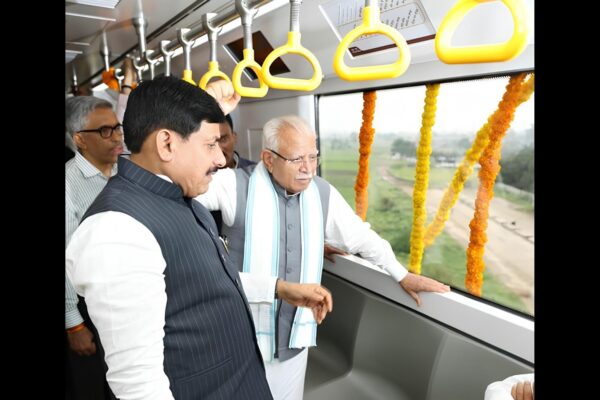
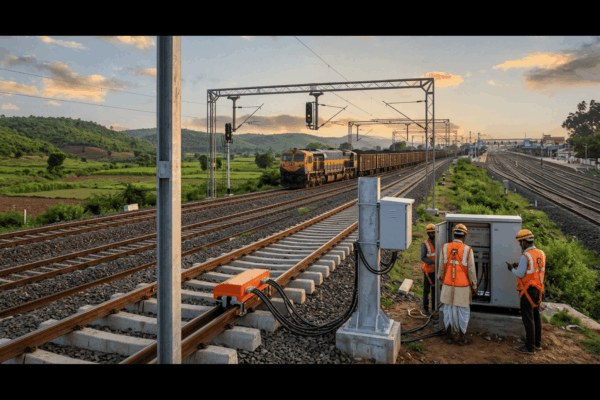
Rail-based mobility is at the forefront of this technological shift. The Delhi–Meerut Namo Bharat corridor represents one of the most advanced examples, deploying a hybrid Level-III radio-based signalling system integrated with LTE technology. The system combines advanced train control with continuous communication, enabling higher operational efficiency, safety and closer monitoring. The corridor has also introduced platform screen doors, while the Namo Bharat network is designed around a digitally enabled operating environment. In February 2026, the completion of the 82-km Delhi–Meerut corridor and the integration of Meerut Metro with Namo Bharat created another important precedent: the two services operate on the same infrastructure, demonstrating how technology and infrastructure planning can be combined to deliver both regional and intra-city mobility from a common network.
Automation is also moving deeper into metro operations. Delhi Metro’s Pink and Magenta Lines have adopted Unmanned Train Operations (UTO), while the indigenous i-ATS (Automatic Train Supervision) system, developed jointly by DMRC and BEL, has been deployed on the Red Line. These developments point towards a wider localisation of sophisticated railway technologies, reducing dependence on imported systems while creating domestic capabilities in signalling, automation and train control. QR-based mobile ticketing is similarly reducing dependence on physical ticketing infrastructure and bringing the entire transaction closer to the passenger’s smartphone.
The digital wave extends beyond rail. Intelligent Transport Systems are becoming increasingly relevant for managing traffic flows, monitoring road conditions, optimising signals and generating real-time information for commuters. At airports, digital passenger-processing technologies, automated systems and integrated information platforms are reshaping the journey from the terminal entrance to boarding. The growing integration of airports with metro systems, expressways and other public transport networks is also creating a stronger case for common digital interfaces and multimodal journey planning. Meanwhile, the expansion of electric mobility is bringing software into vehicle operations through fleet monitoring, predictive maintenance, energy management and charging-network optimisation.
The larger trend is therefore not simply the digitisation of individual transport modes, but the emergence of a connected mobility ecosystem. The next generation of urban transport projects is likely to be judged by how effectively infrastructure can communicate across modes and how seamlessly data can move between operators, commuters and control centres. From NCMC and QR ticketing to driverless metro operations, advanced signalling, integrated hubs and AI-enabled traffic management, technology is steadily shifting urban mobility from a physical network into a responsive, data-driven system. The opportunity—and the challenge—now lies in ensuring that these digital layers work together, rather than creating another set of disconnected platforms.
Gearing the Green Shift
As cities grapple with congestion, deteriorating air quality and rising energy demand, the focus is shifting from simply moving more people to moving them with a lower environmental footprint. This is giving green mobility a much wider canvas than electric cars. Metro rail, electric buses, clean-energy-powered transport systems, charging infrastructure, renewable energy and increasingly efficient airports and terminals are becoming part of a broader strategy to make urban movement cleaner and more resource-efficient.
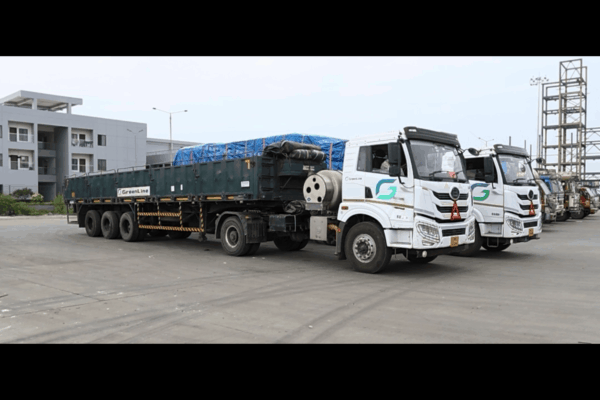
Public transport is emerging as one of the biggest beneficiaries of this shift. Electric buses are moving from pilot deployments to large-scale fleet programmes, creating a new market spanning vehicles, batteries, charging systems, fleet management and operations. Under the PM e-Bus Sewa scheme, the government plans to deploy 10,000 electric buses in 100 cities, with an emphasis on strengthening organised urban bus services. The programme is particularly significant because it takes electrification beyond the country’s largest metropolitan markets and creates opportunities for cleaner public transport in smaller cities as well. The PM E-DRIVE scheme is also supporting the deployment of thousands of electric buses while providing an impetus to the wider charging ecosystem.
“E-Buses are the future of passenger mobility, and E-Trucks will define the next era of logistics and freight transport in our country,” said H. D. Kumaraswamy, Union Minister for Heavy Industries & Steel at a high-level consultation meet while addressing the media on accelerating e-buses and e-trucks.
While presenting Delhi’s 2026–27 Budget, Rekha Gupta, Chief Minister, Delhi announced, “Our objective is to build a green, sustainable, and congestion-free transport system. 6,130 additional e-buses services will be implemented in phases, with Delhi targeting 7,500 buses by March 2027, including 5,800 electric buses, alongside a new EV Policy 2.0 and additional charging infrastructure.”
Rail-based urban mobility offers another powerful route to decarbonisation. Metro systems, by their very nature, can move large volumes of passengers using substantially less energy per passenger compared with individual motorised transport. The sector is increasingly combining this inherent advantage with renewable power and energy-efficiency measures. The Delhi Metro Rail Corporation, for instance, has progressively expanded the use of solar power through rooftop installations and power procurement arrangements, while energy-efficient regenerative braking and advanced train-control systems are helping reduce operational energy consumption. Similar initiatives across metro networks are making renewable energy and energy efficiency integral to the lifecycle of urban rail infrastructure rather than add-on sustainability measures.
The green mobility story is also extending to airport infrastructure. With India’s air passenger traffic expanding rapidly, airports are under growing pressure to manage their carbon and energy footprint. New and upgraded airports are increasingly incorporating rooftop solar plants, energy-efficient terminal systems, LED lighting, water-management systems and electric ground-support equipment. Noida International Airport, one of the country’s major Greenfield airport developments, has placed sustainability and energy efficiency among its core design considerations. Airports are also becoming important nodes in the wider electric mobility ecosystem, with charging facilities and improved public-transport links being incorporated into airport access strategies.
At the infrastructure level, charging networks are emerging as a critical enabler of the transition. The growth of electric buses, cars, three-wheelers and commercial fleets is creating demand for high-capacity charging stations, depot charging, smart charging and integrated energy management. The next phase will increasingly require charging infrastructure to be strategically located around transit hubs, bus depots, airports, commercial centres and major mobility corridors rather than developed as isolated facilities.
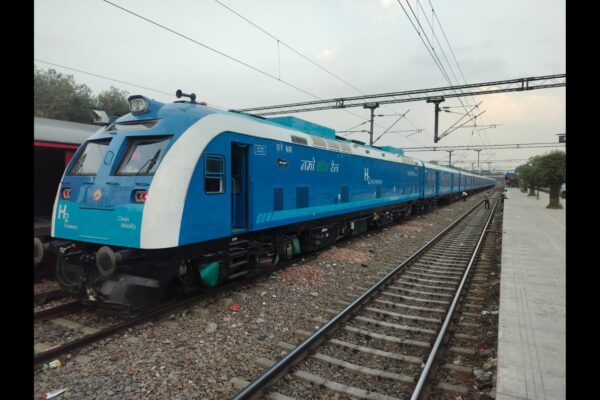
Beyond batteries, the sector is also beginning to explore alternative clean-energy pathways. Hydrogen-powered mobility, green hydrogen production and fuel-cell technologies are being examined for applications where direct electrification may be more difficult. Indian Railways has also been pursuing hydrogen-based train technology through its Hydrogen for Heritage initiative, while pilot projects and research are examining the potential of hydrogen across selected transport applications.
The larger shift is therefore from an EV-centric definition of green mobility to an integrated clean-mobility ecosystem. Electrifying vehicles is only one part of the equation; the environmental benefit ultimately depends on how the electricity is generated, how efficiently vehicles and infrastructure operate, how passengers shift from private vehicles to mass transit, and how different modes connect. For India’s rapidly growing cities, the opportunity is to build mobility infrastructure in which sustainability is embedded from the planning stage itself. The green mobility market is consequently becoming not just an environmental agenda, but a significant infrastructure and technology opportunity—one that could reshape how India designs, builds and operates its urban transport systems over the coming decade.
India’s mobility story is entering a more consequential phase, where the question is no longer how much infrastructure can be added, but how effectively it can change the way cities function. The coming years will bring tougher demands on capacity, affordability, energy use and connectivity, forcing policymakers and industry to rethink conventional transport models. The winners will be cities that can turn these pressures into smarter networks, better public transport and more efficient movement of people and goods. In that sense, the next mobility revolution will be measured not in kilometres of track or numbers of vehicles, but in the time, energy and opportunity that cities are able to save for their people.
Tags